Automotive, aerospace and export diversification propel kingdom to the top of Africa’s industrialisation index
Cairo — A three-way race is emerging for industrial leadership in Africa, with Morocco, South Africa and Egypt increasingly dominating the continent’s manufacturing landscape. The latest African Development Bank (AfDB) Industrialisation Index has placed Morocco at the top for the first time since the ranking was launched in 2010, ending South Africa’s long-held lead and reinforcing North Africa’s growing role as a manufacturing and export hub.
Morocco ranked first in the AfDB’s Industrialisation Index, narrowly ahead of South Africa and followed by Egypt, highlighting the emergence of a competitive industrial triangle spanning North and Southern Africa. Together, the three economies account for a disproportionate share of the continent’s manufacturing capacity, industrial investment and export-oriented production.
The result marks a significant milestone in Morocco’s two-decade industrial transformation, driven by export-oriented manufacturing, large-scale infrastructure investment and sustained integration into global value chains. However, the ranking measures industrial competitiveness, sophistication, export diversification, infrastructure quality and participation in international production networks rather than manufacturing scale alone.
The achievement does not mean Morocco has surpassed South Africa in overall manufacturing output or industrial scale. South Africa remains Africa’s largest manufacturing economy by value added and one of the continent’s most diversified industrial producers. Rather, Morocco’s rise reflects its success in improving industrial competitiveness and export sophistication at a pace unmatched elsewhere on the continent.
Morocco’s emergence is particularly notable given the broader state of African manufacturing. According to the African Industrialization Index, 41 of Africa’s 54 countries improved their industrialisation performance between 2010 and 2024, yet the continent still accounts for less than 2 per cent of global manufacturing output and roughly 1.4 per cent of manufactured exports. Against that backdrop, Morocco’s ascent represents one of Africa’s most significant industrial success stories.
A Shift in Africa’s Industrial Landscape
Over the past two decades, Morocco has pursued a deliberate strategy aimed at moving beyond traditional sectors such as agriculture and phosphates towards higher-value manufacturing industries. Through a combination of industrial policy, export incentives, logistics investments and foreign direct investment attraction, the country has positioned itself as one of the continent’s most integrated manufacturing platforms.
The latest AfDB findings suggest those efforts are beginning to reshape the balance of industrial competitiveness across Africa.
Africa’s Emerging Industrial Triangle
The latest AfDB rankings highlight a growing concentration of industrial competitiveness among Morocco, South Africa and Egypt, which have emerged as Africa’s three leading manufacturing economies by different measures.
South Africa remains the continent’s largest and most diversified industrial producer, supported by decades of manufacturing development across automotive, chemicals, machinery and mining-related industries. Morocco has distinguished itself through export-oriented manufacturing, nearshoring and deep integration into European supply chains. Egypt, meanwhile, is leveraging its strategic location, expanding industrial zones, logistics investments and large domestic market to strengthen its role as a regional manufacturing and export hub.
Rather than converging on a single model, the three countries represent distinct approaches to industrialisation, making their competition an important indicator of Africa’s evolving manufacturing landscape.
Export Growth Powers Industrial Rise
The kingdom’s industrial expansion is increasingly reflected in its trade performance.
Industrial exports reached approximately MAD 408bn ($44.3bn) in 2025, representing an increase of roughly 44.5 per cent over the past four years. Manufacturing products now account for a growing share of Morocco’s exports, reducing reliance on traditional commodity sectors and strengthening the country’s position in global supply chains.
The transformation has been driven largely by automotive manufacturing, aerospace production, electronics and industrial subcontracting activities, sectors that benefit from proximity to European markets and extensive integration with multinational manufacturers.
Automotive Industry Leads the Transformation
No sector better illustrates Morocco’s industrial evolution than automotive manufacturing.
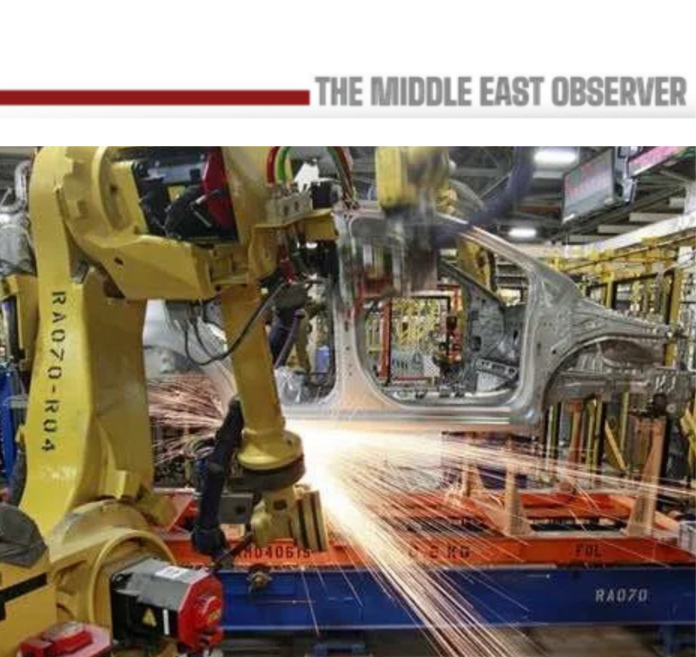
The country has become Africa’s largest vehicle producer, with annual production capacity now exceeding one million vehicles. The sector has overtaken phosphates as Morocco’s largest export industry and has become a cornerstone of the country’s industrial strategy.
More than 260 automotive companies operate within Morocco’s manufacturing ecosystem, employing over 230,000 workers. Production is led by major international manufacturers including Renault Group and Stellantis, alongside a growing network of component suppliers serving European and global markets.
Government officials aim to double production capacity to around two million vehicles annually by the end of the decade, reinforcing Morocco’s role as a strategic manufacturing base linking Europe, Africa and the Middle East.
Aerospace Emerges as a High-Value Export Engine
Alongside automotive manufacturing, aerospace has become one of Morocco’s fastest-growing industrial sectors.
More than 145 aerospace companies operate in the kingdom, supplying components and engineering services to global manufacturers including Airbus, Boeing and Safran.
Aerospace exports reached approximately MAD 29bn during 2025, supported by rising demand from international aviation markets and increasing localisation of production activities.
The sector has become a key contributor to Morocco’s strategy of moving up the industrial value chain and expanding exports in higher-technology industries.
Infrastructure as a Competitive Advantage
Industrial success has been reinforced by substantial investments in logistics and transport infrastructure.
At the centre of this strategy stands Tangier Med Port, Africa’s largest container port and one of the Mediterranean’s most important logistics hubs. The port has become the principal gateway connecting Moroccan industry to international markets, allowing manufacturers to integrate efficiently into European and global supply chains.
The surrounding industrial ecosystem includes automotive plants, supplier parks, logistics centres and export-processing zones that collectively form one of Africa’s most sophisticated manufacturing clusters.
Morocco is also expanding its logistics footprint through projects including Nador West Med Port and Dakhla Atlantic Port, aimed at strengthening connectivity with Europe, West Africa and the Americas.
Morocco’s industrial rise has also been supported by strong foreign investment. Investment-tracking estimates cited by international economic observers indicate that the kingdom has attracted tens of billions of dollars in greenfield industrial investment commitments since 2020, particularly in automotive manufacturing, renewable energy, electronics and industrial supply chains. These investments have helped deepen manufacturing ecosystems and strengthen Morocco’s integration into international production networks.
Nearshoring and Supply-Chain Diversification
Morocco’s industrial ascent has coincided with profound changes in global manufacturing patterns. The disruptions caused by the Covid-19 pandemic, geopolitical tensions and repeated supply-chain disruptions have encouraged companies to diversify production networks and move selected manufacturing activities closer to major consumer markets.
The kingdom has emerged as one of the principal beneficiaries of this nearshoring trend. Its proximity to Europe, extensive network of free-trade agreements, political stability and modern logistics infrastructure have made it an attractive destination for manufacturers seeking an alternative to longer Asian supply chains. As European companies increasingly prioritise resilience alongside cost efficiency, Morocco has strengthened its position as a production platform linking Europe, Africa and the Middle East.
Challenges Beneath the Success Story
Despite its industrial achievements, Morocco continues to face important structural challenges.
Youth unemployment remains elevated, regional disparities persist between major industrial centres and less-developed areas, while the economy remains dependent on imports for a range of industrial inputs and energy needs. Morocco also continues to rely on tourism revenues, remittances and foreign investment inflows to support external balances.
These challenges do not diminish Morocco’s industrial progress, but they highlight the importance of ensuring that industrial expansion translates into broader employment opportunities, productivity gains and inclusive economic development.
The Next Frontier: Batteries and Green Hydrogen
While automotive and aerospace sectors currently dominate industrial growth, policymakers are already preparing for the next phase of expansion.
Morocco is positioning itself as a future hub for electric vehicle battery manufacturing, supported by growing investments in battery materials, cathode production and electric mobility supply chains. The country’s substantial phosphate reserves provide an additional advantage as battery technologies evolve.
At the same time, the kingdom is investing heavily in renewable energy and green hydrogen projects, seeking to establish itself as a supplier of low-carbon industrial products to Europe and other international markets.
These sectors are expected to play an increasingly important role in Morocco’s industrial strategy over the coming decade.
A New Model for African Industrialisation
Morocco’s rise in the AFDB ranking offers an important lesson for Africa’s broader industrialisation ambitions. The competition among Morocco, South Africa and Egypt increasingly demonstrates that manufacturing leadership is no longer determined by market size alone. Export sophistication, logistics efficiency, supply-chain integration, investment attraction and industrial policy execution are becoming equally important drivers of competitiveness.
The kingdom’s experience demonstrates that industrial competitiveness is not determined solely by natural resources or domestic demand. Infrastructure, logistics, export diversification, institutional stability, workforce development and integration into global value chains can be equally decisive in shaping industrial success.
Whether Morocco can maintain its lead will depend on its ability to deepen local supply chains, expand into higher-value industries such as electric vehicle batteries, aerospace technologies and green hydrogen, and convert industrial growth into broader employment gains. The next decade will reveal whether Morocco can consolidate its position at the top of Africa’s industrial competitiveness rankings, or whether South Africa and Egypt will regain momentum in an increasingly competitive race to shape the continent’s manufacturing future.
Related news:
Morocco Eyes Growth Above 5.3% as Tourism, Industry and Diaspora Transfers Drive Economic Expansion
Europe’s Supply-Chain Reset Opens a Strategic Window for Emerging Economies
Nissan Magnite Launch Signals New Phase for Egypt’s Automotive Industry
Read also:
Saudi Arabia Seeks Private Capital for Major Makkah Development
EGX Advances as Arab Investors Bet on Improving Egyptian Outlook