
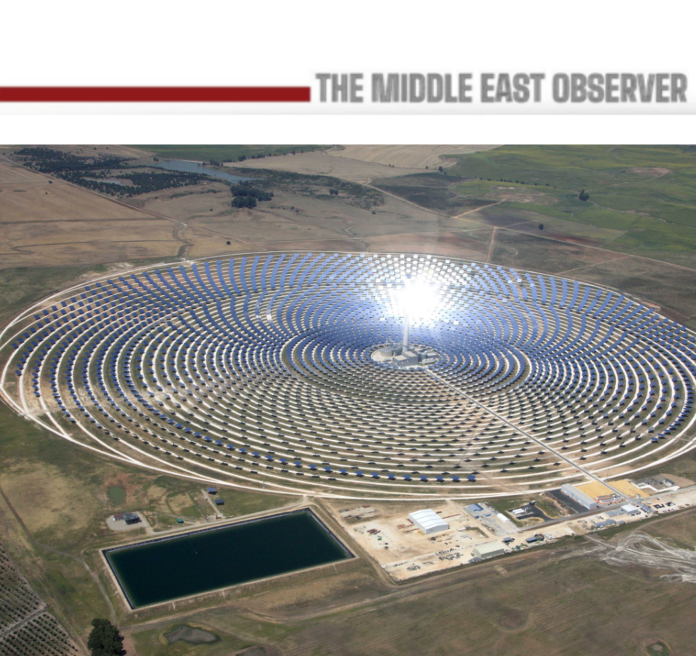
Spain’s rapid expansion of renewable energy is helping to moderate electricity costs and strengthen energy security, offering one of Europe’s clearest examples of how large-scale investment in clean power can reduce exposure to volatile fossil-fuel markets.
Wind, solar and hydroelectric generation now account for a record share of Spain’s electricity mix, reducing the country’s reliance on imported natural gas and helping to keep wholesale power prices below those seen in several European markets during recent energy-market disruptions. Spain’s energy transition has accelerated markedly in recent years, with renewable sources accounting for approximately 56% of total electricity generation in 2025, placing the country among Europe’s leading clean-energy producers.
Spain’s energy system also benefited from the temporary “Iberian exception” mechanism, which capped gas prices used in electricity generation and helped shield households and businesses from the sharp price increases that followed Russia’s invasion of Ukraine and the broader European energy crisis.
Spain’s experience stands in contrast to several major European economies that remain more exposed to imported fuels. While countries such as Germany and Italy have expanded renewable capacity significantly, both continue to rely more heavily on natural gas imports and conventional generation. Spain’s combination of renewable capacity, liquefied natural gas infrastructure and diversified energy sources has provided a stronger buffer against external supply shocks and fuel-price volatility.
Spain ‘s experience is viewed as a model for balancing
The country’s experience is increasingly being viewed as a model for balancing decarbonisation with energy affordability. Lower dependence on imported fuels has improved resilience against external disruptions while enhancing the competitiveness of energy-intensive industries.
The economic benefits extend beyond household electricity costs. Lower and more stable power prices are increasingly viewed as a competitive advantage in attracting investment in sectors such as data centres, green hydrogen, advanced manufacturing, chemicals and battery production. As companies place greater emphasis on energy security, sustainability and predictable operating costs, Spain’s renewable-energy capacity is becoming an important factor in investment-location decisions.
However, challenges remain. Energy experts continue to highlight the need for greater investment in electricity grids, energy-storage systems and backup generation capacity to ensure reliability as renewable energy’s share of the power mix continues to rise. Recent disruptions in the Iberian power system have also underscored the importance of strengthening grid resilience alongside renewable deployment.
Nevertheless, Spain’s experience demonstrates that accelerating renewable-energy investment can deliver not only environmental benefits but also tangible economic and strategic advantages. As Europe searches for ways to reconcile climate ambitions with industrial competitiveness and energy security, Spain’s energy transition increasingly appears less a climate policy than an economic and geopolitical strategy. In an era marked by supply-chain disruption, geopolitical tensions and volatile fuel markets, the ability to generate abundant domestic energy may prove to be one of the most important sources of national resilience and competitive strength.
Related news:
Europe’s Energy Bridge: How to Exit Dependence Without Falling Into a New One
Europe is Leading the race towards 100% Renewable Energy
Read also:
Egypt Aluminium Pursues $100m Loan to Build First Domestic Aluminium Foil Factory
Egypt Bets EGP 12bn on Vaccine Hub to Cut Imports and Expand Regional Reach