
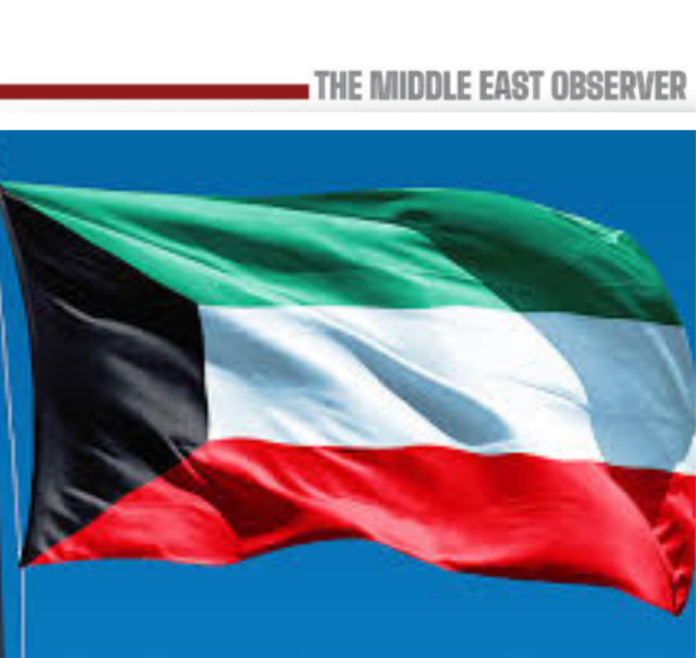
Kuwait has launched a new long-term residency programme offering eligible foreign investors permits of up to 15 years, marking one of the country’s most significant investment reforms in decades as it seeks to attract capital, diversify its economy and strengthen its position within an increasingly competitive Gulf investment landscape.
The new framework, approved under Cabinet Resolution No. 651 of 2026, allows qualified investors, business partners and senior executives linked to projects licensed by the Kuwait Direct Investment Promotion Authority (KDIPA) to obtain extended residency rights, subject to strict investment, operational and compliance requirements.
To qualify, investment entities must maintain a minimum investment volume of KD5 million ($16.3 million) and capital of at least KD1 million, while demonstrating a genuine operational presence in Kuwait and compliance with local employment requirements. Applications are expected to be reviewed through an accelerated approval process overseen by KDIPA.
The initiative reflects Kuwait’s broader effort to reduce its dependence on oil revenues and attract higher levels of foreign direct investment. While neighbouring Gulf states such as the UAE and Saudi Arabia have spent years using long-term residency programmes to attract investors, entrepreneurs and skilled professionals, Kuwait has historically maintained a more restrictive approach. The new policy signals a strategic shift as the country seeks to improve its competitiveness as a regional business destination.
Kuwait seeks to strengthen its position in attracting international capital
The reform comes as Kuwait seeks to strengthen its position in attracting international capital within an increasingly competitive Gulf market. According to recent UNCTAD data, the UAE’s inward foreign direct investment stock exceeds $250 billion, while Saudi Arabia’s is above $300 billion, compared with a substantially smaller base in Kuwait. The gap has increased pressure on policymakers to accelerate reforms that improve the country’s attractiveness to long-term investors.
The initiative also aligns with New Kuwait Vision 2035, the country’s long-term economic transformation strategy aimed at reducing dependence on hydrocarbons, increasing private-sector participation and establishing Kuwait as a regional financial, trade and investment centre. Government officials view foreign investment as a key pillar in transforming the country into a more diversified and globally integrated economy.
Beyond residency reform, the move highlights a broader trend across the Gulf, where governments are increasingly competing not only for capital but also for talent, technology and corporate headquarters. In that race, long-term residency has become an important economic policy tool, offering investors greater certainty while helping countries secure a larger share of global investment flows.
For Kuwait, the success of the initiative will ultimately be measured not by the number of residency permits issued, but by its ability to attract productive investment, generate employment, transfer technology and accelerate economic diversification. In an increasingly competitive Gulf investment landscape, however, residency incentives alone are unlikely to determine investor decisions. Their effectiveness will depend on broader progress in regulatory reform, ease of doing business, project execution and private-sector development. Kuwait’s latest move signals a recognition that attracting global capital increasingly requires not only financial incentives but also a business environment capable of competing with the region’s most dynamic investment destinations.
Related news:
Kuwait at 65: A Strategic Partnership with Egypt Poised for Deeper Economic Integration
Kuwait Seeks Advisers to Re-Tender 23 Projects on Public Land
Read also:
Nasr Automotive and FAW Forge Partnership to Rebuild Egypt’s Car Industry
Egypt Earns Global Respect After Holding Belgium in World Cup Opener