
CAIRO — Egypt is accelerating efforts to strengthen digital sovereignty through a comprehensive cybersecurity strategy designed to protect critical digital infrastructure, enhance economic resilience, support emerging technologies and position the country as a regional hub for data, cloud services and digital innovation.
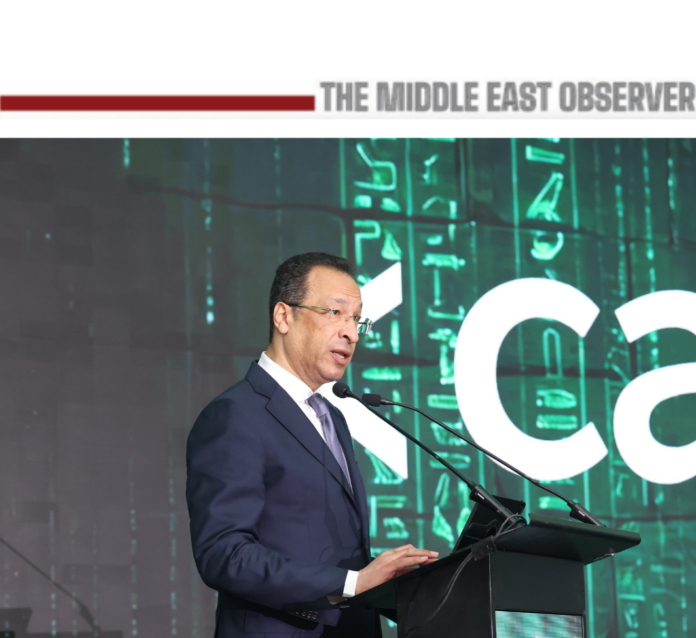
Speaking at the opening session of the fifth edition of the CAISEC 2026 Information Security and Cybersecurity Conference, Acting Minister of Communications and Information Technology Raafat Hindi said Egypt is pursuing an integrated approach that combines policy development, technical preparedness, innovation support and human-capital development to build a secure and sustainable digital ecosystem.
The conference, held under the patronage of Prime Minister Mostafa Madbouly and supported by ten ministries, brought together more than 180 speakers and over 5,000 participants from 22 countries, reflecting the growing importance of cybersecurity as a pillar of economic and national security.
Hindi said Egypt continues to implement the second edition of its National Cybersecurity Strategy (2023–2027) through the institutional framework of the Supreme Cybersecurity Council, while preparatory work has already begun on a third strategy cycle aimed at addressing rapidly evolving technological developments and emerging digital threats.
He stressed that cybersecurity is no longer limited to protecting networks and systems but has become a critical element in safeguarding trust within the digital economy, ensuring service continuity, protecting digital assets and strengthening national capabilities in managing data securely and efficiently.
Cybersecurity Moves to the Center of Economic Policy
Hindi described digital infrastructure protection as a core component of national security, noting that digital sovereignty has become increasingly important in protecting national interests and ensuring the continuity of essential services.
Drawing a parallel with traditional economic infrastructure, he said that just as ports, airports and transport networks have historically underpinned economic activity, data centers have emerged as vital arteries of the modern digital economy, supporting cloud services, artificial intelligence applications and advanced computing capabilities.
Egypt has been expanding investments in digital infrastructure while encouraging private-sector participation in data centers and cloud-computing facilities as part of broader efforts to establish the country as a regional platform serving markets across Africa, the Middle East and Europe.
The government’s digital-transformation agenda has gained momentum in recent years as authorities seek to increase digital exports, attract technology investment and expand the contribution of information and communications technology to economic growth.
The minister also highlighted the opportunities and challenges presented by emerging technologies, particularly artificial intelligence and quantum computing. While AI is increasingly enhancing cyber-threat detection and response capabilities, quantum technologies could eventually challenge existing encryption systems and data-protection frameworks.
Regional Competition for Digital Leadership
Egypt’s ambitions are unfolding amid intensifying regional competition as governments across the Middle East invest heavily in cybersecurity, cloud computing, artificial intelligence and digital infrastructure.
Saudi Arabia has integrated cybersecurity into its Vision 2030 economic diversification program and continues to attract major investments in cloud infrastructure, AI and digital services. The UAE has established itself as one of the region’s leading digital hubs through extensive investments in digital government, advanced connectivity and hyperscale data-center projects. Qatar has also expanded its cybersecurity and digital infrastructure capabilities as part of its long-term economic modernization agenda.
Against this backdrop, Egypt is seeking to leverage its strategic geographic location, extensive international connectivity, growing technology workforce and expanding digital infrastructure to strengthen its position within regional digital value chains.
Industry research indicates that cybersecurity spending across the Middle East and Africa is expected to continue growing rapidly over the coming years, driven by digital transformation, cloud adoption and rising cyber threats targeting governments, financial institutions and critical infrastructure.
Analysts view Egypt as one of the region’s most promising growth markets due to its expanding fintech ecosystem, digital-government initiatives, outsourcing sector and increasing demand for cloud-based services.
Building a Domestic Cyber Security Ecosystem
Hindi revealed that 45 companies have been accredited as cybersecurity service providers, reflecting government efforts to develop a domestic cybersecurity industry and strengthen the capabilities of Egyptian technology firms.
Human capital remains a central pillar of the national strategy. The minister highlighted a series of capacity-building initiatives, including Digital Egypt Generations, Digital Pioneers, the Cybersecurity Academy for Youth and the Mahara-Tech platform, all aimed at developing the next generation of cybersecurity and digital-technology professionals.
He also pointed to the launch of the “Waei.net” platform, developed in cooperation with the National Council for Childhood and Motherhood and the United Nations, to promote digital citizenship, online safety and responsible technology use among young people and broader segments of society.
In recognition of the growing strategic importance of emerging technologies, Egypt recently expanded the mandate of its national AI governance framework, establishing the National Council for Artificial Intelligence, Quantum Computing and Emerging Technologies to help anticipate future technological shifts and maximize economic opportunities.
Industry experts attending CAISEC noted that cybersecurity is increasingly viewed as an economic enabler rather than solely a defensive function. Countries capable of demonstrating robust cyber governance, trusted digital infrastructure and effective regulatory frameworks are becoming more attractive destinations for foreign direct investment, cloud-service providers and technology companies.
International Cooperation and Future Readiness
Hindi concluded by emphasizing that cybersecurity challenges transcend national borders and require extensive international cooperation, knowledge-sharing and coordinated action among governments, businesses and institutions.
The conference reflected this global dimension, bringing together senior officials and representatives from Egypt’s defense, financial, regulatory and technology sectors alongside regional and international organizations, including Smart Africa, the Arab Information and Communication Technologies Organization and the European Telecommunications Standards Institute.
Major technology companies participating in the event included Dell Technologies, Cisco, Fortinet, eFinance and other regional cybersecurity leaders, underscoring the increasing role of public-private partnerships in addressing evolving digital risks.
Looking Ahead
As economies become increasingly dependent on data, artificial intelligence, cloud computing and digital services, cybersecurity is evolving into a strategic pillar of economic policy and national competitiveness.
For Egypt, the success of its digital-sovereignty strategy will be measured not only by its ability to defend critical infrastructure against cyber threats but also by its capacity to attract technology investment, expand digital trade, support data-center development and strengthen its position as a trusted regional hub for digital services.
In an era where economic influence is increasingly linked to control over data, computing resources and digital infrastructure, cybersecurity is becoming a cornerstone of sustainable growth. Egypt’s challenge—and opportunity—will be translating policy frameworks and institutional preparedness into a secure digital ecosystem capable of connecting African, Middle Eastern and European markets while supporting long-term economic competitiveness.
Related news:
Europe Wants More Than Regulation. It Wants Its Own Tech Ecosystem.
MCIT Discusses Expanded Cloud and AI Investments in Egypt With AWS
Egypt’s MCIT Expands Qodwa.Tech Drive to Strengthen Women’s Digital Empowerment
Read also:
Egypt’s Sinai Offshore Fields Reach Highest Oil Output Since 2017
Egypt’s Mobile Manufacturing Sector Raises Local Content Amid Rising Costs