
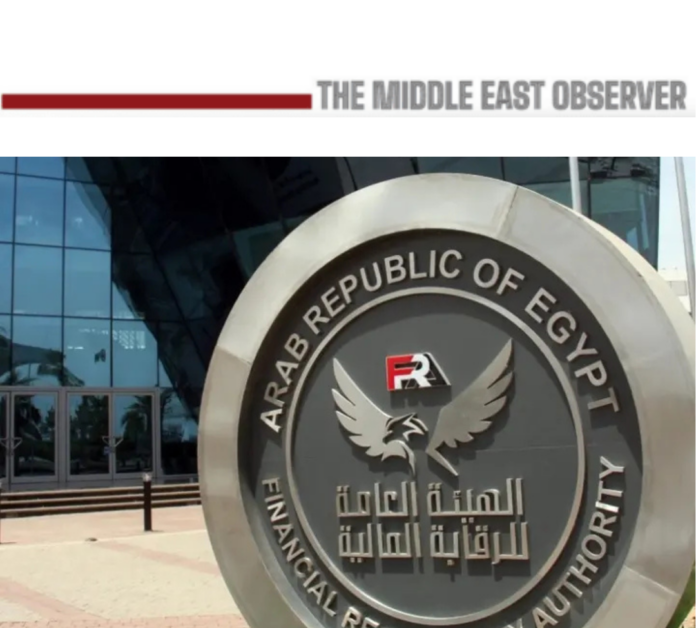
CAIRO — Egypt has taken another step in its long-term programme to deepen capital markets and diversify sources of financing beyond the traditional banking sector after the Financial Regulatory Authority (FRA) approved ten new licences spanning securities rating, derivatives brokerage, insurance, real estate investment, financial leasing and fintech.
The approvals broaden the country’s non-banking financial services ecosystem at a time when policymakers are seeking to strengthen private sector-led investment, improve financial inclusion and expand the range of financing and risk-management instruments available to businesses and investors.
The latest licensing package reflects the FRA’s strategy of building a more sophisticated financial market infrastructure capable of supporting Egypt’s wider economic reform agenda, while encouraging innovation, competition and greater institutional participation across the capital markets.
One of the most significant approvals was granted to International Credit Rating Solutions, which became the first Egyptian-owned company licensed to provide securities valuation, rating and ranking services. The approval makes it only the second licensed operator in this specialised segment, representing an important milestone in strengthening Egypt’s domestic financial market infrastructure and enhancing transparency for issuers and investors.
In another move aimed at developing Egypt’s nascent derivatives market, the FRA licensed Sigma Capital and Aspire Securities and Bonds to conduct futures brokerage activities. The approvals increase the number of licensed futures brokers to eight since the Egyptian Exchange (EGX) launched its derivatives market in March 2026, a key reform designed to broaden investment opportunities and provide institutional investors with additional hedging and risk-management tools.
The regulator also continued expanding specialised insurance and healthcare administration services. Med Right Health Solutions received Egypt’s first temporary licence to operate as a specialised medical insurance company under the country’s new insurance regulatory framework, while Nextcare Health, the Dubai-based healthcare programme management company affiliated with Allianz, obtained a temporary licence to operate in Egypt, bringing the number of licensed healthcare programme management companies to eight.
In the investment management sector, the FRA approved two licences for Co Wealth, allowing the company to undertake securities promotion and underwriting activities as well as manage real estate investment funds. It also authorised the Thndr Real Estate Assets Investment Fund, established by Egypt’s digital investment platform Thndr, to operate as a real estate investment fund, reflecting growing demand for digitally accessible investment products and the continued evolution of Egypt’s fintech ecosystem.
Further approvals included a financial leasing licence for Commercial International Finance Company (CIFC), the non-banking financial services subsidiary of Commercial International Bank (CIB), expanding its existing activities in mortgage finance and factoring. Digital financial services provider MNT-Halan also secured licences to undertake mortgage finance and factoring, further strengthening its integrated digital financial services platform.
The approvals come against a backdrop of rapid expansion in Egypt’s non-banking financial sector, which has become an increasingly important source of financing for businesses, households and investment projects. According to FRA data, financing provided by entities regulated by the authority reached approximately EGP 1.4 trillion by the end of 2025, highlighting the growing contribution of alternative financing channels to the national economy.
The FRA regulates a broad spectrum of financial activities outside the banking system, including capital markets, insurance, financial leasing, mortgage finance, consumer finance, microfinance, securitisation and Buy Now, Pay Later (BNPL) services. The authority is responsible for licensing market participants, safeguarding market integrity, promoting transparency and protecting investors.
Market indicators point to sustained momentum across the sector. Financial leasing contract values increased by 50.8% during 2025 to EGP 179.2 billion across 44 licensed companies, while factoring portfolios expanded by 77.3% to EGP 132.2 billion through 41 licensed providers, reflecting rising demand for alternative corporate financing solutions.
Egypt’s capital market infrastructure has also continued to broaden. By the end of 2025, the country had 978 licensed capital market entities, including 253 listed companies, 538 operating firms and 172 investment funds, demonstrating continued institutional development and an expanding investment landscape.
The licensing decisions also reinforce the FRA’s objective of encouraging greater competition across specialized financial services while supporting innovation in digital finance and investment management. The expansion of domestic credit-rating capabilities, derivatives brokerage, real estate investment funds and fintech-based financing is expected to improve market efficiency, strengthen price discovery and widen access to capital for both businesses and investors.
The latest approvals form part of Egypt’s broader efforts to create deeper and more resilient capital markets capable of mobilising long-term investment, reducing reliance on conventional bank lending and supporting sustainable economic growth. As authorities continue implementing financial sector reforms, the expansion of non-banking financial services is expected to play an increasingly important role in enhancing market depth, attracting institutional investment and positioning Egypt as one of the region’s leading financial centers.
Related news:
Egypt’s Stabilisation Drive Gains Momentum as External Buffers Strengthen
Read also:
Egypt Introduces Digital Property Transfers, Targets EGP 7bn in Administrative Fees
TMG Expands Regional Footprint with $18.8bn Baghdad Development
