A careful examination of Egypt’s contemporary theatrical landscape reveals a complex reality. Egypt’s State Theatre—long regarded as a leading incubator of artistic experimentation and cultural creativity—has not died. Rather, it exists in a condition resembling a chronically ill patient struggling against decline. Between revival efforts led by the Ministry of Culture through the National Theatre Organization and the General Authority for Cultural Palaces, and the persistent challenges of funding, maintenance and marketing, one fundamental question remains: can State Theatre regain its popular appeal in the age of digital entertainment?
Visible Activity… Numbers That Do Not Tell the Whole Story
According to figures released by the Ministry of Culture, theatrical activity expanded noticeably during 2024 and 2025. The National Theatre Organization announced the production of 13 new plays in 2024, while the number of performance nights exceeded 1,100 in 2025. Touring activities also expanded through the “Confrontation and Touring Theatre” initiative, reaching villages participating in the “Decent Life” national development programme.
Viewed in isolation, these figures suggest a vibrant theatrical movement. Yet numbers alone do not tell the full story. Critics and regular theatre-goers understand that increased production does not necessarily translate into deeper cultural impact. In some cases, touring activity risks becoming movement for its own sake, without cultivating sustainable audiences or leaving a lasting artistic imprint.
Infrastructure… The Silent Crisis
Perhaps the most troubling challenge lies behind the scenes. Many state-owned theatres have suffered years of deterioration. Several venues remain closed pending renovation, while others continue to operate with outdated lighting and sound systems. In some cases, concerns over safety standards and fire-prevention measures remain unresolved.
The “Masr Theatre” project on Emad El-Din Street, promoted as a flagship cultural development, remains unfinished. Meanwhile, visitors to theatre venues in several governorates can still observe the extent of the infrastructure challenges facing Egypt’s theatrical network.
Yet early 2026 brought a measure of optimism. In February, the Umm Kulthum Theatre at Mansoura Cultural Palace officially reopened following a comprehensive redevelopment completed in December 2025. With a seating capacity of 820, the venue now features upgraded infrastructure, modern lighting and sound systems, enhanced safety measures and fully renovated public facilities.
Its reopening, which coincided with Dakahlia Governorate’s 776th National Day celebrations, demonstrated that the state continues to invest in restoring historic cultural venues, even if the pace of implementation remains slower than many theatre professionals would prefer.
The Audience Crisis… The Loss of a Habit or a Failure to Attract?
If the State Theatre continues to produce performances, why do so many seats remain empty?
This question lies at the heart of the debate. Government theatre now competes with powerful alternatives: digital streaming platforms offering instant entertainment, television drama attracting leading stars and mass audiences, and private commercial theatre producing lighter productions tailored to contemporary tastes.
These challenges are compounded by weak marketing strategies, limited promotional campaigns and administrative procedures that can make the simple act of purchasing a ticket unnecessarily complicated.
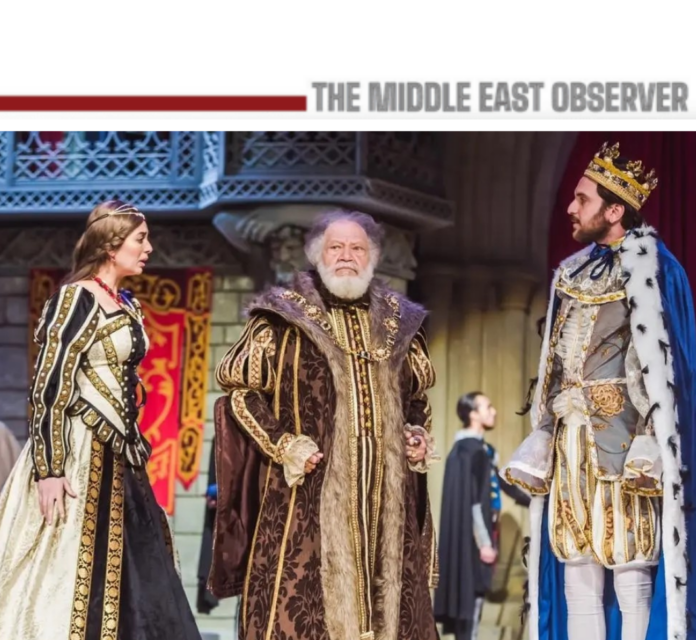
Yet the situation is not entirely bleak. Productions such as King Lear, starring Yehia El-Fakharany at the National Theatre, continue to attract strong attendance, while several independent youth productions generate significant public interest. The audience has not disappeared; rather, it has become more selective, seeking either star-driven productions, distinctive artistic experiences or what might be described as a genuine theatrical event rather than a routine performance.
Budgetary Concerns… Transparency and the Funding Gap
The issue of funding remains central. Although the Ministry of Culture presented its 2025/26 budget before Parliament, detailed allocations for theatrical activities remain largely inaccessible to the public and even to many specialists.
What is clear, however, is that the State Theatre remains heavily dependent on government subsidies. Box-office revenues cover only a small fraction of the costs associated with salaries, production, maintenance and operations.
While the government frequently highlights increased spending on cultural development and theatre restoration projects—including the redevelopment of Umm Kulthum Theatre—artists and critics continue to raise concerns over low remuneration for creative professionals, bloated administrative structures and the limited resources allocated to publicity and audience outreach.
The result is a widening gap between the cultural mission assigned to State Theatre and the financial tools available to fulfil that mission.
Neither Collapse nor a Golden Age
Any balanced assessment leads to a nuanced conclusion. Egypt’s State Theatre is neither collapsing nor experiencing a renaissance.
It retains significant strengths: a rich cultural legacy, experienced artistic talent and a loyal audience that continues to support live performance despite mounting challenges. The reopening of Umm Kulthum Theatre provides tangible evidence that the state has not abandoned its theatrical institutions and remains committed to their preservation and modernization.
Moreover, Egypt’s official theatre sector continues to hold symbolic significance as one of the Arab world’s oldest and most influential state-sponsored cultural institutions.
At the same time, it faces chronic financial pressures, bureaucratic rigidity, evolving audience habits and intense competition from commercial and digital entertainment platforms that increasingly dominate public attention.
The Egyptian state continues to describe theatre as a pillar of the country’s soft power and remains committed to supporting it financially. Yet financial support alone cannot guarantee renewal. What the State Theatre requires is not simply the restoration of buildings, but a comprehensive rethinking of governance, audience engagement, artistic development and cultural policy. Infrastructure rehabilitation, as demonstrated in Mansoura, is an important step. Whether it becomes part of a broader revival strategy remains the more important question.