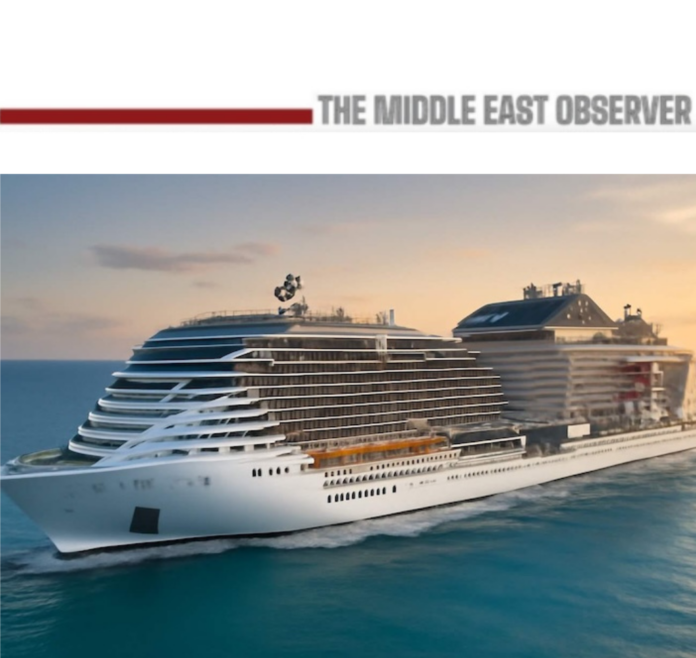
CAIRO — Egypt’s ambitions to expand its Water Tourism offering received fresh momentum after Tourism and Antiquities Minister Sherif Fathy held talks with Glen Moroney, founder and chairman of Scenic Luxury Cruises & Tours, on potential investments in the country’s Nile and maritime tourism sectors.
The discussions focused on opportunities to build and operate new luxury cruise vessels in Egypt, reflecting growing international interest in one of the country’s most distinctive tourism segments. During his visit, Moroney toured Alexandria and Ain Sokhna to assess port infrastructure and potential locations for future cruise operations.
Scenic’s interest reflects growing confidence among international luxury operators in Egypt’s tourism outlook. The company, which operates premium river and ocean cruises across Europe, Asia, Australia and the Americas, serves a high-spending customer base seeking immersive cultural experiences. For Scenic, Egypt offers a rare opportunity to add one of the world’s most celebrated heritage destinations to its portfolio while capitalising on rising global demand for luxury experiential travel.
The talks come as Egypt pursues an ambitious tourism expansion strategy aimed at increasing annual visitor arrivals from approximately 15.7 million tourists in 2024 to 30 million by the end of the decade. Achieving that target will require substantial investment in accommodation capacity, transport infrastructure and high-value tourism products capable of attracting longer stays, higher visitor spending and stronger economic returns.
The expansion strategy is already being supported by robust sector performance. According to data from the Central Bank of Egypt, tourism revenues rose to $14.4 billion during July 2025–March 2026, compared with $12.5 billion during the corresponding period a year earlier. European markets remained Egypt’s largest source of visitors, accounting for 69.2% of total tourist arrivals during the first nine months of the fiscal year, with Russia and Germany leading inbound tourism flows. The figures underscore Egypt’s growing appeal across both traditional leisure markets and higher-spending cultural tourism segments.
Luxury Travel Meets Ancient Civilisation
The opportunity is reinforced by strong global demand for premium cruise experiences. Industry estimates indicate that the global cruise tourism market exceeds $20 billion annually, with luxury river cruising among the fastest-growing segments as affluent travellers increasingly seek culturally immersive and destination-focused experiences.
Egypt’s water tourism sector offers a combination of heritage, leisure and spirituality that is difficult to replicate elsewhere. Unlike most river-cruise destinations, where itineraries focus primarily on scenery and recreation, the Nile provides direct access to one of the world’s longest continuous civilisations. Cruise journeys connect visitors to globally renowned sites including Luxor, Karnak, the Valley of the Kings, Edfu, Kom Ombo and Aswan, while also incorporating cultural encounters, traditional cuisine and locations associated with the Holy Family’s journey through Egypt.
Egypt is already among the world’s leading cultural tourism destinations and operates one of the largest river-cruise industries globally, with hundreds of vessels navigating the Luxor-Aswan corridor. However, much of the existing fleet serves the mid-market segment, creating opportunities for operators such as Scenic to introduce a new generation of luxury vessels, premium services and bespoke travel experiences aimed at affluent international travellers.
Infrastructure Expansion Supports Tourism Growth
Beyond the Nile, Egypt is increasingly positioning its Mediterranean and Red Sea coastlines as premium cruise destinations, leveraging marine tourism, yachting, diving and heritage tourism. The country’s extensive coastline, year-round sunshine and proximity to major European and Gulf markets provide significant growth opportunities.
The growth in visitor demand has been matched by substantial investments in aviation infrastructure. Egyptian airports handled 9.4 million passengers and 70,700 flights during the first four months of 2026, representing annual increases of 6.8% and 7.4%, respectively. The government attributes the increase to extensive airport expansion and modernization programmes designed to accommodate rising tourism volumes while improving service quality and connectivity.
Since 2014, Egypt has expanded its airport network from 19 to 23 airports, adding facilities such as Sphinx, Berenice, Bardawil and Capital International airports. Meanwhile, Cairo International Airport is preparing for the construction of Terminal 4, a project expected to double annual passenger capacity from more than 30 million to over 60 million travellers. Combined annual capacity across airports outside Cairo has reached 44.6 million passengers, strengthening Egypt’s ability to support both mass tourism and premium travel segments.
Regional Competition and Higher-Value Tourism
Competition for high-end tourism investment is intensifying across the Middle East as countries including Saudi Arabia and the United Arab Emirates commit billions of dollars to luxury tourism, cruise terminals, marina developments and premium hospitality projects. Egypt’s competitive advantage lies in its ability to combine world-class cultural heritage, river cruising, coastal tourism and year-round sunshine within a single destination, offering a proposition few regional competitors can match.
Minister Fathy said expanded investment in river and maritime tourism could increase accommodation capacity and support Egypt’s long-term tourism ambitions. Beyond visitor arrivals, cruise tourism generates significant economic multiplier effects across local economies. Spending extends beyond cruise operators to ports, marinas, hotels, transport providers, restaurants, cultural attractions and small businesses, supporting employment, foreign-currency earnings and local investment.
Looking ahead, the arrival of global luxury operators could strengthen Egypt’s position as one of the Middle East’s leading water-tourism destinations. For Scenic, Egypt offers access to a market benefiting from rising tourism revenues, expanding airport capacity and strong government support for sector development. For Egypt, attracting internationally recognised operators brings more than additional cruise capacity; it enhances global visibility, introduces higher service standards and increases average visitor spending.