Egypt has restored stability to natural gas supplies for industry, enabling fertiliser producers to operate at utilisation rates exceeding 90% and helping drive urea exports to $9.4 billion in 2025, as the government accelerates phosphate investments, expands energy infrastructure and strengthens the country’s position as a regional hub for fertiliser production and exports serving markets across Africa, Europe and Asia.
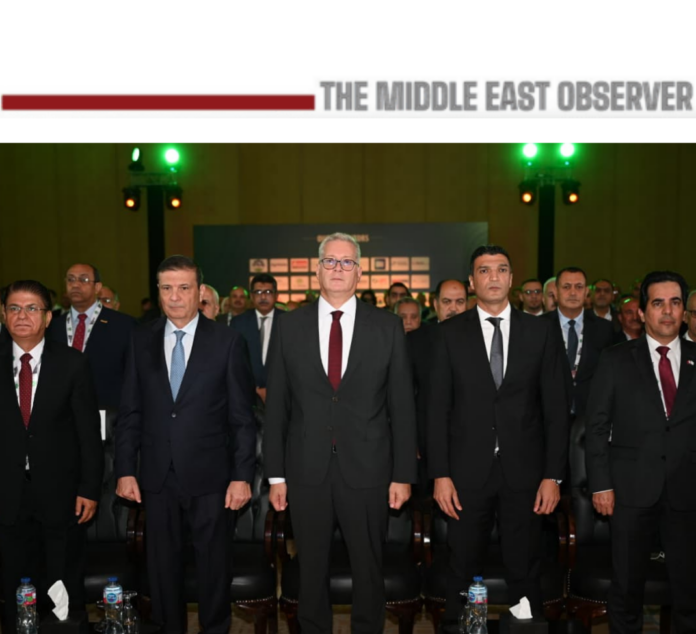
Speaking at the annual international conference of the Arab Fertilizer Association, Petroleum and Mineral Resources Minister Karim Badawi said the government had successfully overcome recent gas supply challenges and secured sufficient volumes for the domestic market and key industrial sectors, allowing production activity to recover and supporting broader economic growth.
The recovery is particularly significant for Egypt’s fertiliser industry, which has faced periodic disruptions over the past two years amid tighter gas supplies, rising domestic demand and regional energy market volatility. The restoration of stable gas deliveries comes as Cairo seeks to maximise foreign-currency earnings from export-oriented industries while strengthening energy security and industrial competitiveness.
Badawi said the ministry remains committed to ensuring adequate natural gas supplies for fertiliser manufacturers, describing the sector as strategically important to food security, export growth and economic development. Natural gas remains the principal feedstock for nitrogen fertilisers such as urea, making reliable supply essential to maintaining production and competitiveness.
To secure supplies, the ministry has pursued a dual-track strategy. The first focuses on stimulating investment in exploration, development and production activities to offset natural declines in output and boost domestic gas production. The second centres on expanding energy infrastructure through additional regasification capacity and liquefied natural gas (LNG) import facilities, enabling greater volumes of gas to be injected into the domestic market.
According to the minister, these measures have enabled Egypt to overcome supply bottlenecks and meet the needs of industrial consumers, helping restore production across several manufacturing sectors.
The impact has been particularly evident in fertiliser manufacturing. Factory utilisation rates exceeded 90% during the past year, while Egypt’s urea fertiliser exports generated approximately $9.4 billion in 2025, representing annual growth of 7.4%.
The performance underscores the sector’s growing contribution to export revenues and foreign currency inflows at a time when Egypt is seeking to expand non-oil exports and improve its external balance position.
Industry analysts note that stable gas supplies have become an increasingly important competitive advantage in global fertiliser markets. Natural gas can account for as much as 70% of nitrogen fertiliser production costs, making access to reliable and competitively priced feedstock a decisive factor in determining export competitiveness.
The minister also highlighted Egypt’s substantial phosphate reserves, which exceed three billion tonnes and rank among the largest globally. The resource base provides a strong foundation for expanding phosphate-based fertiliser production and moving further up the value chain through downstream processing industries.
As part of its mining development strategy, the government is prioritising investments that maximise the economic value derived from mineral resources rather than exporting raw materials. This includes expanding phosphate fertiliser production, phosphoric acid manufacturing and related chemical industries aimed at increasing value-added exports.
Several major projects are advancing under this strategy, including the New Valley phosphoric acid complex and the large-scale phosphate fertiliser complex in Ain Sokhna being developed in partnership with Indorama Corporation. The government is also working with domestic private-sector groups including Polyserve Group and Elsewedy Electric, alongside international specialised firms.
The fertiliser expansion programme forms part of a broader effort to attract industrial investment into Egypt’s mining, chemicals and downstream manufacturing sectors. Recent investments in phosphate processing and fertiliser production reflect growing confidence in Egypt’s ability to leverage its natural resource base while capitalising on its strategic location linking African, European and Asian markets.
Badawi also highlighted cooperation with the Ministry of Electricity and Renewable Energy to expand renewable generation capacity. Increased renewable power production is expected to improve the efficiency of Egypt’s energy mix and free additional natural gas volumes for higher-value industrial applications, including fertiliser manufacturing.
The strategy aligns with Egypt’s broader objective of transforming its mineral wealth into export-oriented industrial output. By integrating mining resources, energy infrastructure and manufacturing investment, policymakers aim to create higher-value industrial clusters capable of generating employment, export revenues and long-term economic growth.
Regionally, Egypt is seeking to strengthen its position alongside major fertiliser producers such as Morocco, Saudi Arabia and Qatar. While Morocco remains the dominant global phosphate powerhouse and Gulf producers benefit from abundant hydrocarbon resources, Egypt’s combination of sizable phosphate reserves, established industrial infrastructure, access to international shipping routes and expanding gas import capacity offers a competitive platform for future growth.
With gas supplies stabilising, phosphate investments accelerating and global demand for agricultural inputs remaining resilient, Egypt is increasingly positioning itself not only as a regional energy hub but also as a major fertiliser production and export centre serving markets across Africa, Europe and Asia.