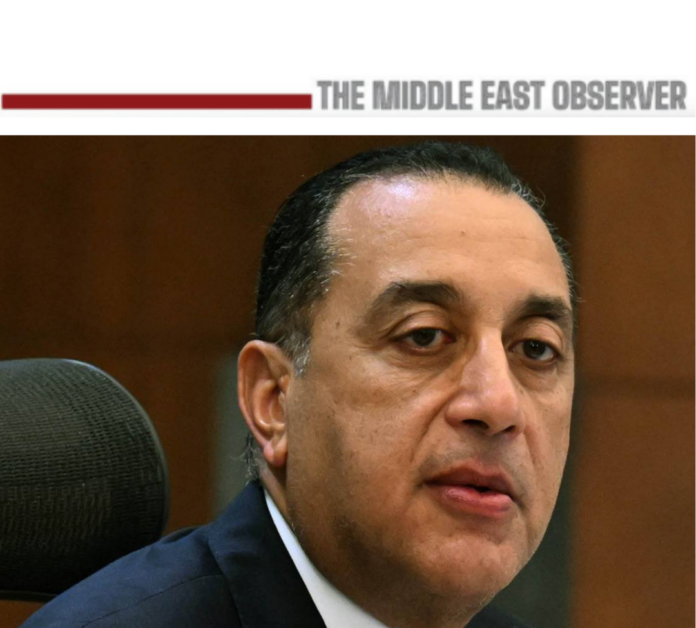
CAIRO — Egypt recorded preliminary economic growth of 5% during the third quarter of the 2025/2026 fiscal year, supported by a recovery in Suez Canal activity, tourism, construction, and rising energy-sector investments despite ongoing regional geopolitical tensions.
According to statements issued by Egypt’s Cabinet and comments by Prime Minister Mostafa Madbouly and planning officials, the economy expanded faster than earlier government expectations of 4.6–4.8%, despite disruptions linked to the US-Iran confrontation and volatility in global energy markets.
Officials said Suez Canal activity rose by 23.6% during the quarter, marking the third consecutive quarter of recovery in maritime traffic as shipping disruptions around the Strait of Hormuz prompted partial rerouting through the Red Sea and Suez corridor.
Non-oil sectors also contributed to growth, with restaurants and hotels expanding by 8.3%, construction activity rising 5.6%, and non-petroleum manufacturing recording growth of 2.1%.
The government said the results reflect broader economic resilience despite higher energy costs, supply-chain pressures, and continued weakness across parts of the private non-oil sector, where Purchasing Managers’ Index data has continued to indicate contraction since the start of 2026.
During his weekly press conference, Prime Minister Madbouly also announced that international energy companies had committed more than $19 billion in planned investments in Egypt’s petroleum sector over the coming three years, including major commitments from Eni, BP, Apache Corporation, and UAE-based Arcius Energy.
Madbouly stated that Egypt had reduced outstanding arrears owed to foreign energy partners from more than $6.1 billion to around $714 million, with full repayment targeted before the end of June 2026.
The Prime Minister also highlighted recent natural gas discoveries, including new production from the Abu Madi area in the Nile Delta and the larger “Denis” offshore field in the Mediterranean, which officials said could significantly support Egypt’s efforts to reduce energy imports and strengthen long-term energy security.
At the same time, Egypt continues accelerating renewable-energy expansion, with the government targeting renewable sources to account for 45% of electricity generation by 2028 through major wind and battery-storage projects in the Gulf of Suez and Red Sea regions as part of a wider strategy to reduce fuel import dependence and strengthen long-term energy sustainability.
The stronger-than-expected growth figures come despite the International Monetary Fund lowering its forecast for Egypt’s full-year growth to 4.2%, while the World Bank maintained projections around 4.3%.
As The Middle East Observer notes, Egypt’s latest economic indicators suggest that Cairo is increasingly relying on a combination of infrastructure expansion, energy-sector recovery, logistics activity, and industrial investment to preserve macroeconomic stability amid one of the region’s most volatile geopolitical and energy environments in years.