
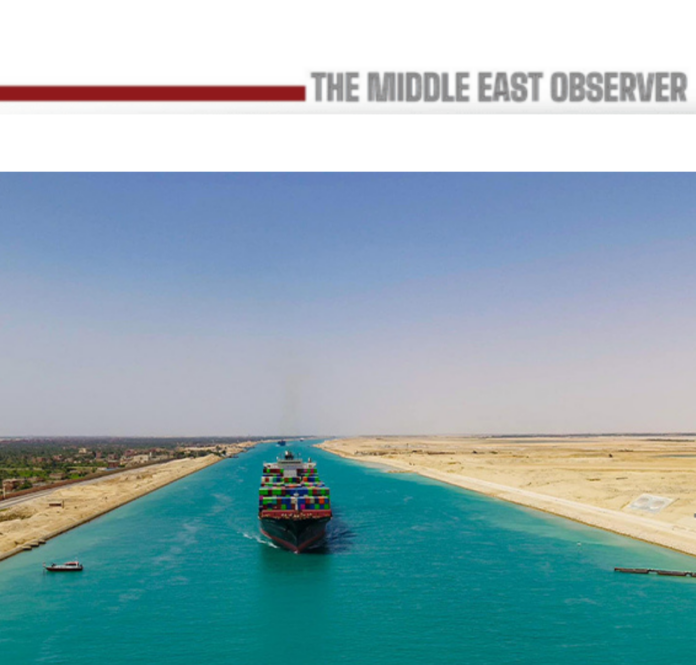
Global shipping has taken an important step towards restoring one of the world’s busiest trade corridors after Maersk and Hapag-Lloyd announced that their jointly operated AE15 service under the Gemini Cooperation will resume transits through the Suez Canal instead of sailing around the Cape of Good Hope. The resumption of the first major scheduled Asia–Europe liner service to return to the canal since the recent regional disruptions signals improving confidence in security conditions across the Red Sea, providing renewed momentum for the recovery of the Suez Canal while strengthening prospects for more efficient global supply chains and lower transport costs if additional carriers follow suit.
The decision follows what both companies described as comprehensive assessments of the security situation in the Red Sea and represents the first significant return of a major scheduled Asia–Europe container service since regional tensions disrupted normal shipping patterns. While Maersk emphasised that no further Gemini services are currently being rerouted through Suez, the announcement is widely viewed within the shipping industry as an important confidence-building milestone rather than an isolated operational adjustment.
A Positive Signal for the Shipping Industry
The return of the AE15 service demonstrates that some of the world’s largest shipping operators now consider conditions suitable for the gradual reintroduction of selected Suez Canal transits.
Although most global container carriers continue to monitor developments before making broader routing changes, the Maersk-Hapag-Lloyd decision provides the first tangible indication that commercial confidence in the Red Sea corridor is beginning to recover.
The world’s leading liner operators—including MSC, CMA CGM, COSCO, OOCL, Evergreen, ONE, HMM and Yang Ming—continue to evaluate routing decisions based on operational safety, commercial viability and schedule reliability. Collectively, these companies account for more than 80% of global container shipping capacity, making their future decisions central to the long-term recovery of Suez Canal traffic.
Why the Suez Canal Remains the Preferred Route
The Suez Canal remains the shortest and most efficient maritime link between Asia and Europe.
Before the Red Sea disruptions, approximately 10% of global seaborne trade transited the canal, making it one of the world’s most strategically important shipping corridors.
Routing vessels around the Cape of Good Hope significantly increases voyage distances, fuel consumption, vessel utilisation and delivery times, while reducing fleet efficiency and extending container turnaround cycles.
For shipping companies, restoring safe navigation through the Suez Canal offers considerable operational and commercial advantages, enabling faster deliveries, lower fuel consumption and improved utilisation of existing fleets.
Growing Confidence Supports Global Trade
The gradual return of scheduled services reflects improving confidence rather than the complete normalisation of regional conditions.
Egypt has continued to maintain the operational readiness and efficiency of the Suez Canal while working closely with international partners concerned with the security of one of the world’s most important maritime corridors. At the same time, multinational maritime security efforts have contributed to improving conditions for commercial navigation through the Red Sea and Bab el-Mandeb Strait.
Industry analysts generally expect that shipping companies will continue to adopt a phased approach, restoring additional services only after confirming that current improvements prove sustainable over time.
Lower Shipping Costs Benefit Businesses and Consumers
A broader return to the Suez Canal would generate benefits extending well beyond the shipping industry.
Shorter voyages would reduce fuel consumption, improve vessel productivity and lower operating costs. More efficient shipping schedules would also strengthen global supply chains by reducing transit times and improving cargo reliability.
Over time, greater routing efficiency could help ease logistics costs that have increased during the Red Sea disruptions. Lower transport costs would support manufacturers, importers and retailers while helping moderate some of the inflationary pressures associated with higher freight expenses, longer delivery times and elevated risk-related shipping costs.
Recovery Offers Opportunities for Egypt
For Egypt, the gradual return of international shipping lines would support the continued recovery of Suez Canal traffic after the exceptional challenges experienced over the past two years.
Higher vessel numbers would strengthen foreign currency earnings, reinforce the canal’s position as a cornerstone of global trade and reaffirm Egypt’s strategic role in connecting Europe, Asia and Africa through one of the world’s most important maritime gateways.
Recent operational improvements already indicate encouraging momentum, with the Suez Canal Authority reporting year-on-year increases in vessel numbers, cargo tonnage and revenues compared with the previous financial year, although activity remains below historical levels.
A Gradual Recovery with Long-Term Potential
The return of the AE15 service is unlikely to represent an immediate return to pre-crisis traffic levels. Rather, it serves as an important indicator that commercial confidence is beginning to improve.
If the service operates successfully and regional stability continues, other major carriers are expected to reassess their own routing strategies over the coming months. Each additional service returning through the canal would strengthen confidence further, creating a positive cycle that benefits shipping companies, global trade and Egypt alike.
While security will remain the decisive consideration for all operators, the commercial advantages of the Suez Canal continue to make it the preferred route between Asia and Europe. As confidence gradually returns, the canal is well positioned to regain its central role in international maritime trade, contributing to more efficient global supply chains and helping reduce transport costs for businesses and consumers worldwide.
Related news:
El-Sisi Accelerates Suez Canal Shipbuilding Strategy as Exports Reach Europe
Egypt Opens 9 Industrial Projects in Suez Canal Economic Zone with $182.5mn Investments
Read also:
Lebanon Between a Bad Agreement and Civil War
How Hollywood and Luxury Brands Created a Win-Win Business Model