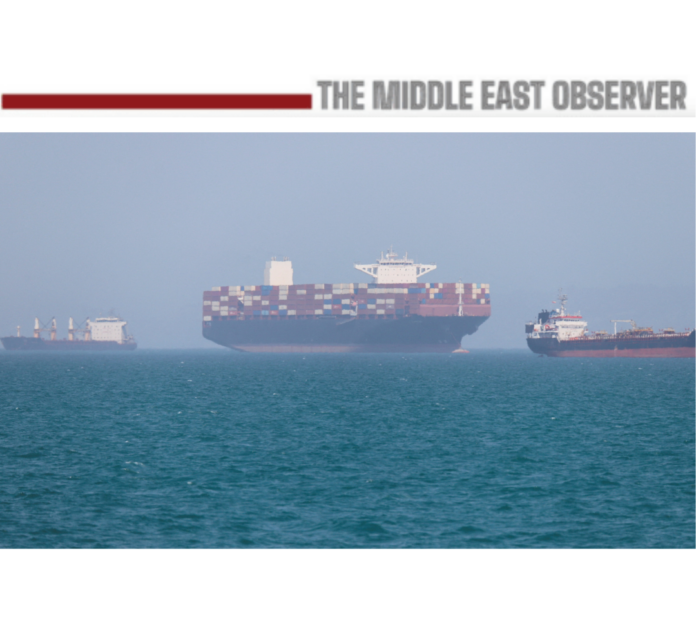
Oil prices remained elevated on Tuesday, holding close to $114 per barrel, as intensifying geopolitical tensions around the Strait of Hormuz continued to unsettle global energy markets, according to reports from Reuters, Bloomberg and regional outlet Asharq News.
Brent crude stabilised near this level following a sharp 6% rally earlier in the week, while US West Texas Intermediate traded below $105 per barrel. The gains come amid renewed exchanges of fire between the United States and Iran, alongside reported attacks on vessels and energy infrastructure near the strategic waterway.
According to statements cited by Reuters, US Central Command confirmed that American forces intercepted Iranian attacks while escorting flagged vessels through the corridor. Separately, an oil facility in Fujairah, United Arab Emirates, was reportedly targeted, underscoring the widening scope of the confrontation.
Efforts by Washington to reopen maritime passage through Hormuz have raised doubts over the durability of a fragile ceasefire that has held for several weeks. US President Donald Trump indicated in media remarks that hostilities could persist for 2-3 weeks, reinforcing market concerns over prolonged disruption.
Energy analysts cited by Bloomberg warned that continued attacks signal an erosion of the truce and could trigger further price spikes, particularly if additional oil infrastructure is damaged. The Strait of Hormuz—through which a significant share of global oil supply transits—remains effectively constrained amid reciprocal restrictions imposed by Washington and Tehran.
Brent crude has surged by roughly 90% since the start of the year, reflecting the loss of millions of barrels from global supply and ongoing logistical bottlenecks. As Abbas Araghchi noted, diplomatic talks may be progressing, but recent developments highlight the absence of a military resolution to the crisis.
The sustained rally in energy prices is now feeding into broader macroeconomic concerns. Rising fuel costs have intensified fears of global inflationary pressures, with bond markets reacting accordingly. Yields on long-term US Treasuries have climbed above 5%, suggesting expectations that the Federal Reserve may need to maintain or tighten monetary policy.
As The Middle East Observer notes, the evolving situation in the Strait of Hormuz has become a central variable in both energy market pricing and global economic stability. Without a clear diplomatic breakthrough, the risk premium embedded in oil markets is likely to persist, keeping upward pressure on prices and complicating the global inflation outlook.