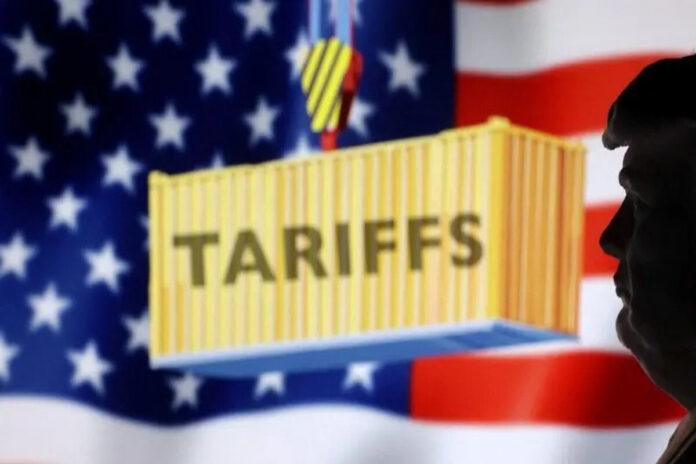
International mail flows to the United States collapsed this week after Washington scrapped long-standing exemptions on low-value imports, prompting 88 national postal operators to suspend services and underscoring the fragility of global logistics in the face of sudden trade policy shifts.
The Universal Postal Union (UPU), the UN agency that coordinates global mail exchanges, reported that U.S.-bound postal traffic plunged 81% on August 29, compared to the previous week, following the White House’s move to abolish duty-free treatment for small parcels.
The measure, announced by President Donald Trump’s administration in late July and effective from August 29, immediately triggered suspensions by postal systems in Germany, the UK, France, Japan, India, Italy and Australia, among others. Operators cited the inability to adapt quickly to new customs and tariff requirements.
Analysts say the collapse in mail traffic highlights how trade protectionism can ripple far beyond tariffs. “Small parcels are the lifeblood of cross-border e-commerce,” said Dr. Karen Liu, logistics expert at MIT’s Center for Transportation and Logistics. “When tariffs suddenly upend cost structures and customs procedures, entire postal flows seize up. This is not just about stamps — it’s about global supply chains.”
The changes effectively strip out what was once a “de minimis” exemption — a threshold allowing low-value items to enter the U.S. duty-free. For decades, that exemption enabled the rapid rise of cross-border e-commerce platforms shipping inexpensive goods from Asia to U.S. consumers.
Masahiko Metoki, UPU’s director general, said the agency is developing a “new technical solution” to resume services, though no timeline has been given. Industry insiders told The Middle East Observer that discussions include a temporary digital customs pre-clearance system, which would allow parcels to be screened electronically before entering U.S. borders.
“This could become a model for future trade compliance in e-commerce, but it requires U.S. regulatory approval and rapid adaptation by operators,” said a senior European postal executive involved in the talks.
The suspension is already reverberating across industries. Small businesses that rely on inexpensive international shipping — particularly from China, Southeast Asia, and Eastern Europe — face immediate disruptions. Meanwhile, large courier companies such as FedEx, UPS, and DHL are positioned to capture market share, as their express divisions are already structured to handle customs clearance.
“Consumers will pay the price,” warned Alan Beattie, trade columnist at the Financial Times. “If the cost of getting a $10 gadget from Shenzhen suddenly doubles, demand shifts — and that has macro implications for inflation, consumer choice, and even diplomatic relations.”
Historical Precedent
Founded in 1874 and based in Bern, the UPU has long acted as the quiet backbone of global commerce, ensuring letters and packages cross borders even during wars and financial crises. But experts note this is one of the rare moments where the system has been brought to near-standstill by a single policy decision from one member state.
“This is not unlike when the U.S. threatened to withdraw from the UPU in 2019 over terminal dues,” recalled Paul Drexler, former USPS international policy director. “Back then, a compromise was reached. The question now is whether other nations will absorb the cost of compliance or whether this triggers a broader renegotiation of global postal rules.”