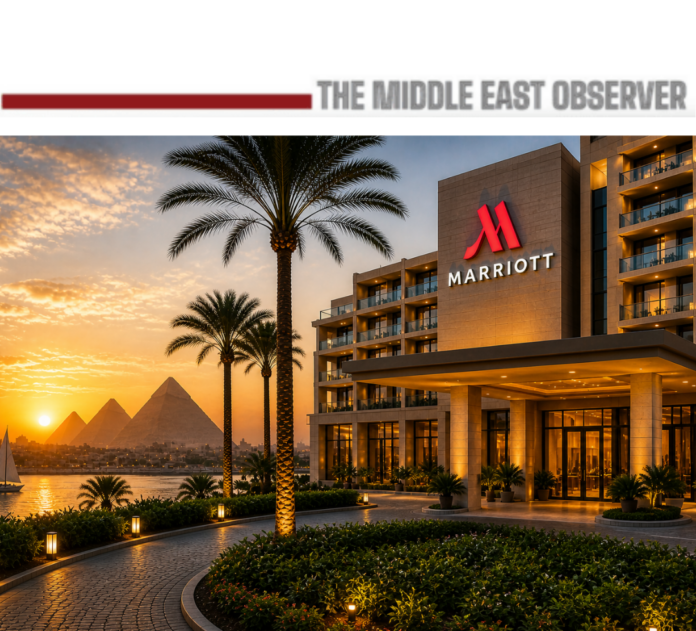
Marriott International is expanding its presence in Egypt through a growing pipeline of hotel developments, reflecting rising investor confidence in the country’s tourism sector, according to company statements reported in regional media and supported by official investment trends.
Shady Hassan, Vice President for Development in North Africa at Marriott, said the company is pursuing multiple new hotel projects across key destinations, including coastal and cultural tourism hubs, as part of its broader regional growth strategy.
The expansion is expected to focus on high-demand areas such as Egypt’s North Coast and locations surrounding major tourism landmarks, including the Grand Egyptian Museum, which is anticipated to drive increased visitor flows upon full opening.
The move aligns with Egypt’s wider efforts to increase hotel capacity and attract international hospitality investment, supported by infrastructure upgrades and new tourism projects. According to the Egyptian Ministry of Tourism and Antiquities, expanding accommodation capacity remains a key pillar of the country’s tourism growth strategy.
Global hotel operators have been scaling up their footprint in Egypt in recent years, targeting both leisure and cultural tourism segments, as visitor numbers recover and new destinations are developed.
Egypt’s appeal to international investors is underpinned by its strategic location, diversified tourism offering, and ongoing development of large-scale projects aimed at enhancing the visitor experience. Industry analysts note that sustained demand growth is encouraging long-term commitments from global hospitality brands.
As The Middle East Observer notes, Marriott’s expansion reflects a broader trend of renewed international investment in Egypt’s tourism infrastructure, where global operators are positioning early to capture future demand. The Middle East Observer highlights that the pace of hotel development will be critical in supporting Egypt’s ambitions to increase tourist arrivals while maintaining service quality and global competitiveness.