
Egypt must accelerate reforms to improve agricultural productivity, strengthen food security and manage mounting pressure on scarce natural resources as its population expands towards 160 million by 2050, according to a landmark review by the Organisation for Economic Co-operation and Development (OECD).
The report, Policies for the Future of Farming and Food in Egypt, offers one of the most comprehensive assessments of the country’s agricultural and food system in recent years, concluding that future policy should move beyond traditional support for staple crops and focus increasingly on innovation, nutrition, sustainability and resilience.
Agriculture remains a strategic pillar of the Egyptian economy, contributing approximately 14% of GDP and providing employment for around one-fifth of the workforce. Yet the OECD warns that demographic growth, climate pressures, water scarcity and food-import dependence are placing growing strain on the sector and threatening its long-term sustainability.
Population Growth and Food Imports Raise Pressure on Food Security
The report notes that Egypt’s population reached approximately 116.5 million in 2024 and is projected to approach 160 million by 2050, significantly increasing demand for food, water and agricultural resources.
While Egypt has successfully maintained broad food availability through subsidies, strategic grain reserves and public support programmes, the OECD argues that food security challenges are becoming increasingly complex. The country remains one of the world’s largest wheat importers and continues to depend heavily on international markets for key food commodities.
According to the report, Egypt recorded agro-food imports worth approximately $19bn in 2024, compared with exports of around $10bn, resulting in an agricultural trade deficit approaching $9bn.
The OECD’s concerns come despite a strong recent performance in agricultural exports. According to the Ministry of Agriculture and Land Reclamation, Egypt’s fresh agricultural exports rose 8.5% to a record $11.5bn in 2025, while export volumes increased 10.5% to 9.5m tonnes, up from 8.6m tonnes in 2024. Citrus fruits remained the country’s leading export crop at 2m tonnes, followed by potatoes at 1.3m tonnes, sweet potatoes at 387,000 tonnes, beans at 336,000 tonnes and onions at 288,000 tonnes.
Exports of grapes reached 191,000 tonnes, pomegranates 136,000 tonnes, mangoes 126,000 tonnes, tomatoes 68,000 tonnes and strawberries 64,000 tonnes. Fresh agricultural products accounted for approximately 24.5% of Egypt’s total exports in 2025.
The figures illustrate a key paradox identified by the OECD: Egypt is becoming an increasingly successful agricultural exporter while remaining heavily dependent on imported staple foods, particularly wheat.
The report also highlights a growing nutritional challenge. Despite extensive food-support programmes, including subsidised bread and ration-card schemes, roughly one-third of Egyptians experience some form of food insecurity or inadequate nutrition. At the same time, Egypt faces some of the world’s highest rates of overweight and obesity, creating what the OECD describes as a “double burden of malnutrition” that carries significant social and healthcare costs.
Water Scarcity Emerges as Agriculture’s Greatest Long-Term Challenge
The OECD identifies water scarcity as the most serious structural threat facing Egyptian agriculture.
With virtually all agricultural production dependent on Nile water resources, growing competition among agricultural, industrial and urban users is intensifying pressure on available supplies. Climate change, rising temperatures and environmental degradation are expected to compound these challenges over the coming decades.
The report warns that future agricultural growth cannot rely primarily on expanding water use or cultivated acreage. Instead, productivity gains must increasingly come from more efficient resource utilisation.
The OECD highlights concerns over soil salinity, land degradation, nutrient imbalances, excessive fertiliser use, weak enforcement of pesticide regulations and agricultural pollution, all of which threaten long-term productivity.
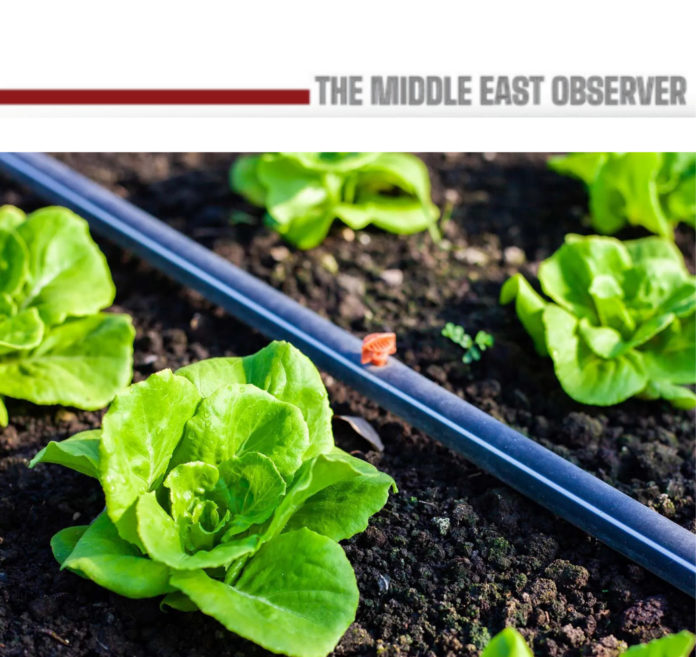
The organisation recommends accelerating the adoption of modern irrigation systems, improving groundwater management, reducing fertiliser misuse and strengthening environmental oversight across the agricultural sector.
The report also suggests that future land-reclamation projects should be accompanied by rigorous assessments of water efficiency and long-term sustainability to maximise economic returns from scarce natural resources.
Export Success Masks Structural Vulnerabilities
The report highlights the distinction between agricultural competitiveness and food security. While Egypt has emerged as one of the region’s leading exporters of fruit and vegetables, the OECD argues that export growth alone cannot eliminate vulnerabilities associated with food-import dependence, water scarcity and population growth.
Agriculture has become an increasingly important component of Egypt’s broader economic strategy. The government has identified the sector as one of five priority areas for private-sector investment and export growth under its economic development programme.
To support that objective, Egypt allocated EGP 144.8bn ($3.1bn) in investments to the agriculture and irrigation sectors during FY2025/26 and continued its flagship productive-sector financing initiative, providing EGP 90bn in financing facilities for sectors including agriculture.
Government projections envisage agricultural output rising to EGP 5.7trn by 2028/29, while net agricultural value added is expected to increase from EGP 2.6trn in FY2025/26 to EGP 4trn within four years.
The OECD views these investments as an opportunity to accelerate the transition towards higher productivity and more sustainable production systems. However, it argues that future public spending should increasingly prioritise innovation, research, water efficiency and technology adoption rather than relying primarily on production support measures.
Innovation and Governance Seen as Keys to Future Growth
While recognising Egypt’s substantial investments in agricultural infrastructure and land development, the OECD concludes that future productivity growth will depend increasingly on innovation rather than expansion.
The report calls for stronger agricultural research and development, enhanced extension services, wider adoption of digital technologies, improved seed varieties and greater investment in farmer training programmes.
A central recommendation is the creation of stronger food-system governance capable of aligning agricultural, nutritional, environmental and economic objectives. The OECD proposes a comprehensive review of existing government interventions across the food value chain, including the role of state-owned enterprises and public agencies, to improve transparency and policy effectiveness.
One of the report’s most significant recommendations is a review of government agencies, state-owned enterprises and market interventions operating throughout agricultural value chains. The OECD argues that greater transparency, clearer responsibilities and stronger coordination could improve policy effectiveness, reduce overlapping interventions and ensure that public resources generate stronger productivity and nutritional outcomes.
The organisation also urges policymakers to improve the quality and availability of data on agricultural expenditures, market interventions, nutritional outcomes and environmental performance to support evidence-based decision-making.
Over time, the OECD recommends gradually shifting public support away from market-distorting interventions and staple-crop subsidies towards investments in innovation, sustainable productivity, nutrition programmes and climate resilience.
Such reforms, the report argues, would help Egypt increase agricultural output while reducing pressure on public finances, water resources and the environment.
A Roadmap for the Next Agricultural Transformation
The OECD concludes that Egypt’s next agricultural transformation will be determined less by expanding cultivated land and more by improving productivity per hectare and per cubic metre of water. While the country has demonstrated an ability to expand exports and attract investment into agriculture, sustaining that success will require addressing deeper structural challenges linked to food security, resource scarcity and nutrition.
For Egypt, agriculture is no longer solely a rural-development or food-supply issue. It sits at the intersection of economic competitiveness, foreign-exchange generation, water security and social stability. The OECD’s central message is that future prosperity will depend not only on producing more food, but on producing it more efficiently, more sustainably and with greater resilience to the economic and climate shocks likely to shape the coming decades.
Related news:
Egypt, IFAD Expand $1.1bn Rural Development Partnership
Cultivated Wheat Area Jumps by 600,000 Feddans in 2025/2026 Season
Read also:
East African States Advance Joint Regional Satellite Initiative
MCIT Discusses Expanded Cloud and AI Investments in Egypt With AWS