
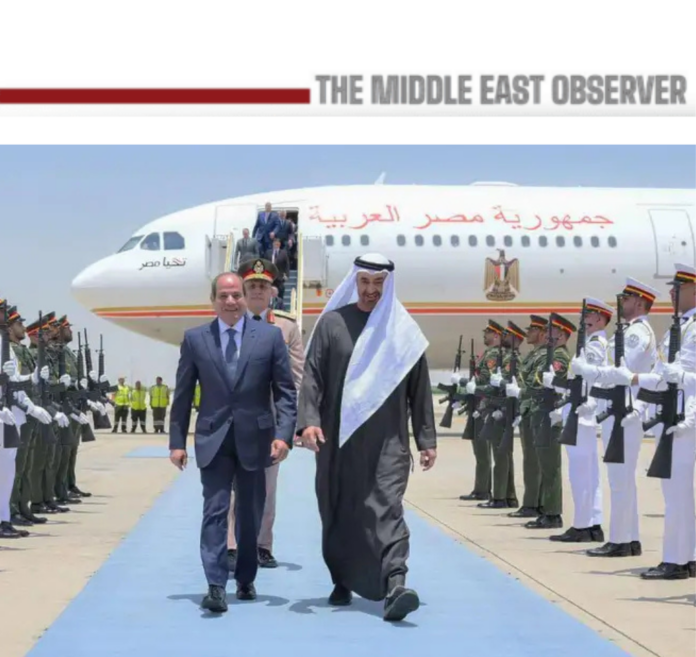
In a region increasingly defined by conflict, polarization and shifting alliances, Egypt has carved out a distinctive role for itself: that of a steady, pragmatic mediator. While military confrontations and diplomatic breakdowns have dominated headlines across the Middle East, Cairo has consistently chosen restraint, dialogue and regional stability over confrontation.
Over the past several years, Egypt’s leadership has demonstrated a strategic commitment to avoiding entanglement in conflicts that do not directly serve the country’s national interests. Rather than becoming another participant in the region’s many rivalries, Cairo has positioned itself as a bridge between opposing sides, preserving its credibility and strengthening its influence.
Nowhere was this approach more evident than during the devastating war in Gaza that followed the events of October 7. As the conflict dragged on for nearly two years, Egypt emerged as one of the few actors capable of maintaining communication with all parties involved. Cairo hosted countless rounds of negotiations, bringing together representatives from different sides in an effort to prevent further escalation and secure humanitarian relief.
Egypt is committed to delivering aid to Gaza
Throughout the crisis, Egypt remained committed to delivering aid to Gaza despite enormous political and logistical challenges. At a time when emotions often overshadowed diplomacy, Egyptian officials repeatedly emphasized the importance of dialogue, de-escalation and the protection of civilians. Just as importantly, the Egyptian leadership resisted mounting pressures and provocations that could have drawn the country into a broader confrontation.
This patient diplomacy eventually contributed to efforts that culminated in a ceasefire agreement and prisoner exchanges, reinforcing Egypt’s reputation as an indispensable regional intermediary.
A similar strategy has characterized Cairo’s response to the growing tensions involving Iran, the United States and Israel. Rather than aligning itself fully with one camp or another, Egypt has sought to maintain balanced relations while advocating for regional security and political solutions.
Cairo has repeatedly voiced its opposition to any actions that could threaten the stability of Gulf states, recognizing that the security of the Gulf remains closely tied to the economic and strategic wellbeing of the wider Arab world. At the same time, Egyptian diplomacy has encouraged dialogue over military escalation, warning of the potentially catastrophic consequences of a wider regional conflict.
Egypt’s balanced posture enhanced its status as a regional power
Alongside countries such as Pakistan, Egypt has also played the role of a trusted adviser and intermediary, using its extensive diplomatic networks and decades of regional experience to encourage restraint among rival powers.
This approach reflects a broader transformation in Egypt’s foreign policy. Rather than seeking influence through military projection, Cairo increasingly derives its regional standing from its ability to facilitate communication, reduce tensions and build consensus.
In an era when diplomatic credibility has become a scarce commodity, Egypt’s balanced posture has enhanced its status as a regional power whose voice carries weight far beyond its borders. The country’s influence may not always dominate headlines, but its quiet diplomacy continues to shape outcomes in some of the Middle East’s most consequential crises.
As conflicts persist and geopolitical fault lines deepen, Egypt’s greatest strength may lie not in choosing sides, but in ensuring that dialogue remains possible when others have stopped talking
Related news:
Read also: