
In the 1970s, Egyptians watched the construction of the 6th of October Bridge — a massive concrete artery linking Cairo and Giza that would go on to transform mobility in one of the world’s most densely populated capitals.
A decade later came another major leap: the first line of the Cairo Metro, developed with French expertise and stretching from Helwan to El Marg through the heart of the capital. What initially appeared to many as an ambitious infrastructure experiment eventually evolved into the backbone of daily transportation for millions of Egyptians.
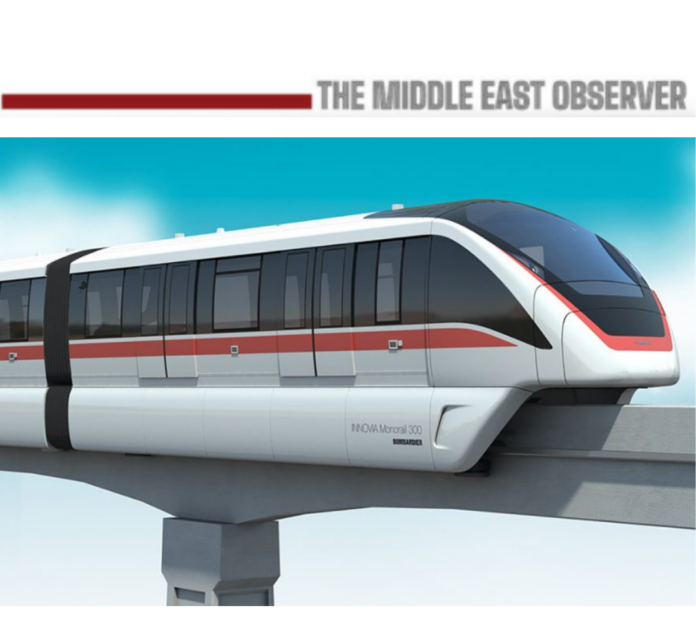
Now, in 2026, Egypt is once again wagering on a new chapter in urban mass transit: the monorail.
The sleek, driverless trains gliding above Cairo’s highways represent more than a transportation project alone. For supporters, they symbolize a state determined to modernize its infrastructure despite mounting economic pressures. For critics, however, the project raises difficult questions regarding spending priorities in a country still grappling with inflation, debt pressures and the lingering economic repercussions that followed the 2011 uprising.
Earlier this month, Egypt launched the first operational phase of the East Nile Monorail connecting eastern Cairo with the New Administrative Capital, part of a broader network estimated at roughly $4.5 billion that will eventually link Greater Cairo with both the administrative capital and the expanding districts of 6th of October City.
According to Egypt’s Ministry of Transport, the eastern line extends more than 56 kilometers and includes 22 stations. Authorities say the fully electric system is designed to reduce traffic congestion, lower emissions and provide a faster alternative to Cairo’s chronic gridlock.
Government officials and transportation advocates insist the project should not be evaluated solely through the lens of immediate financial profitability.
“Public service projects are not always measured by direct financial return,” remains a familiar argument repeated by pro-government commentators and transport specialists alike. Supporters frequently draw parallels with earlier debates surrounding the Cairo Metro, which also faced skepticism over its costs and long-term feasibility before ultimately becoming indispensable to daily life in the Egyptian capital.
Indeed, few Egyptians today can imagine Cairo functioning without the metro system that now carries millions of passengers every day.
The monorail project arrives, however, at a far more challenging economic moment.
Egypt has endured years of currency devaluations, rising living costs and increasing public debt burdens. Critics argue that multibillion-dollar mega projects risk placing additional strain on future generations at a time when many public services and household budgets remain under pressure.
Across social media platforms and online forums, some Egyptians question whether monorail systems offer sufficient passenger capacity and affordability compared with expanding conventional metro lines or investing more heavily in buses, roads and pedestrian infrastructure. Others dismiss the project as an expensive showcase closely tied to promoting the New Administrative Capital.
Supporters counter that nearly every major transportation leap in modern Egypt initially faced criticism.
The 6th of October Bridge was once attacked over its enormous cost. The Cairo Metro faced widespread doubts regarding feasibility and necessity. Both later evolved into essential pillars of Egypt’s urban infrastructure network.
Transport specialists also note that Greater Cairo’s metropolitan population — now exceeding 20 million residents — urgently requires diversified and integrated transit systems capable of reducing pressure on overcrowded roads and existing public transportation networks. The monorail is expected to integrate with Cairo’s broader metro and light rail systems while eventually serving tens of thousands of passengers per hour.
Whether Egypt’s monorail ultimately emerges as a transformative transportation success or an overambitious economic gamble may take years to determine.
Yet, much like the bridge builders of the 1970s and the metro engineers of the 1980s, Egypt is once again placing a strategic bet that modern infrastructure can reshape not only how its citizens move, but also how the country envisions its economic future and urban development trajectory in the decades ahead.