
Egypt is pursuing a dual-track energy strategy aimed at restoring domestic natural gas production growth while strengthening its position as the Eastern Mediterranean’s leading gas processing and export hub.
The Ministry of Petroleum is targeting an additional 120 million cubic feet of natural gas per day (mmcf/d) by the end of June through the development and connection of nine new wells across the Mediterranean Sea, the Nile Delta and the Western Desert. The projects, backed by approximately $100 million in investment, form part of broader efforts to offset natural production declines and narrow the gap between domestic supply and rising energy demand.
According to government officials, U.S.-based Apache Corporation is preparing to connect three new wells in the Jumana field in the Western Desert, adding an estimated 45 mmcf/d. Italy’s Eni is expected to contribute around 40 mmcf/d from the Nidoco-2 deepwater well in the Mediterranean, while UK’s Cairn Petroleum plans to add 20 mmcf/d from the Badr-15 well in the Western Desert. Additional onshore developments by UAE-based Dana Gas, UK’s Capricorn Energy and Tunisia’s HBS are expected to contribute a further 15 mmcf/d.
The new developments come as Egypt seeks to reverse a decline in gas production that has pushed output below four billion cubic feet per day, while natural depletion is estimated to reduce production by roughly 100 million cubic feet each month. To accelerate recovery, Cairo has introduced a package of incentives for international operators, including improved gas purchase prices and greater flexibility for companies to recover outstanding receivables through export revenues.
Egypt relies on imported liquefied natural gas (LNG) cargoes
The production drive also comes as Egypt continues to rely on imported liquefied natural gas (LNG) cargoes to bridge seasonal supply shortages, particularly during periods of peak summer electricity demand. The situation highlights Cairo’s challenge of balancing immediate energy-security requirements with its longer-term ambition of restoring its position as a major regional gas exporter.
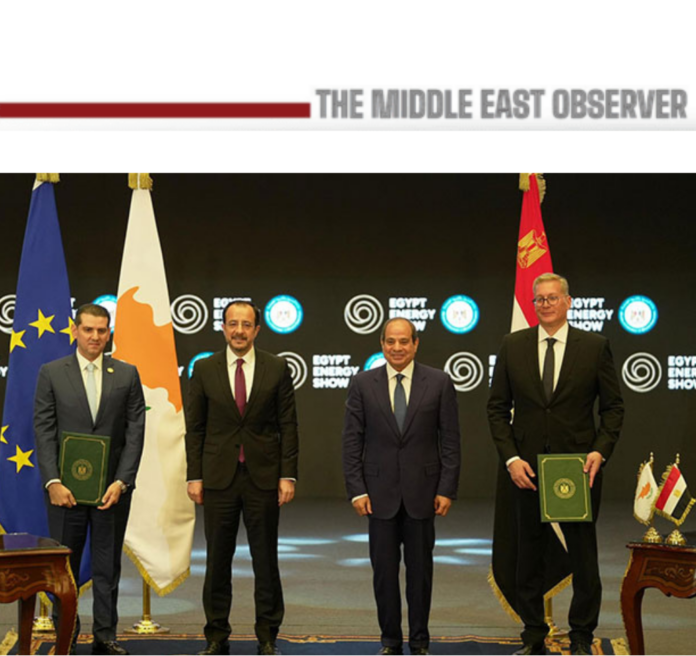
At the same time, Egypt is deepening its role as a regional gas transit and liquefaction centre through a series of agreements involving Cypriot offshore gas discoveries.
Government officials revealed that Egypt, alongside QatarEnergy and ExxonMobil, is advancing plans to transport gas from Cyprus’ Pegasus and Glaucus offshore fields to Egyptian facilities for processing, liquefaction and re-export to international markets. The two fields are estimated to contain approximately seven trillion cubic feet of recoverable gas reserves, with production expected to reach nearly one billion cubic feet per day by 2030.
Under the proposed framework, gas would be transported via subsea pipelines to Egypt, processed through existing infrastructure such as the Zohr and Burullus facilities, before being liquefied at the country’s LNG export terminals in Idku and Damietta.
Officials said studies conducted by Cyprus and the field developers concluded that utilizing Egypt’s existing infrastructure represented the fastest and most cost-effective route to commercial production compared with building standalone processing and liquefaction facilities in Cyprus or deploying floating LNG solutions offshore.
The strategy highlights one of Egypt’s key competitive advantages in the Eastern Mediterranean. The country possesses a gas transmission network capable of handling around nine billion cubic feet per day, surplus processing capacity exceeding two billion cubic feet daily, and LNG export facilities with a combined capacity of approximately 1.9 billion cubic feet per day.
The latest agreement follows a series of regional gas partnerships. Earlier this year, Cyprus agreed to sell production from the Aphrodite gas field to Egypt under a 15-year arrangement, while separate agreements are progressing to connect the Cronos field to Egyptian processing facilities. Cronos, operated by Eni with participation from TotalEnergies, holds estimated reserves of 2.5 trillion cubic feet and is expected to begin supplying Egypt from 2027 at an initial rate of around 500 million cubic feet per day.
By the end of 2028, Egypt expects to receive approximately 1.3 billion cubic feet of Cypriot gas per day from the Aphrodite and Cronos fields alone, with volumes either re-exported through Egypt’s LNG terminals or directed into the domestic gas grid.
Europe reduces dependence on traditional suppliers
The developments come at a time when Europe continues to diversify its energy supply sources and reduce dependence on traditional suppliers, increasing the strategic importance of Eastern Mediterranean gas resources and export infrastructure. This has heightened competition among regional players seeking to position themselves as key gateways for gas flows to European and global markets.
Beyond strengthening energy security, Egypt stands to generate additional foreign-currency revenues through pipeline transit fees, gas processing charges, liquefaction services and export-related activities. The ability to monetize existing infrastructure offers Cairo a competitive advantage that few countries in the region can currently replicate.
Prime Minister Mostafa Madbouly has previously indicated that domestic gas production could rise to 6.6 billion cubic feet per day over the coming years, supported by new discoveries, accelerated field development and expanding regional energy cooperation.
The strategy reflects a broader effort to transform Egypt’s energy sector from a domestic supply story into a regional infrastructure business. By combining rising local production with imported gas from neighbouring producers, Cairo is positioning its LNG plants, pipelines and processing facilities as critical links in the Eastern Mediterranean energy chain. Success could help restore export revenues, strengthen foreign-currency inflows and reinforce Egypt’s role as one of the region’s most important energy gateways as it seeks to return to net gas exports by 2027.
Related news:
Egypt Signs $208 Million Western Desert Agreement to Boost Oil and Gas Output
Egypt and Syria Deepen Cooperation on Gas and Infrastructure
Read also: