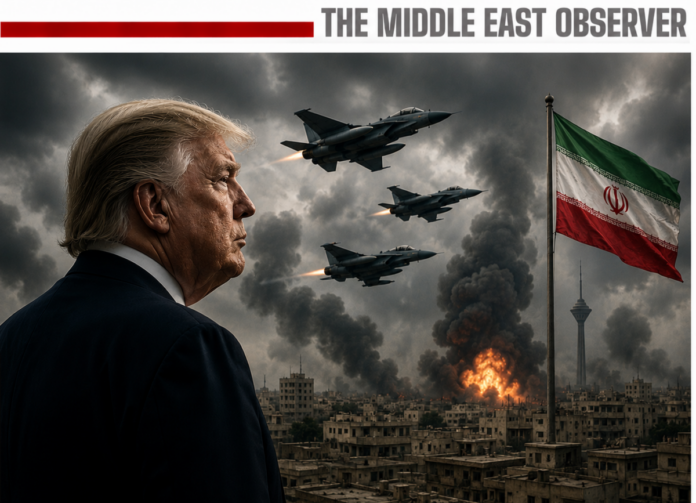
Three months ago, the picture appeared straightforward. The United States had demonstrated overwhelming military superiority. Iranian facilities were damaged, Washington projected strength, and President Donald Trump declared victory with characteristic confidence.
Yet wars are rarely judged by what happens on the battlefield alone. They are ultimately measured by the political realities that emerge once the smoke clears.
That is where Trump’s Iran strategy faces its greatest test.
Despite the military blows inflicted on the Islamic Republic, the pillars of Iranian power remain largely intact. The country’s theocratic leadership is still in place. Tehran has not made the nuclear concessions Washington hoped to extract through pressure. Most importantly, Iran continues to possess the ability to disrupt one of the world’s most critical economic arteries: the Strait of Hormuz.
This is the uncomfortable reality confronting the White House. America may have won the military confrontation, but Iran appears determined not to lose the strategic one.
The conflict has exposed a truth often overlooked in discussions of power. A weaker nation does not necessarily need to defeat a superpower militarily to claim success. Sometimes it merely needs to survive, absorb the blows, and retain enough leverage to shape its adversary’s choices.
Iran seems to understand this principle well.
By demonstrating its capacity to threaten the flow of nearly a fifth of global oil and gas supplies, Tehran reminded the world that influence is not measured solely in fighter jets, aircraft carriers or precision-guided missiles. Economic disruption can be as potent a weapon as military force, particularly in an interconnected global economy already vulnerable to geopolitical shocks.
For America’s Gulf allies, the implications are equally troubling. The region has once again been reminded that even a limited confrontation with Iran carries enormous economic risks. Higher shipping costs, market uncertainty and concerns over energy security have affected countries that were never direct participants in the conflict.
In that sense, Iran has succeeded in broadening the costs of the confrontation far beyond its own borders.
For Trump, the political stakes are particularly high. Few modern politicians have been more invested in the language of winning and losing. Throughout his career, he has portrayed himself as a dealmaker who delivers victories and exposes weakness in his opponents.
Yet the Iran crisis presents a more complicated narrative.
The commander-in-chief of the world’s most powerful military now finds himself confronting a regional power that continues to behave as though it holds significant cards. Tehran’s refusal to concede on key issues has made it increasingly difficult for Washington to transform tactical military achievements into a clear geopolitical triumph.
This does not mean the final chapter has been written. Diplomacy could still produce an agreement that allows Trump to present the crisis as a strategic success. Iran’s economic vulnerabilities remain profound, and sustained pressure may yet influence its calculations.
But time is not necessarily working in Washington’s favour.
The longer the standoff continues without meaningful concessions from Tehran, the harder it becomes to sustain the narrative of decisive victory. Military power can destroy targets. It can deter adversaries. It can reshape calculations.
What it cannot always do is dictate political outcomes.
Trump may have won nearly every battle against Iran. The more important question now is whether history will conclude that he lost the war that mattered most: the struggle to translate military dominance into lasting strategic success.