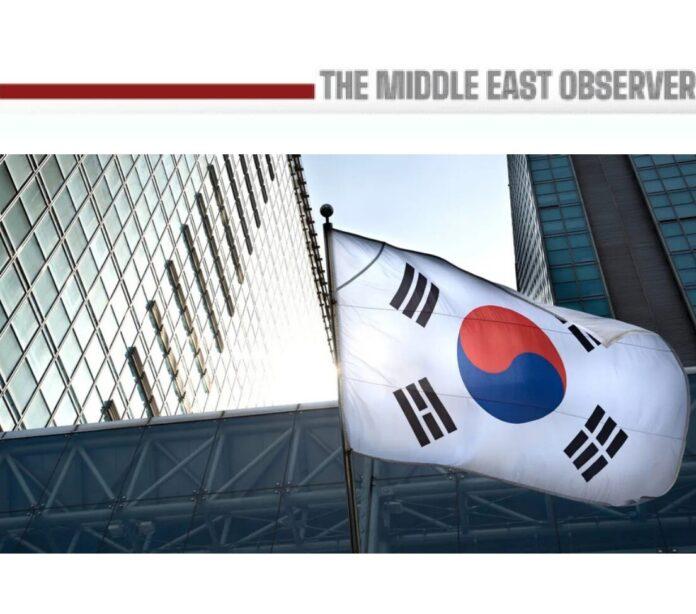
SEOUL — South Korea has imposed a temporary five-month ban on naphtha exports, effective from midnight Thursday, as authorities move to stabilise domestic supply chains amid disruptions linked to tensions in the Middle East. At the same time, Seoul is exploring alternative sourcing options, including the potential resumption of imports of Russian crude oil and naphtha, to mitigate growing geopolitical risks.
The measure, announced by the Ministry of Trade, Industry and Energy, requires domestic refiners to prioritise local demand by redirecting export volumes to the domestic market. It also grants the government expanded authority to regulate production and allocate supply of naphtha, a critical petrochemical feedstock used in semiconductors, automotive manufacturing, plastics and a wide range of consumer goods.
The decision reflects South Korea’s structural dependence on imported energy inputs. The country sources roughly 45% of its naphtha demand from imports, with approximately 77% originating from the Middle East—leaving supply chains particularly vulnerable to regional instability.
Data from the ministry and the Korea National Oil Corporation shows that around 11% of domestically produced naphtha is typically exported. Under the new directive, these volumes will be redirected to domestic users to stabilise supply and support industrial continuity.
Authorities confirmed that the export restriction will remain in place for five months, with priority allocation directed toward essential sectors, including healthcare, core manufacturing industries and key consumer goods.
Alongside these measures, the government is assessing alternative procurement strategies. Officials have engaged with domestic companies to evaluate the potential resumption of imports of Russian crude oil and naphtha, signalling a possible recalibration of energy sourcing policy following the suspension of trade with Moscow in 2022.
The tightening supply environment is already affecting industrial operations. LG Chem announced earlier this week that it would temporarily suspend operations at one of its domestic naphtha crackers due to feedstock shortages. The company also acknowledged government support in facilitating procurement and financing arrangements for alternative supplies, including Russian-origin naphtha.
In parallel, authorities are reviewing whether to extend export controls beyond naphtha to include downstream petrochemical products. Officials indicated that proposals to prioritise domestic allocation of materials such as ethylene and synthetic resins are under active consideration.
Speaking at an industry roundtable, a senior ministry official said the government is “giving very serious consideration” to expanding export restrictions, adding that decisions would be taken swiftly in coordination with industry stakeholders.
The policy shift underscores the increasing pressure on energy-importing economies to secure critical industrial inputs as geopolitical tensions continue to disrupt global supply chains, particularly in energy-dependent sectors.