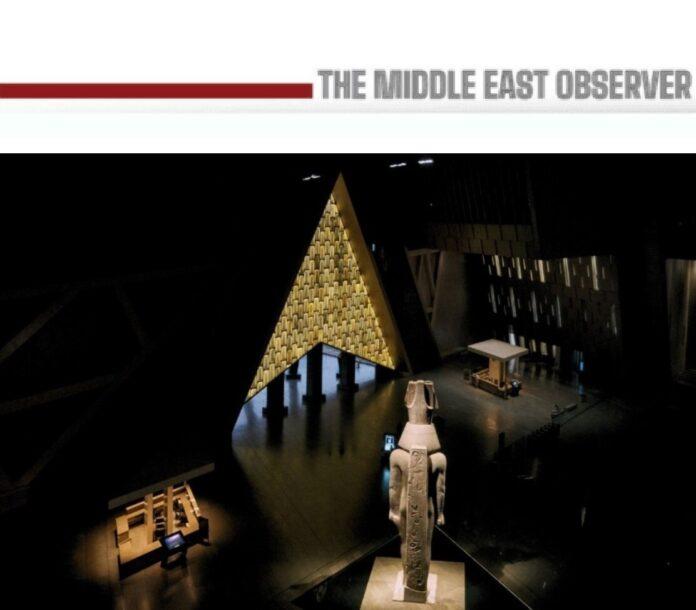
CAIRO — The Grand Egyptian Museum has been named among TIME magazine’s “World’s Greatest Places” for 2026, marking a major international endorsement of Egypt’s flagship cultural project following its official opening on 1 November.
The listing reflects growing global recognition of the museum as a landmark institution, both for its architectural scale and for its role in preserving and presenting one of the world’s most significant archaeological legacies. Situated on the Giza Plateau with direct sightlines to the Giza Pyramids, the museum spans more than five million square feet, making it the largest archaeological museum in the world dedicated to a single civilisation.
Designed as more than a traditional exhibition space, the museum integrates advanced conservation infrastructure, including climate-controlled galleries capable of safeguarding approximately 100,000 artefacts. The development is widely viewed as strengthening Egypt’s position in global cultural discourse, particularly regarding the preservation and potential repatriation of antiquities.
Among its key attractions is the complete collection of artefacts from the tomb of Tutankhamun, with more than 5,000 items displayed together for the first time in a dedicated exhibition wing. The museum also features a monumental entrance atrium housing the 3,200-year-old statue of Ramses II, positioned beneath a vast glass canopy designed to maximise natural light.
Architecturally, the museum employs a transparent façade and a grand ascending staircase, creating a visual and spatial dialogue between the modern structure and the surrounding ancient landscape. This design approach reinforces the site’s dual identity as both a contemporary cultural institution and a continuation of Egypt’s historical narrative.
The recognition comes amid a strong recovery in Egypt’s tourism sector. The country recorded more than 19 million visitors in 2025, with authorities targeting 30 million annual tourists by 2030. The Grand Egyptian Museum is expected to serve as a central pillar in achieving this objective, offering visitors an integrated cultural experience that situates Egypt’s most iconic artefacts within their original geographical and historical context.
By securing a place on TIME’s 2026 list, the museum further consolidates its status as a global cultural destination, positioning Egypt at the forefront of heritage preservation and experiential tourism in the years ahead.