
CAIRO — Egypt is accelerating efforts to integrate artificial intelligence into national cybersecurity and digital-governance frameworks, placing AI Security at the center of a broader strategy aimed at strengthening digital sovereignty, protecting critical infrastructure and enhancing national competitiveness in emerging technologies.
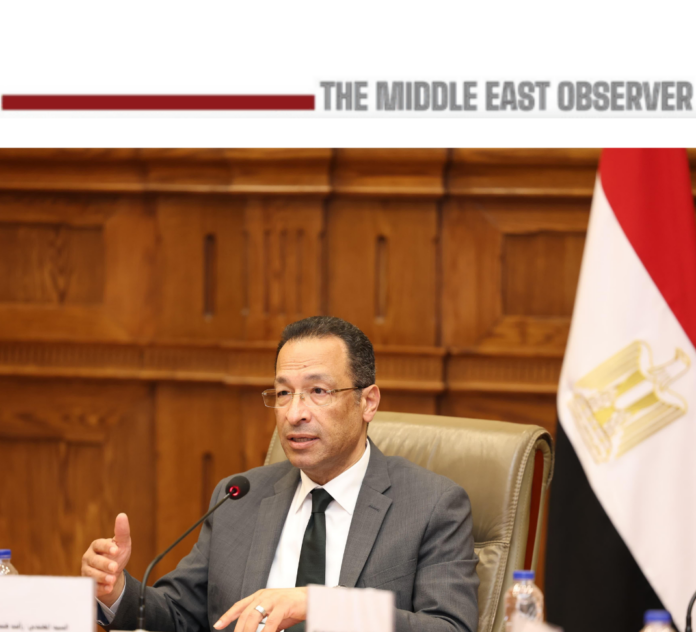
Speaking before the Senate’s Defense and National Security Committee, Acting Minister of Communications and Information Technology Raafat Hindi said artificial intelligence has evolved beyond a technological innovation into a strategic enabler influencing national security, economic development and state capabilities. He stressed that the responsible deployment of AI technologies has become increasingly important as governments seek to navigate a rapidly changing digital landscape.
The remarks come amid an intensifying global race to develop artificial intelligence capabilities. International industry forecasts estimate that the global AI market could exceed $1 trillion by the early 2030s, while cybersecurity spending is projected to surpass $300 billion annually within the next few years as governments and businesses respond to increasingly sophisticated digital threats.
Building Egypt’s AI Ecosystem
Hindi highlighted a series of milestones that have shaped Egypt’s artificial intelligence agenda over recent years. These include the establishment of the National Council for Artificial Intelligence in 2019, the launch of the country’s first National AI Strategy in 2021, the Responsible AI Charter in 2023 and the second edition of the National AI Strategy in 2025.
The updated strategy is built around six pillars: governance, technology, data, infrastructure, ecosystem development and skills enhancement. Together, these pillars are intended to support both innovation and regulatory readiness as AI adoption expands across the public and private sectors.
Among the initiatives cited was the Applied Innovation Center, which develops AI-driven solutions to address societal and economic challenges. The center has also developed Karnak, a sovereign Arabic-language large language model designed to understand local linguistic and cultural contexts while enabling Egyptian startups, government entities and technology companies to build applications using locally relevant datasets and Arabic-language content.
The ministry also established the Egyptian Center for Responsible Artificial Intelligence at the end of 2025 to support the safe deployment of AI technologies within government institutions and develop governance models that encourage innovation while mitigating risks.
Cybersecurity Takes Center Stage
A key theme of the discussion was the growing role of artificial intelligence in cybersecurity.
Hindi described cybersecurity as an integral component of national security and noted that authorities are increasingly leveraging AI technologies to improve threat detection, incident response and digital resilience. He pointed to ongoing efforts to strengthen the capabilities of Egypt’s Computer Emergency Readiness Team (EG-CERT), which operates under the National Telecom Regulatory Authority.
The government is currently implementing the second edition of the National Cybersecurity Strategy while simultaneously preparing a third version designed to address emerging technological developments and increasingly sophisticated cyber threats.
The emphasis reflects a broader global trend. As governments, businesses and critical infrastructure operators become more reliant on digital systems, AI-powered cyber-defense tools are increasingly viewed as essential for detecting threats at scale, analyzing attack patterns and responding to incidents in real time.
Regional Competition for AI Leadership
Egypt’s ambitions are unfolding amid intense regional competition. Gulf countries, particularly the United Arab Emirates, Saudi Arabia and Qatar, have committed billions of dollars to artificial intelligence, cloud computing, advanced semiconductor infrastructure and national data-center ecosystems as part of broader economic diversification strategies.
Against this backdrop, Egypt’s advantage lies in its large talent pool, expanding digital infrastructure, strategic geographic location and growing ecosystem of technology startups. Government officials increasingly view AI adoption not only as a technological objective but also as a tool for enhancing productivity, attracting investment and strengthening the country’s role as a digital gateway connecting Africa, the Middle East and Europe.
According to government data, Egypt has advanced 60 places over six years in the Government AI Readiness Index, reaching first place in Africa, third in the Arab world and 51st globally.
Data Centers and Digital Sovereignty
Beyond cybersecurity, officials are seeking to position Egypt within the next generation of advanced technologies.
Hindi revealed that the National Council for Artificial Intelligence has been expanded to become the National Council for Artificial Intelligence, Quantum Computing and Emerging Technologies. The body is currently preparing a national quantum-computing strategy, reflecting growing recognition of the transformative potential of future technologies.
At the same time, the Ministry of Communications and Information Technology is preparing a strategy to attract investments in data centers, a sector increasingly viewed as a cornerstone of digital sovereignty, cloud services and AI development. Governments across the Middle East are investing heavily in data-center infrastructure as they compete to host regional cloud platforms, AI training facilities and digital services that underpin future economic growth.
For Egypt, attracting such investments could create high-value jobs, support technology exports and reinforce its position within regional digital supply chains.
Balancing Opportunity and Risk
The government continues to expand programs aimed at developing digital skills in artificial intelligence and cybersecurity across all governorates and age groups.
Such investments are increasingly important as countries compete for technology talent and seek to build domestic innovation ecosystems capable of supporting long-term economic growth. Egypt has also achieved a top-tier ranking in the International Telecommunication Union’s Global Cybersecurity Index after attaining full marks across the assessment framework.
While opportunities remain substantial, challenges persist. The rapid pace of technological change requires continuous investment in skills, regulation and infrastructure. Policymakers must also balance innovation with privacy, security and ethical considerations as AI adoption accelerates.
Looking ahead, Egypt’s strategy suggests that artificial intelligence will increasingly be treated not merely as a technology sector but as a strategic national capability. In the emerging digital economy, countries that control data, computing infrastructure, cybersecurity capabilities and AI innovation ecosystems are likely to hold a decisive advantage in attracting investment and shaping future economic competitiveness. Egypt’s next challenge will be translating its policy ambitions into scalable platforms, commercial applications and digital infrastructure capable of competing in an increasingly crowded regional marketplace.