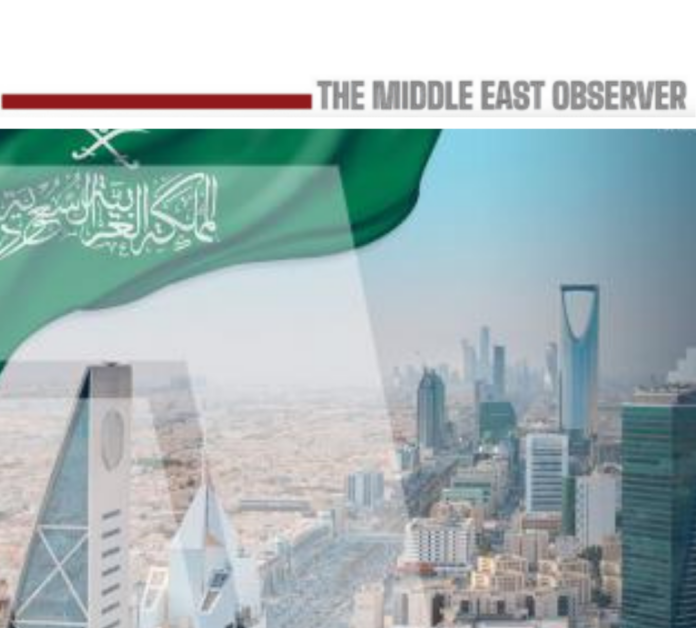
Saudi Arabia has approved new executive regulations imposing annual fees on vacant residential and commercial properties, marking one of the Kingdom’s most significant recent interventions aimed at increasing housing supply, improving urban asset utilization, and stabilizing the rapidly evolving real estate market.
The regulations, approved by the Ministry of Municipalities and Housing, form part of a broader restructuring of the Saudi property sector under Vision 2030, as authorities increasingly seek to balance investor-driven expansion with affordability, housing accessibility, and long-term urban sustainability.
Under the new framework, annual fees of up to 5% may be imposed on buildings deemed vacant within designated urban zones. Authorities define vacancy as a property remaining unused for six months—whether continuously or intermittently—during the reference year. Fee assessments will be linked to estimated rental values and prevailing market conditions.
Saudi officials stated that implementation will initially target cities and geographic areas experiencing elevated vacancy levels, affordability pressures, or significant supply-demand imbalances. The Ministry confirmed that specific locations subject to the regulations will be announced later based on indicators monitored by the Real Estate General Authority (REGA).
The reforms come amid a profound transformation underway across Saudi Arabia’s urban economy, particularly in Riyadh, which has emerged as the centerpiece of the Kingdom’s diversification strategy.
Driven by Vision 2030 megaprojects, regional headquarters relocation programs, tourism expansion, and accelerating private-sector growth, Riyadh has witnessed exceptional demand growth in both residential and commercial real estate over recent years.
Saudi Arabia’s Regional Headquarters (RHQ) initiative has become one of the strongest drivers behind the capital’s urban expansion. The program, designed to encourage multinational corporations to relocate regional operations to the Kingdom, has significantly increased demand for office space, premium housing, hospitality services, and supporting infrastructure.
According to official and market estimates, more than 700 multinational companies had established regional headquarters in Riyadh by early 2026, surpassing the Kingdom’s original Vision 2030 target of attracting 500 firms. The influx of corporations, expatriate professionals, and investment activity contributed to strong upward pressure on both residential and commercial property prices.
At the same time, rapid urban expansion intensified affordability concerns, particularly among middle-income households and younger Saudi families seeking homeownership in major urban centers.
Saudi authorities have increasingly responded with structural market reforms designed not to suppress investment activity, but rather to improve market efficiency and accelerate the circulation of underutilized urban assets.
Recent official data suggest the Saudi property market may already be entering a corrective phase following several years of rapid appreciation.
According to data released by the General Authority for Statistics (GASTAT), Saudi Arabia’s real estate price index declined by 1.6% year-on-year during the first quarter of 2026. Residential real estate prices fell by 3.6%, driven largely by a 3.9% decline in residential land prices.
Riyadh recorded one of the Kingdom’s sharpest regional corrections, with property prices in the capital declining by 4.4% during the same period, reflecting growing evidence that earlier state interventions—including white land fees, housing expansion programs, and regulatory reforms—are beginning to reshape supply dynamics.
Officials continue to stress that the objective is not to undermine the real estate sector, which remains central to Saudi Arabia’s diversification strategy, but to establish a more sustainable balance between investment growth and housing accessibility.
The reforms also intersect with Saudi Arabia’s broader demographic and social objectives.
Vision 2030 aims to increase Saudi family homeownership rates to 70% by the end of the decade, compared with approximately 47% in 2016. Official indicators show significant progress already achieved, with Saudi homeownership rates reaching around 66.24% in 2026.
Housing affordability has consequently become an increasingly important policy priority as Saudi Arabia’s young population expands and urbanization accelerates.
Authorities increasingly view unused residential inventory as a structural inefficiency within a market simultaneously experiencing strong demand growth and rising urban costs. By incentivizing owners to lease, develop, or operationalize vacant properties, policymakers aim to expand effective housing supply without relying exclusively on lengthy new construction cycles.
The Kingdom is simultaneously pursuing one of the region’s largest housing and urban development pipelines, including major residential projects linked to Riyadh’s expansion strategy and giga-project developments under Vision 2030. Authorities hope that combining large-scale construction with stronger market regulation will produce a more balanced and sustainable long-term urban growth model.
The regulations are expected to affect commercial property markets as well.
Developers and investors holding office towers, retail assets, or mixed-use developments for long-term speculative appreciation may face increasing incentives to activate idle assets more rapidly. Analysts believe this could gradually improve occupancy levels and increase economic utilization across expanding urban districts, particularly within Riyadh’s growing business corridors.
The policy also reflects Saudi Arabia’s broader shift toward data-driven urban governance and more institutionalized market management. Similar vacancy-related measures have previously been introduced in global markets such as Singapore and Vancouver to discourage long-term property hoarding and support housing availability.
For Saudi Arabia, however, the reforms carry wider economic significance. Real estate remains central to Vision 2030’s diversification strategy, supporting tourism, infrastructure development, logistics growth, financial-sector expansion, and foreign direct investment attraction.
As The Middle East Observer notes, the vacant property regulations signal that Saudi Arabia is entering a more mature and actively managed phase of urban-economic governance—one in which the Kingdom’s long-term competitiveness will increasingly depend not only on the scale of construction and investment, but also on how efficiently, sustainably, and inclusively its cities function amid one of the world’s largest ongoing economic transformation programs.
The reforms further reflect the Saudi government’s increasingly effective management of the real estate sector’s rapid expansion. Following years of strong price growth and mounting pressure on housing and commercial assets, authorities have gradually moved to contain inflationary pressures through a combination of regulatory interventions, supply expansion programs, and market-balancing measures designed to preserve both investor confidence and social affordability.
With the latest vacant property regulations, Saudi Arabia now appears to be entering a new phase focused on maximizing the economic productivity and utilization of existing real estate assets, improving market circulation, and ensuring that urban expansion continues under a controlled and sustainable growth framework. By maintaining sufficient supply, reducing speculative inefficiencies, and limiting excessive concentration of capital within real estate, policymakers aim to contain broader inflationary pressures while enabling greater investment diversification toward other strategic sectors prioritized under Vision 2030, including industry, technology, logistics, tourism, and advanced manufacturing.
In this context, the Kingdom’s evolving real estate strategy increasingly reflects a broader state-led economic model centered on managed growth, optimized asset allocation, fiscal efficiency, and economies of scale—positioning the property sector not merely as a driver of expansion, but as a calibrated strategic instrument supporting Saudi Arabia’s wider long-term economic transformation agenda and Riyadh’s emergence as a globally competitive business and investment hub.