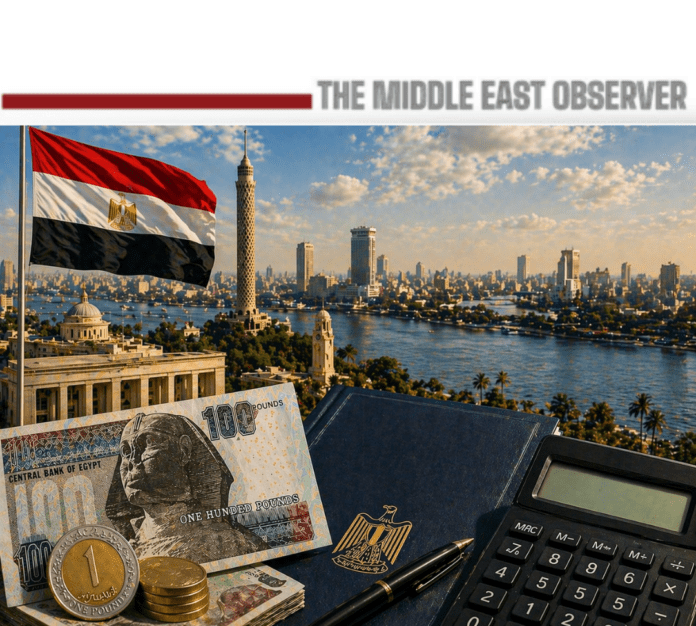
Cairo — Egypt has set an average exchange rate assumption of EGP 47 per US dollar in its draft FY 2026/27 budget, as authorities seek to anchor fiscal planning amid continued currency volatility, Finance Minister Ahmed Kouchouk told parliament.
The announcement, delivered during the government’s budget presentation to the House of Representatives, comes as the pound currently trades near EGP 52 per dollar, after briefly touching historic lows above EGP 54.6 following recent regional disruptions.
According to official estimates, the government is targeting real GDP growth of 5.4%, alongside a reduction in inflation to around 9.3% and a projected nominal GDP of EGP 24.5 trillion. Authorities are also aiming for a primary surplus of 5% of GDP and a budget deficit of 4.9%, as part of efforts to strengthen fiscal sustainability and reduce public debt levels.
During the same parliamentary session, officials outlined a more conservative scenario should geopolitical tensions persist. Ahmed Rostom indicated that growth could moderate to 5.2% under continued regional and global uncertainty, reflecting a cautious medium-term outlook.
The government also highlighted increased fiscal allocations in response to external pressures. Since early March, approximately EGP 135.6 billion has been directed toward priority sectors, including EGP 90.6 billion for energy, alongside additional funding for healthcare and essential goods, underscoring the state’s capacity to respond to crisis conditions.
On the fiscal side, the budget targets EGP 4 trillion in revenues and EGP 5.1 trillion in expenditures, with a focus on balancing consolidation with social protection. Significant allocations include EGP 832 billion for subsidies and social programmes, EGP 821 billion for public sector wages, and EGP 120 billion for energy support, alongside targeted funding for exports, tourism, and industrial development.
Policy priorities also include reducing the debt-to-GDP ratio to 78% by mid-2027, lowering external debt levels, and gradually easing borrowing costs, with treasury yields expected to decline over the medium term.
Data from the Central Bank of Egypt and recent government statements indicate improving macroeconomic conditions, including easing inflationary pressures and stabilizing capital flows.
The Middle East Observer notes that the adoption of both baseline and conservative scenarios reflects a risk-aware fiscal strategy, balancing recovery objectives with external uncertainties. The Middle East Observer further observes that increased allocations to energy, social protection, and productive sectors highlight a dual approach—shielding the economy from shocks while sustaining growth momentum.
The budget framework positions fiscal policy as a central tool in navigating regional volatility, while reinforcing investor confidence and maintaining economic stability.