
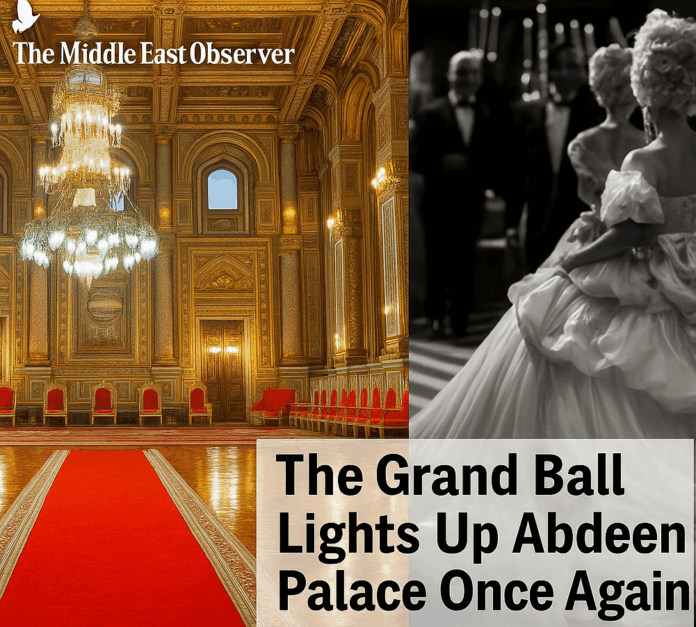
Cairo’s Abdeen Palace — once the political and ceremonial heart of Egypt’s monarchy — returned to global spotlight as it hosted The Grand Ball for the first time, marking a rare revival of royal pageantry within one of the country’s most distinguished historical sites.
Long associated with Monaco’s aristocratic tradition, The Grand Ball’s debut in Cairo drew nobles, diplomats, and cultural figures to halls once frequented by kings, statesmen, and foreign dignitaries. The event formed part of the “Givers of Hope” campaign and stood under the patronage of Egypt’s Ministry of Tourism and Antiquities. It represents a strategic step in positioning Egypt as a destination not only for heritage tourism, but for high-end cultural and luxury events.
The significance lies not simply in the guest list — which included European royals and global society figures — but in the setting. Abdeen Palace, completed in 1874 under Khedive Ismail, was designed to reflect European grandeur while asserting Egypt’s sovereign identity during a transformative era. Its gilded salons, museum-grade artifacts, and expansive courtyards embody a royal narrative rarely activated in contemporary public memory.
By staging the Ball there, Egypt placed its own palace tradition alongside Europe’s most prestigious heritage venues. The effect was twofold: a reintroduction of Abdeen as a living cultural landmark rather than a static museum, and a confirmation that the country can host events with diplomatic, cultural, and elite social weight.
Tourism officials framed the evening as a testament to Egypt’s capability to deliver refined hospitality at an international standard. Special reception protocols at Cairo International Airport, curated guest handling, and staged ceremonial elements underscored a deliberate emphasis on precision and elegance. This presentation, paired with the symbolic venue, conveyed an image of a nation comfortable at the intersection of history and global luxury.
For one night, chandeliers glowed across high vaults once reserved for monarchs, and the palace regained its ceremonial purpose. While the event’s social impact remains limited to high society, its strategic implications are broader: a deliberate move to re-activate Egypt’s royal architectural heritage as a cultural asset, support luxury tourism positioning, and align Cairo with global capitals capable of hosting exclusive cultural diplomacy events.
Whether The Grand Ball becomes a recurring feature in Egypt’s cultural calendar remains to be seen. But this inaugural edition succeeded in its intent — it reopened the palace’s ceremonial identity and projected a modern Egypt willing to engage the world not only through antiquity and history, but through contemporary prestige and refined experience.
Abdeen, for an evening, was not only a relic of monarchy. It was a stage once more — illuminated, relevant, and aligned with a renewed vision of national cultural presence.
