
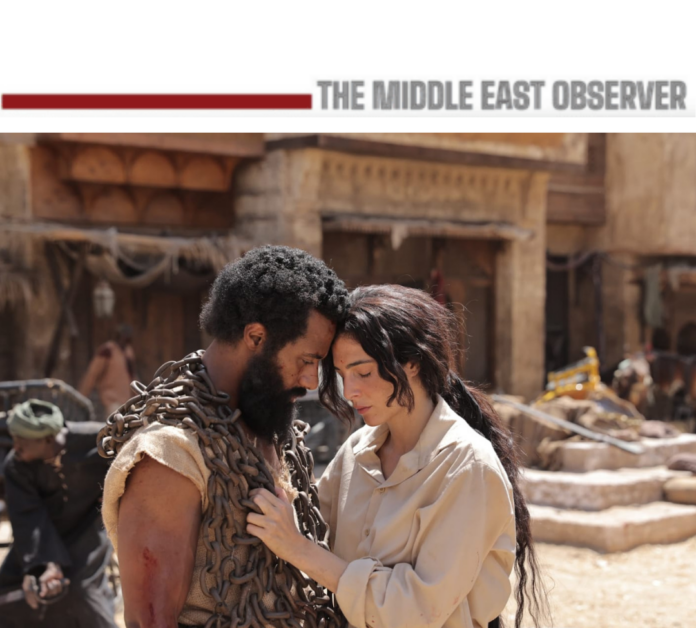
With large-scale battle sequences, regional filming locations, and one of the most ambitious production scales attempted in recent Egyptian cinema, Egyptian actor Mohamed Ramadan’s upcoming historical epic “Assad” is being positioned as far more than a conventional commercial release. The film arrives at a time when Arab cinema is increasingly seeking a stronger presence across international theaters and global streaming platforms, raising questions over whether “Assad” could mark a broader breakthrough moment for both Ramadan’s career and the regional film industry itself.
Speaking during a press conference held on Sunday ahead of the film’s release, Ramadan described “Assad” as the most ambitious and artistically complete project of his career, revealing that he deliberately stepped away from television dramas and cinema for nearly three years in order to fully dedicate himself to the production.
Ramadan said the project represented a major transition in his artistic journey, emphasizing that every aspect of the film had been developed through what he described as a “fully integrated system.” He reserved particular praise for director Mohamed Diab — internationally recognized for directing Marvel’s Moon Knight — thanking him for selecting him for the lead role.

“This film is the biggest proof that I am loyal to my dream,” Ramadan stated during the conference. “Now that I stand firmly on my feet, you will only see this kind of film from me.”
The actor also acknowledged the financial implications of stepping away from commercially lucrative projects during the lengthy production process, noting that the decision came despite his status as one of Egypt’s highest-paid actors. According to Ramadan, the scale, vision, and long-term significance of “Assad” justified the sacrifice.
The film is scheduled for release in Egyptian cinemas on 14 May 2026, before expanding across Arab markets beginning 21 May, positioning it among the region’s most anticipated cinematic releases of the year.
Producer Emad El Sayed Ahmed used the conference to dismiss circulating rumors regarding the film’s storyline, particularly speculation linking the narrative to the historical revolt of Black slaves led by Mohamed bin Ali Al-Farsi.
Instead, producers clarified that the story unfolds during a historical era and centers on a young man and woman who secretly marry despite belonging to opposing social classes. Their relationship gradually evolves into a broader confrontation between entrenched social forces, eventually triggering a large-scale uprising and revolutionary conflict.
The production blends romance, war drama, political tension, and expansive action sequences, reflecting an increasingly ambitious direction within Egyptian historical filmmaking.
Industry reports surrounding the production indicate that filming extended over approximately eighteen months, involving extensive battle choreography, thousands of extras, and shooting locations across both Egypt and Saudi Arabia. The scale of the project has led many observers to describe “Assad” as one of the largest Arab historical productions attempted in recent years.
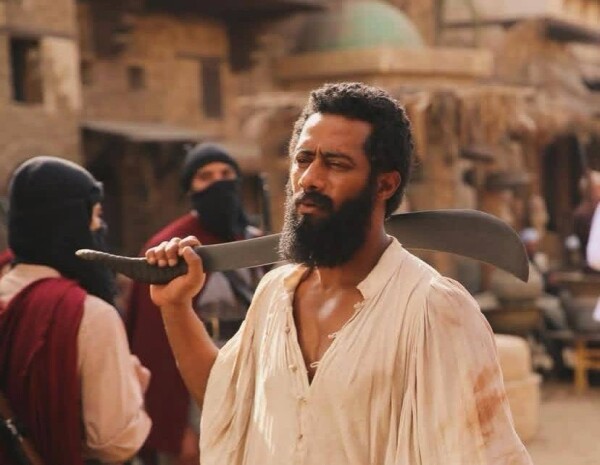
Much of the anticipation surrounding the project also stems from the involvement of Mohamed Diab, whose international profile expanded significantly following the success of Moon Knight. Diab co-wrote the film alongside Sherine Diab and Khaled Diab, combining international production experience with a deeply regional narrative structure.
The film features a broad ensemble cast including Razane Jammal, Ahmed Dash, Kamel El Basha, Islam Mubarak, Ali Qassem and Maged El Kedwany, who appears as a special guest star.
The soundtrack is composed by acclaimed Egyptian composer Hisham Nazih, further strengthening expectations surrounding the film’s cinematic atmosphere and production quality.
Beyond the film itself, “Assad” appears to represent a broader strategic evolution in Mohamed Ramadan’s career. Long associated with commercially successful contemporary action dramas and mass-market television series, the actor signaled that his future projects would increasingly move toward larger cinematic productions with deeper artistic and technical ambitions.
Ramadan also revealed during the conference that his upcoming drama project will be written by Egyptian novelist Ahmed Mourad, while confirming that his next feature film will once again reunite him with Mohamed Diab on what he described as a production potentially even more difficult than “Assad.”
The project therefore carries implications extending beyond a single commercial release. “Assad” appears to represent an attempt to reposition Ramadan from a commercially dominant regional star into a more globally marketable cinematic figure capable of leading high-budget Arab productions beyond regional markets.
The growing competition among regional studios and international streaming platforms for premium Arabic-language productions has intensified investment in large-scale historical and action-driven content. In this evolving landscape, “Assad” arrives amid regional efforts to develop cinematic productions capable of competing theatrically and digitally at international technical and storytelling standards.
Whether “Assad” ultimately succeeds commercially or not, the project already reflects the growing ambition of an Arab film industry increasingly determined to compete on a global cinematic stage — not only through scale and spectacle, but through productions capable of translating regional stories into internationally marketable cinematic experiences.