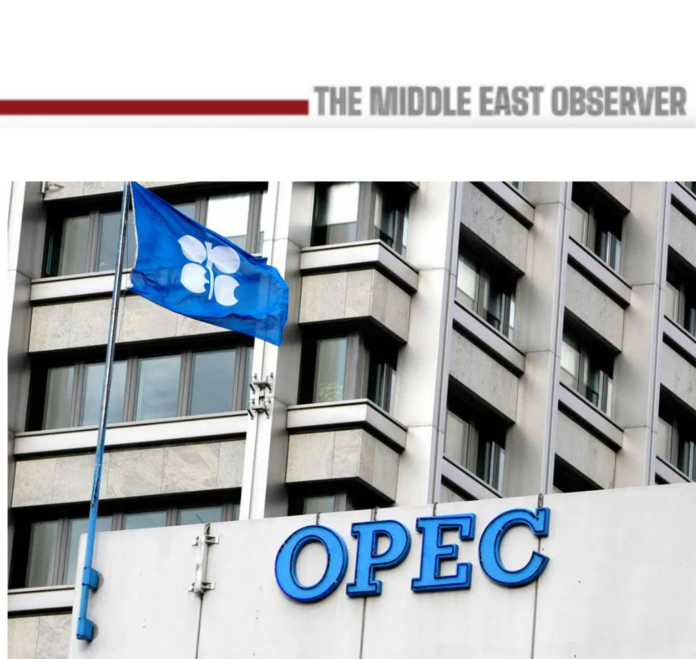
Nigeria has become the first member of the Organization of the Petroleum Exporting Countries (OPEC) to join the International Energy Agency as an associate member, positioning Africa’s largest oil producer at the intersection of the world’s leading producer alliance and its foremost energy policy institution. The landmark move signals what analysts increasingly describe as a “best of both worlds” strategy, enabling Abuja to maintain its influence within OPEC while benefiting from the IEA’s expertise in energy security, market intelligence and long-term energy policy.
The IEA’s Governing Board unanimously approved Nigeria’s admission, making it the agency’s 14th associate member and expanding a network that now represents more than 80% of global energy demand. The decision marks a significant milestone in global energy governance as the organisation broadens engagement with major emerging producers and consumers at a time when energy security, investment and the transition to cleaner fuels are becoming increasingly interconnected.
“Nigeria becoming part of the world’s energy authority marks a milestone for global energy governance,” IEA Executive Director Fatih Birol said, adding that deeper cooperation would support Nigeria’s efforts to strengthen energy security, expand access to modern energy and accelerate economic growth.
A Bridge Between Producers and Consumers
Nigeria’s accession represents far more than a symbolic diplomatic milestone. While OPEC coordinates oil production policies among exporting countries to promote market stability, the IEA has evolved into the world’s leading authority on energy security, market analysis, technology, investment and long-term energy policy.
Rather than creating conflicting obligations, associate membership enables Nigeria to benefit from both institutions’ complementary strengths. Abuja retains its commitments within OPEC while gaining access to the IEA’s analytical resources, technical cooperation and policy expertise without assuming the emergency oil stockholding obligations required of full IEA members.
The timing is particularly significant as global gas markets undergo another period of structural adjustment. Conflict in the Middle East temporarily disrupted shipping through the Strait of Hormuz, interrupting around one-fifth of monthly global LNG supply and pushing Asian spot prices above US$20 per million British thermal units (MMBtu). Yet, unlike the energy shock triggered by Russia’s invasion of Ukraine in 2022, the market proved considerably more resilient as expanding North American liquefaction capacity, improved operational performance at existing LNG facilities and diversified supply sources cushioned the disruption. The episode underscored the growing importance of coordinated international energy policies and resilient supply chains.
The development also reflects a broader evolution in global energy governance, where the traditional divide between producers and consumers is steadily giving way to greater cooperation on shared priorities including energy security, infrastructure investment, affordability and decarbonisation.
Africa’s Energy Giant Expands Its Ambitions
Nigeria’s admission reflects its growing strategic importance within international energy markets. Producing around 1.6 million barrels of crude oil per day and possessing some of Africa’s largest proven oil and natural gas reserves, the country is seeking to move beyond its traditional role as a crude exporter by expanding refining capacity, developing its gas industry and strengthening regional energy integration.
That transformation has accelerated with the commissioning of the Dangote Refinery, Africa’s largest refinery, which is reshaping domestic fuel markets while positioning Nigeria as an emerging exporter of refined petroleum products across West, Central and Southern Africa. Combined with ongoing petroleum sector reforms and investments in natural gas infrastructure, the refinery is expected to enhance energy security, reduce dependence on imported fuels and increase export revenues.
Global LNG market trends further reinforce Nigeria’s strategic importance. Around 180 million tonnes per annum of new LNG liquefaction capacity is forecast to enter the market by 2030, while demand is expected to continue expanding through the 2040s. South and Southeast Asia alone are projected to account for almost 40% of global LNG imports by 2050 as countries transition from coal to cleaner fuels. With abundant natural gas resources and an established LNG export industry, Nigeria is well positioned to benefit from this long-term demand growth, provided investment continues across upstream production, liquefaction capacity and export infrastructure.
Despite its resource wealth, Nigeria continues to face significant domestic energy challenges. Millions of citizens still lack reliable electricity access, while many households remain dependent on traditional biomass and other polluting cooking fuels. Closer engagement with the IEA is therefore expected to support reforms in electricity planning, energy efficiency, market regulation and universal energy access.
Strategic Benefits for Both Sides
For Nigeria, associate membership strengthens its international influence while supporting its ambition to become a fully integrated regional energy hub spanning upstream production, refining, petrochemicals, natural gas and electricity.
The partnership also comes as governments increasingly recognise natural gas as a critical transition fuel capable of balancing intermittent renewable energy while supporting industrial development and energy security. Global LNG trade reached 422 million tonnes in 2025—around 60% higher than a decade earlier—and industry forecasts indicate that approximately 200 million tonnes per annum of additional liquefaction capacity will still be required during the 2030s and 2040s to satisfy projected demand. Rapid growth in LNG bunkering, industrial consumption and power generation further reinforces Nigeria’s long-term strategic importance within both international energy markets and global energy policy discussions.
For the IEA, Nigeria’s accession strengthens engagement with influential emerging economies whose production capacity, investment requirements and rising energy demand will increasingly shape the future global energy system. It also enhances Africa’s representation within international energy policymaking at a time when the continent is expected to account for a growing share of future energy demand and infrastructure investment.
A New Model of Global Energy Governance
Nigeria’s decision illustrates how global energy governance is entering a more collaborative era. Rather than choosing between producer and consumer institutions, Abuja is positioning itself as a bridge between market stability, energy security and the global energy transition.
As Africa’s largest oil producer pursues higher refining capacity, greater natural gas utilisation and broader regional energy integration, its dual engagement with OPEC and the IEA reflects a pragmatic strategy that combines hydrocarbon development with long-term energy diversification. More broadly, the move signals a shift towards a more inclusive international energy architecture in which cooperation increasingly complements competition in addressing the interconnected challenges of energy security, investment, affordability and sustainable development.
For investors and policymakers alike, Nigeria’s accession represents more than a diplomatic milestone. It reflects the emergence of a new generation of energy-producing nations that seek influence across both producer alliances and global policy institutions, recognising that the future of energy security will increasingly depend on collaboration rather than confrontation between the world’s major exporting and consuming economies.
Related news:
Nigeria’s Fuel Prices Surge Despite Flagship Refinery Start-Up
Profit-Taking Erases $2.6bn from Nigerian Exchange as Rally Faces Valuation Test
Read also: