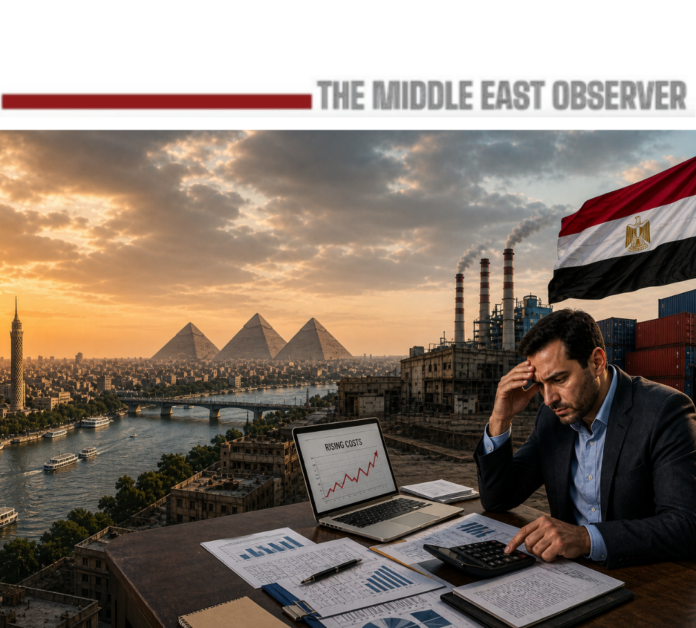
CAIRO — Egypt’s non-oil private sector recorded its steepest contraction in more than two years in April, as rising cost pressures and weakening demand weighed on business activity, according to data from S&P Global Market Intelligence.
The headline Purchasing Managers’ Index (PMI) fell to 46.6 in April, down from 48.0 in March, remaining well below the 50-point threshold that separates expansion from contraction and marking the weakest reading since January 2023.
Higher fuel and raw material costs—partly linked to regional geopolitical tensions—drove input prices to their fastest increase in over three years, with around 27% of surveyed firms reporting cost rises since March.
Businesses responded by raising selling prices at the quickest pace since August 2024, further weighing on demand. New orders declined for a third consecutive month, with the sharpest drop since March 2023.
Output fell at the fastest rate since early 2023, particularly in manufacturing and wholesale and retail sectors, while purchasing activity declined as firms adopted more cautious inventory strategies. Employment edged lower, although job cuts remained modest and broadly in line with long-term trends.
Supply chains also showed signs of strain, with delivery times lengthening slightly amid global shipping disruptions and material shortages.
The April reading follows a series of domestic energy price adjustments, including fuel increases of 14–17% in March and recent hikes in industrial gas prices. These measures, alongside elevated global energy costs linked to disruptions in the Strait of Hormuz, have intensified cost pressures on Egyptian firms.
Annual urban inflation accelerated to 15.2% in March, according to Central Agency for Public Mobilization and Statistics (CAPMAS), reinforcing the broader inflationary environment.
Despite the downturn, business sentiment showed a modest improvement from March, when expectations had turned negative for the first time, with firms cautiously anticipating stabilisation if regional pressures ease.
As The Middle East Observer notes, Egypt’s private sector is navigating persistent cost pressures and subdued demand, with energy prices and supply disruptions weighing on activity. Stabilising key variables—particularly energy costs and exchange rates—will be critical to support market adjustment and limit further pressure on growth and employment.