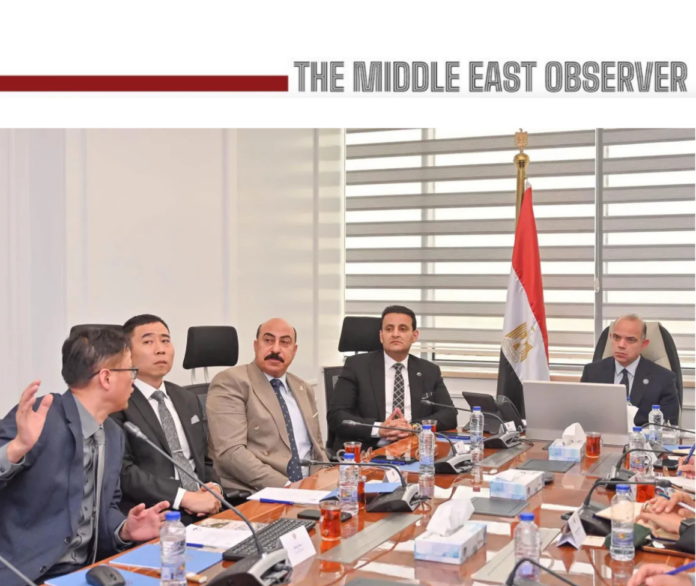
Chinese industrial developer Cloud Chain is planning to establish a USD 1.5 billion–2 billion integrated textile industrial city in Port Said, in what officials describe as a potentially carbon-neutral manufacturing complex and one of the largest textile investment projects proposed in Egypt in recent years.
According to Egypt’s Ministry of Investment and Foreign Trade, the proposed “Egyptian Textile Industries City – Cloud Chain” project would span approximately 4.5 million square metres and be developed over two phases, each expected to take around 24 months.
The first phase, covering nearly 2 million sqm, aims to attract between 30 and 50 textile manufacturers alongside integrated logistics centres, commercial facilities, and vocational and technical training schools designed to support industrial workforce development. The second phase would focus on integrating feeder and complementary industries to establish a fully connected textile supply chain.
Egyptian Investment Minister Mohamed Farid discussed the proposal with a Chinese delegation led by Cloud Chain executives Huang Wei and Xian Chun as Cairo intensifies efforts to position Egypt as a regional manufacturing and export hub for textiles and value-added industrial production.
Officials estimate the project could generate between 50,000 and 80,000 direct jobs alongside roughly 60,000 indirect employment opportunities once fully operational.
The choice of Port Said reflects Egypt’s broader strategy of leveraging its proximity to the Suez Canal and Red Sea trade corridors to attract export-oriented manufacturing investments linked to regional and European markets. Egypt has increasingly promoted industrial localisation and textile manufacturing as part of efforts to expand non-oil exports and strengthen foreign currency inflows.
The proposed development also aligns with wider regional efforts to promote lower-emission industrial infrastructure and sustainable manufacturing standards, particularly as global textile supply chains face growing environmental scrutiny from international buyers and regulators.
However, the project remains at the planning and feasibility stage, with Egyptian authorities continuing technical studies and investment coordination discussions with the Chinese side. Large-scale industrial developments in Egypt have historically faced implementation, financing, and infrastructure execution challenges, particularly during periods of global economic volatility.
If completed, the project would mark one of the largest Chinese industrial investments in Egypt’s textile sector and further deepen Beijing’s manufacturing footprint along the eastern Mediterranean trade corridor.