
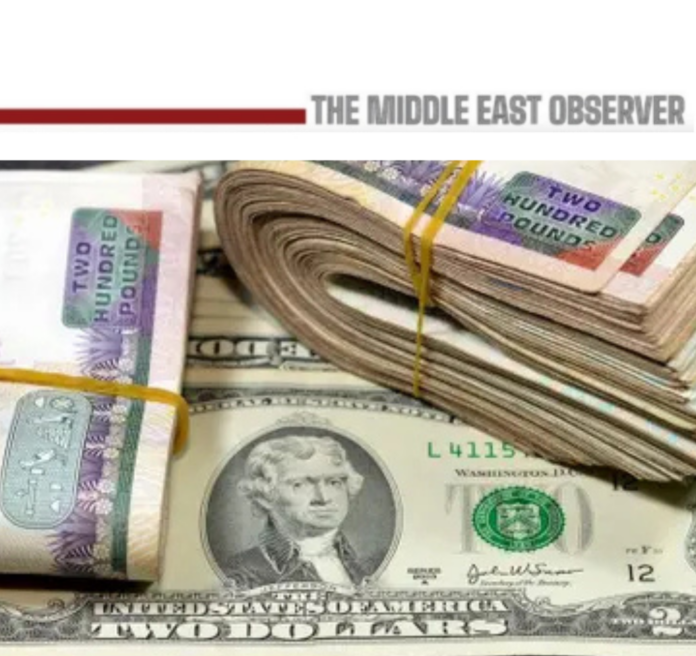
CAIRO — Egypt’s economic outlook received a vote of confidence from Standard Chartered, which expects the Egyptian pound to strengthen to around EGP49 per US dollar by the end of 2026, supported by ongoing economic reforms, resilient capital inflows and easing external pressures.
The forecast, highlighted during the bank’s Global Research 2026 briefing, comes as policymakers approach a critical stage in Egypt’s relationship with the International Monetary Fund (IMF Programme), raising questions about whether the country will require a successor arrangement after completing its current $8 billion programme.
Bader Al Sarraf, economist at Standard Chartered, said Egypt has made steady progress through the IMF programme and is currently advancing toward its seventh review, with implementation of agreed reforms largely on track.
IMF Path Beyond the Current Programme
One of the key questions facing investors, according to Al Sarraf, is what form future cooperation with the IMF may take once the existing programme concludes.
He suggested that future engagement could range from a technical and advisory framework to a smaller financing arrangement than the current $8 billion programme, depending on Egypt’s economic performance over the coming years.
The comments reflect a broader shift in investor thinking. While IMF programmes have historically been associated with emergency financing needs, Egypt’s recent reforms have increasingly focused on structural measures aimed at improving competitiveness, strengthening fiscal sustainability and enhancing private-sector participation.
Among the issues expected to remain central to discussions with the IMF is the government’s divestment programme, including planned initial public offerings and the listing of state-owned enterprises. Progress in this area continues to be viewed as a key indicator of Egypt’s commitment to expanding the role of the private sector within the economy.
Pound Outlook and Reform Momentum
The bank’s forecast for the Egyptian pound contrasts with more cautious market expectations and is based on several assumptions, including the absence of a significant escalation in regional geopolitical tensions.
Standard Chartered’s forecast of EGP49 per US dollar by the end of 2026 implies a modest strengthening from current market levels, where the pound has traded near the low-50s against the dollar in recent months. The projection is significant because it suggests the bank expects reform-driven capital inflows and improving macroeconomic conditions to outweigh external pressures, reversing expectations of continued currency weakness.
Al Sarraf noted that continued progress on structural reforms is helping sustain demand for Egyptian debt instruments and supporting so-called carry-trade inflows, which have become an important source of foreign-currency liquidity since the adoption of a more flexible exchange-rate regime.
The forecast is notably more constructive than broader market sentiment, which remains cautious amid ongoing geopolitical uncertainty, disruptions to Red Sea shipping routes and volatility in global capital flows. While some analysts continue to anticipate pressure on emerging-market currencies, Standard Chartered argues that Egypt’s reform trajectory and relatively high real interest rates provide a stronger foundation for exchange-rate stability.
Standard Chartered also expects the US dollar to remain broadly stable globally rather than strengthening significantly, a factor that could provide additional support for emerging-market currencies, including the Egyptian pound.
Financing Needs and Growth Outlook
The bank estimates Egypt’s external financing needs at between $8 billion and $9 billion next year, with approximately $4 billion expected to be raised through debt markets, reflecting continued investor appetite for Egyptian sovereign instruments despite global uncertainty.
Although financing requirements remain substantial, economists increasingly view them as manageable compared with the pressures Egypt faced during previous periods of external stress. The country’s financing mix has become more diversified, drawing support from international debt markets, multilateral institutions, Gulf investments and a gradual recovery in foreign-exchange inflows from tourism, remittances and exports.
While maintaining a constructive medium-term outlook, Standard Chartered acknowledged that Egypt continues to operate within a challenging geopolitical environment.
According to Al Sarraf, elevated uncertainty across the region continues to exert pressure through energy and food-price channels, increasing imported inflation risks and testing policy makers’ ability to shield the economy from external shocks.
These pressures remain particularly relevant for Egypt, a major energy importer during periods of peak demand and one of the region’s largest food-consuming markets. The interaction between commodity prices, exchange-rate stability and inflation will therefore remain a critical factor influencing economic performance over the coming quarters.
Despite these challenges, Standard Chartered forecasts Egypt’s economy to grow by 3.6% during the current fiscal year, before accelerating to 4.7% by 2027 as macroeconomic conditions improve and reform momentum continues.
Reform Dividend
The latest projections suggest investors are increasingly focusing on Egypt’s reform trajectory rather than solely on short-term economic pressures. Continued progress on fiscal consolidation, exchange-rate flexibility, state-ownership reform and private-sector participation could strengthen the country’s ability to attract capital and reduce dependence on external financing over time.
Beyond portfolio inflows and carry-trade activity, long-term currency stability will depend on Egypt’s ability to attract sustainable foreign direct investment. Progress on state-ownership reform, public offerings of state-owned enterprises and strategic asset sales is therefore viewed as critical not only for meeting IMF commitments but also for expanding productive investment and generating durable foreign-currency earnings.
Nevertheless, risks remain. Geopolitical tensions, commodity-price volatility and delays in structural reforms could weigh on investor sentiment and complicate economic management.
Looking ahead, the debate over a future IMF arrangement may ultimately prove secondary to the broader challenge of sustaining reform momentum. The long-term trajectory of the Egyptian pound will depend less on external financing programmes and more on whether reforms can generate stronger exports, attract productive investment, deepen private-sector participation and improve competitiveness.
For investors, the real test is not whether Egypt secures another IMF programme, but whether the economy can increasingly finance its growth through investment, production and trade rather than external support. Success in that transition would mark a significant milestone in Egypt’s journey toward greater economic resilience and policy independence.
