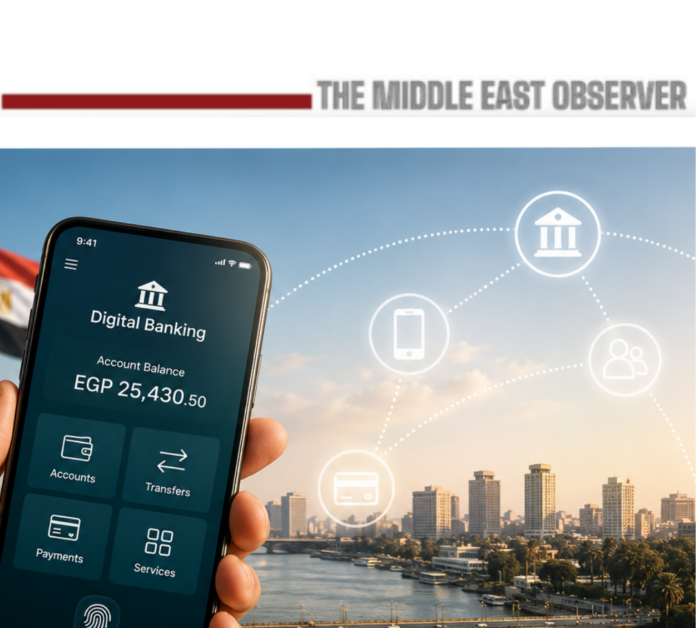
Egypt’s expansion into digital banking could become one of the country’s most significant financial transformation opportunities over the coming decade, particularly as policymakers seek to widen financial inclusion, modernise banking services, and integrate larger segments of the population into the formal economy.
The planned launch of “Yomo” by Commercial International Bank later in 2026, alongside the earlier rollout of “One Bank” backed by Banque Misr, reflects the country’s gradual shift toward digital financial services following the Central Bank of Egypt’s introduction of digital banking regulations.
The importance of digital banking in Egypt extends beyond technological modernisation. Unlike smaller regional markets, Egypt’s large population and expanding youth demographic give digital banking broader economic significance, particularly in improving access to financial services for younger users, small businesses, freelancers, and communities with limited access to traditional banking infrastructure.
The central question is whether Egypt can successfully build the regulatory and technological framework necessary to support digital banking at population scale. Regional experiences in countries such as Saudi Arabia and the UAE demonstrate that digital banking expansion depends not only on launching applications, but also on establishing integrated systems for digital identity verification, mobile-based customer onboarding, cybersecurity, electronic payments, and fintech regulation.
In Egypt’s case, continued investment in digital Know Your Customer (KYC) systems, fraud prevention technologies, cloud banking governance, and financial literacy programmes may prove essential to building public trust and encouraging broader adoption of digital financial services.
The potential economic impact could extend well beyond the banking sector itself. Wider digital banking adoption may help reduce dependence on cash transactions, improve financing access for small and medium-sized enterprises, support e-commerce growth, strengthen tax formalisation, and expand integration between banking services and Egypt’s broader digital economy initiatives.
Given Egypt’s demographic scale, even modest gains in digital financial inclusion could bring millions of additional users into the formal banking system over the coming decade, particularly in underbanked areas where mobile technology may provide easier access than traditional branch expansion.
As The Middle East Observer notes, Egypt’s opportunity may ultimately lie in learning from regional experiences while adapting digital banking models to the realities of its own population size and economic structure. If supported by strong regulation, financial education, cybersecurity infrastructure, and coordinated fintech development, digital banking could evolve from a technological banking service into a wider economic development tool capable of improving financial accessibility, supporting entrepreneurship, and strengthening long-term economic formalisation across the country.