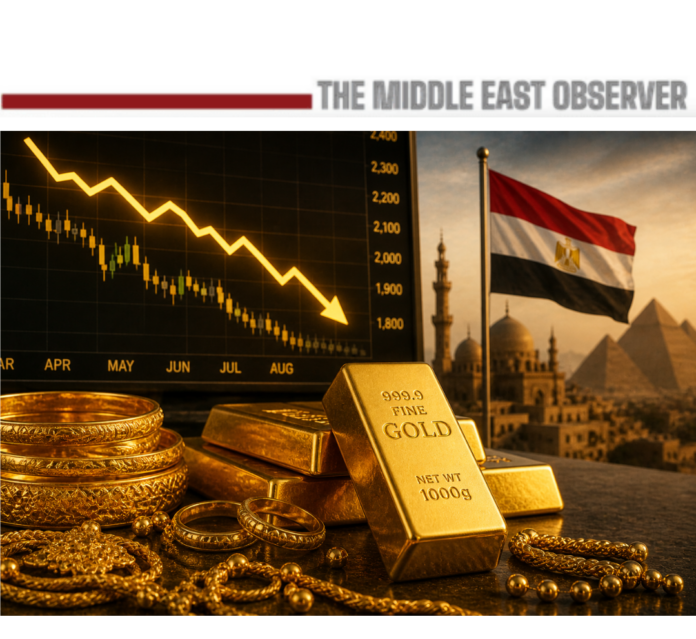
Gold prices continued to weaken today, slipping below $4,580 per ounce in global markets, as investors balanced geopolitical developments in the Middle East with tightening monetary expectations, according to Bloomberg and Reuters.
The metal fell by roughly 0.8–0.9% in early trading, marking a second consecutive weekly decline and bringing total losses to nearly 12–14% since late February. The downturn reflects a shift in sentiment as markets assess diplomatic signals between Washington and Tehran and evolving efforts to stabilise shipping through the Strait of Hormuz, a critical artery for global energy supplies.
At the same time, macroeconomic pressures have intensified. Rising energy prices continue to fuel inflation concerns, prompting expectations that the Federal Reserve will maintain elevated interest rates for longer. This has pushed bond yields higher and strengthened the US dollar, increasing the opportunity cost of holding non-yielding bullion and exerting sustained pressure on gold prices. These dynamics align with broader trends highlighted in recent market reporting, where elevated yields and geopolitical risks have jointly shaped gold’s trajectory.
In Egypt, the global decline has been directly reflected in domestic pricing. 21-karat gold, the benchmark for local trade, hovered around EGP 6,900–6,950 per gram, with prices showing heightened intraday volatility as jewellers adjust rates in response to international market movements.
Despite the recent pullback, gold remains historically elevated in local currency terms, supported by exchange rate dynamics and persistent inflationary pressures. Market participants report cautious retail demand, with consumers reacting to rapid price swings while maintaining gold’s role as a store of value.
Broader economic conditions continue to shape both global and Egyptian gold markets. Elevated energy prices—driven by ongoing geopolitical tensions—are feeding into inflation expectations, reinforcing gold’s hedging appeal while simultaneously strengthening the case for tighter monetary policy.
Meanwhile, structural demand remains resilient. The World Gold Council reported a 2% year-on-year increase in global gold demand in Q1 2026, supported by continued central bank purchases, underscoring longer-term support for the market.
Looking ahead, gold price direction will hinge on incoming US economic data and central bank signals, alongside developments in Middle East geopolitics—particularly regarding energy flows through the Strait of Hormuz.
As The Middle East Observer notes, gold is currently navigating a tight equilibrium—supported by inflation and geopolitical risk, yet constrained by elevated yields and a strong dollar. In Egypt, this translates into continued price sensitivity to global benchmarks, with volatility likely to persist in the near term.