
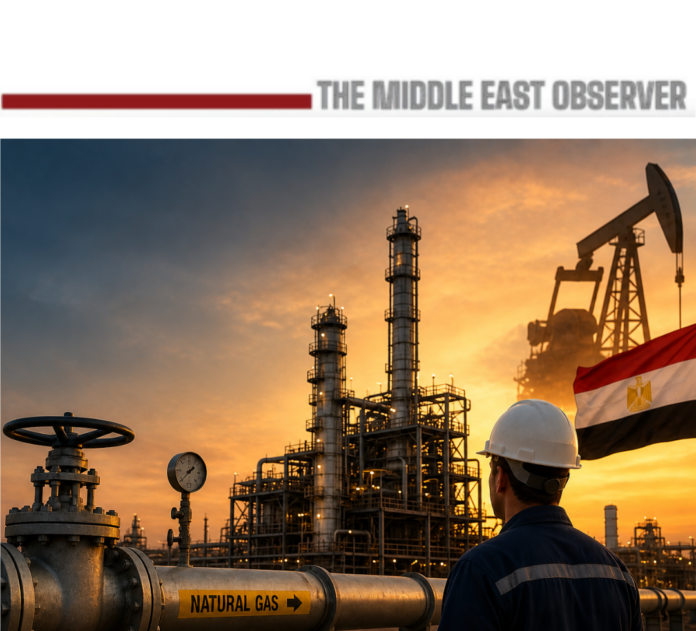
CAIRO — Egypt has increased natural gas prices for energy-intensive industries, reflecting rising global energy costs and ongoing fiscal adjustments, according to an official decision published in the Official Gazette of Egypt and reported by Reuters.
Under the decision issued by Prime Minister Mostafa Madbouly, gas prices were raised by an average of $2 per million British thermal units (MMBtu) for key sectors. Prices for cement producers were set at $14 per MMBtu, while iron and steel, petrochemicals, and non-nitrogen fertiliser industries will pay around $7.75 per MMBtu. Other industrial activities will face prices ranging between $6.50 and $6.75 per MMBtu.
The government clarified that the increase does not apply to companies operating under pre-existing contractual pricing formulas, which will remain unchanged.
The move comes amid heightened global energy prices linked to geopolitical tensions, particularly disruptions affecting the Strait of Hormuz, a key route for global oil and gas shipments. Brent crude has recently traded above $100 per barrel, increasing import costs for energy-dependent economies.
Egypt has been under growing fiscal pressure as energy import bills rise, prompting a gradual adjustment of domestic energy pricing. The government has already implemented multiple fuel price increases over the past year as part of a broader reform programme.
The pricing adjustments align with Egypt’s commitments under its $8 billion programme with the International Monetary Fund, which includes measures to reduce fuel subsidies and enhance fiscal sustainability. Authorities have been pursuing a phased approach to price liberalisation while seeking to mitigate the impact on industrial activity.
Earlier in May, Industry Minister Khaled Hashem indicated that fuel prices for fertiliser producers had also been increased, reflecting broader cost adjustments across key sectors.
While the increase is expected to raise input costs for heavy industries, officials aim to balance fiscal consolidation with maintaining industrial output and competitiveness. Energy-intensive sectors such as cement, steel, and fertilisers remain critical to Egypt’s export strategy and domestic supply chains.
As The Middle East Observer notes, the adjustment highlights the challenge facing emerging economies in navigating energy price shocks while advancing subsidy reforms. The Middle East Observer adds that the pace and calibration of such measures will be crucial in sustaining industrial activity while restoring fiscal balance in a volatile global energy environment.
