
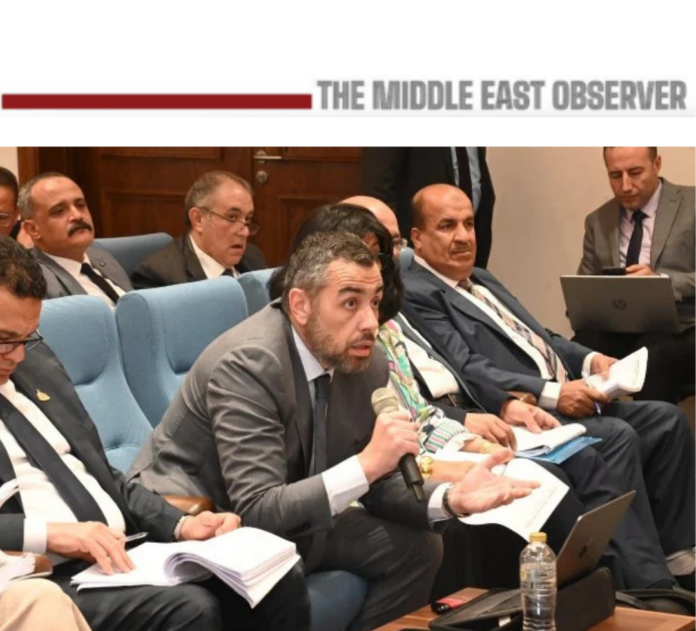
Egypt’s parliamentary Economic Affairs Committee has called on the National Investment Bank (NIB) to submit a comprehensive development strategy—or a timetable for completing one—as lawmakers seek greater clarity over the institution’s future role in managing state-owned assets under the country’s broader economic reform programme.
The committee also requested a summary of financial settlements completed to date and those scheduled for implementation, while urging the Ministry of Planning, Economic Development and International Cooperation to define the bank’s future mandate within Egypt’s 2026–2030 State Ownership Policy.
The parliamentary review comes as Egypt advances reforms aimed at strengthening governance, attracting private investment and improving returns from state-owned assets through a clearer institutional framework. The National Investment Bank plays a central role within this agenda, managing significant government investments and equity holdings across banks, listed companies and strategic economic enterprises.
During the committee session, Sayed Zakaria, Managing Director for Credit and Finance at the National Investment Bank, presented a detailed overview of the bank’s restructuring efforts, financial settlements and future strategy, outlining progress made and the priorities underpinning its ongoing transformation. Committee members praised the presentation for the transparency of its financial and operational updates while stressing the importance of formalising these efforts within a comprehensive development roadmap.
The discussion followed an interpellation submitted by MP Mohamed Fouad, who argued that although the updated State Ownership Policy clearly defines the responsibilities of institutions including the Ministry of Finance, the Sovereign Fund of Egypt and the State Ownership Unit, it does not explicitly specify the National Investment Bank’s institutional role despite its substantial investment portfolio and influence over state-owned assets.
Fouad called for the bank’s responsibilities in managing state financial assets, restructuring investments and coordinating with relevant government institutions to be formally incorporated into the policy framework, arguing that greater institutional clarity would enhance the effectiveness of Egypt’s public asset management strategy.
Clarifying the National Investment Bank’s mandate is expected to become increasingly important as Egypt continues restructuring state-owned holdings, expands private-sector participation and strengthens the governance of public investments, helping define the bank’s place within the country’s evolving framework for managing strategic state assets.
Related news:
Egypt Approves Bank of Palestine Office as Cairo Strengthens Position as Regional Financial Gateway
Egypt–Finland Relations Enter Strategic Phase as President Stubb’s Visit Unlocks Investment Momentum
Read also:
Egypt Announces New Nile Delta Gas Discovery at Nidoco N-2 Well
Egypt’s Strategic Value Takes Centre Stage at Évian Summit
