
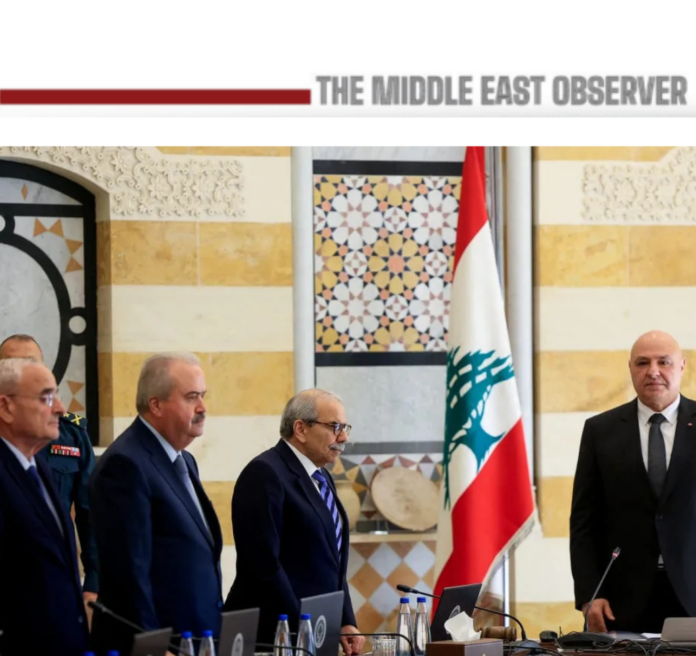
Lebanon has taken a significant step towards introducing its first residency-by-investment programme after Parliament’s Finance and Budget Committee approved a draft law granting special residency rights to foreign investors and Lebanese expatriates who invest at least US$500,000 in the country, as policymakers seek to revive capital inflows and restore confidence in an economy still recovering from one of the world’s deepest financial crises.
The proposed legislation, commonly described as a “golden visa“ programme, aims to attract fresh foreign investment, stimulate job creation and support the rehabilitation of Lebanon’s banking and financial sectors. The draft, however, has not yet become law and must still be approved by the full Parliament before implementing regulations can be issued.
Under the amended proposal, applicants would qualify by depositing or investing no less than US$500,000 in Lebanon through one of three channels: a Lebanese bank deposit, the purchase of real estate in accordance with existing foreign ownership laws, or investment in a Lebanese company. Unlike the government’s original draft, which left the investment threshold to be determined by decree, lawmakers opted to enshrine the minimum amount directly in legislation to provide greater certainty for investors.
Committee Chairman Ibrahim Kanaan described the initiative as a mechanism to encourage productive investment rather than a conventional residency scheme. He said the proposal would offer foreign nationals and Lebanese citizens living abroad the opportunity to establish tax residency in Lebanon while complying with bilateral tax treaties and international standards on transparency, anti-tax evasion and financial crime prevention. According to Kanaan, applicants would also pay a government fee of US$50,000, with an equivalent charge applying to each accompanying family member seeking the same residency status.
Lebanon needs to attract investors
“We all know that Lebanon needs to attract investors and investment as part of economic, financial and banking recovery,” Kanaan said after the committee meeting, arguing that the programme could create employment opportunities, generate fiscal revenues and encourage long-term investment once economic conditions improve.
The proposal forms part of broader government efforts to revive an economy that has endured years of financial collapse, sovereign default, banking sector paralysis and severe currency depreciation. Since the onset of the crisis in 2019, Lebanon has experienced one of the sharpest economic contractions recorded globally in modern history, with capital controls, frozen bank deposits and declining investor confidence severely limiting access to foreign financing.
Officials hope a residency-by-investment programme could help attract fresh foreign currency, encourage expatriate investment and provide additional funding for private-sector activity without increasing government borrowing. Similar programmes operate in several jurisdictions, including the United Arab Emirates, Greece, Portugal and Malta, although many countries have tightened eligibility rules in recent years in response to concerns over financial transparency and security screening.
Unlike citizenship-by-investment programmes offered elsewhere, Lebanon’s proposal is designed primarily as a tax residency and long-term residency framework, not as a pathway to citizenship. Supporters argue this distinction aligns the initiative more closely with international investment migration practices while preserving Lebanon’s nationality laws.
Nevertheless, the initiative has generated significant debate among financial experts and governance specialists, who question whether the timing is appropriate given Lebanon’s fragile banking system and ongoing efforts to restore international confidence. Critics argue that attracting new deposits may prove difficult while confidence in domestic financial institutions remains weak and much of the country’s banking sector continues to grapple with legacy liabilities arising from the financial crisis.
Lebanon and the “grey list”
Additional scrutiny stems from Lebanon’s anti-money laundering obligations. The country remains on the Financial Action Task Force (FATF) list of Jurisdictions under Increased Monitoring, commonly known as the “grey list,” after committing in 2024 to strengthen its framework for combating money laundering and terrorist financing. The FATF reaffirmed Lebanon’s status in its June 2026 review while recognising continued implementation of an agreed reform programme.
That designation does not prohibit investment but increases international scrutiny of financial transactions and places greater emphasis on customer due diligence, beneficial ownership transparency and source-of-funds verification. Analysts therefore argue that any Lebanese residency-by-investment programme will need exceptionally robust compliance procedures to reassure international banks, correspondent financial institutions and prospective investors that the scheme fully complies with global anti-money laundering standards.
For international investors, the proposal presents both opportunity and uncertainty. Lebanon retains significant long-term strengths, including a highly educated workforce, strategic geographic location and an extensive global diaspora capable of supporting future investment. However, the programme’s ultimate success will depend less on the residency incentive itself than on broader economic reforms, banking sector restructuring, judicial certainty and sustained macroeconomic stability.
Should Parliament approve the legislation, Lebanon would join a growing number of countries using investment-linked residency programmes as instruments of economic policy. Yet, unlike many established schemes launched during periods of financial stability, Lebanon’s initiative is being introduced amid an ongoing economic recovery, making investor confidence, regulatory credibility and effective implementation decisive factors in determining whether the programme can deliver the capital inflows and employment growth its architects envisage.
Related news:
Lebanon’s New Era: Joseph Aoun’s Ascension Amidst Challenges and Hopes
Egypt and Lebanon Sign Broad Cooperation Pact Spanning 15 Sectors
Read also:
WE Partners with Grofa to Deliver Smart Infrastructure for New Urban Development
Elsewedy Electric Invests $200m to Build an Integrated Metals Manufacturing Hub