
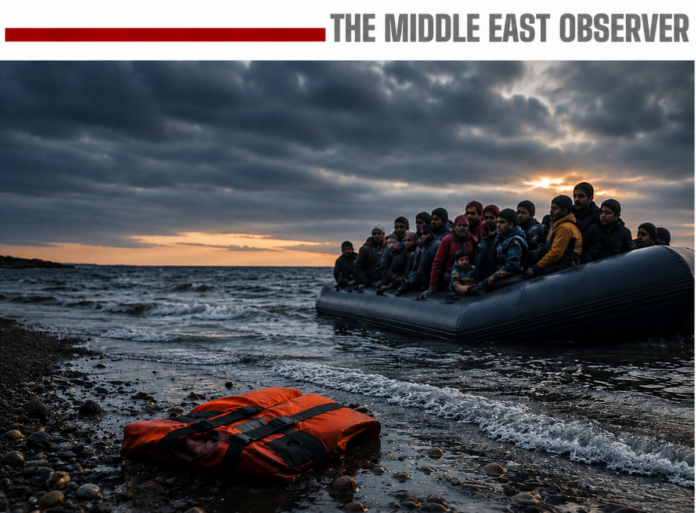
In a recurring tragedy that continues to underscore the human cost of irregular migration across the Mediterranean, sea currents recently washed the bodies of several victims onto Egypt’s northwestern coastline near Marsa Matrouh after a boat carrying migrants reportedly sank under unclear circumstances.
The incident is the latest reminder of a crisis that continues to claim lives despite years of national, regional and international efforts to combat migrant smuggling and provide safer alternatives for vulnerable populations.
Irregular migration refers to the movement of people across international borders in violation of the immigration laws of the destination country, whether through unlawful entry or by remaining beyond the period permitted by a visa or residency status. The phenomenon poses a complex challenge for countries of origin, transit and destination alike, carrying economic, humanitarian, security and legal implications.
Along Egypt’s northern coast and across the Mediterranean basin, such incidents occur with troubling frequency. Overcrowded vessels, unsafe transportation methods and adverse weather conditions often transform the hopes of migrants into humanitarian disasters.
The motivations driving individuals—particularly young people—to embark on these perilous journeys are varied and deeply interconnected.
Economic pressures remain among the most significant factors. Many migrants seek improved living standards, stable employment and greater economic opportunities than those available in their local communities. Others are driven by political instability, armed conflict or security concerns in their home countries, prompting them to seek safety and protection elsewhere.
Social considerations also play a role. Some migrants seek reunification with family members already living abroad, while others are influenced by unrealistic perceptions of life overseas or become targets of sophisticated smuggling networks that exploit aspirations for a better future.
Yet the risks associated with irregular migration are severe.
The most immediate danger is the threat to life itself. Migrants frequently undertake journeys aboard unseaworthy vessels or through hazardous desert routes, exposing them to drowning, dehydration and other life-threatening conditions. Many also become vulnerable to exploitation, extortion and human trafficking at the hands of criminal networks that profit from human desperation.
Even those who survive the journey often face legal consequences, including detention, deportation and prolonged uncertainty regarding their status in destination countries.
Addressing the phenomenon requires a combination of enforcement, development and international cooperation.
Many countries have strengthened legislation targeting migrant smuggling networks, imposing tougher prison sentences and financial penalties on those involved in organising or facilitating illegal migration. At the same time, governments have increasingly focused on development initiatives aimed at creating economic opportunities for young people and reducing the incentives that drive migration in the first place.
Egypt has adopted a multi-dimensional approach to the issue. The country’s legal framework is anchored in Law No. 82 of 2016, as amended in 2022, on combating illegal migration and migrant smuggling. The legislation imposes prison terms and substantial fines on individuals convicted of migrant smuggling offences, with penalties escalating significantly in cases involving organised criminal groups, the use of weapons or incidents resulting in loss of life.
Institutional efforts have also expanded through the work of the National Coordinating Committee for Combating Illegal Migration and Trafficking in Persons, the Fund for Combating Illegal Migration and broader national strategies aimed at addressing the root causes of migration.
Among the most prominent initiatives is the state’s “Lifeboats” programme, which seeks to raise awareness of the dangers associated with irregular migration while promoting education, training and employment opportunities in governorates most affected by the phenomenon.
Nevertheless, the persistence of such tragedies suggests that enforcement measures alone are unlikely to provide a lasting solution. Combating irregular migration ultimately requires addressing the economic, social and developmental pressures that push individuals towards dangerous journeys in the first place, while expanding legal pathways for mobility and strengthening international cooperation against transnational smuggling networks.
The images of young lives lost at sea serve as a stark reminder that behind every migration statistic lies a human story. Until the conditions that fuel irregular migration are effectively addressed, the Mediterranean risks remaining not only a gateway between continents, but also a graveyard for those pursuing hope beyond their shores.
