Coral Reproduction Cycle Highlights Marine Ecosystem Resilience
Hurghada — Egypt’s Red Sea Governorate is advancing a strategic integration of digital governance and environmental preservation, positioning Hurghada as a model for sustainable tourism management amid intensifying global competition.
Governor Walid El-Barqi announced the launch of a real-time “digital monitoring” system, enabling citizens and tourists to report waste and urban violations via mobile-based channels, including instant messaging platforms. According to official statements reviewed by The Middle East Observer’s correspondent in the Red Sea, the system replaces traditional administrative processes with instant reporting supported by images and geolocation data, allowing municipal teams to respond rapidly with enhanced operational transparency and efficiency.
The initiative forms part of Egypt’s broader Vision 2030 framework, which prioritizes the development of “green governorates” and the modernization of urban services. Officials emphasized that environmental quality is not only a public service imperative but also a core economic driver, directly shaping Hurghada’s position as a leading global tourism destination. The Red Sea region remains a key source of foreign currency inflows, attracting millions of visitors annually.
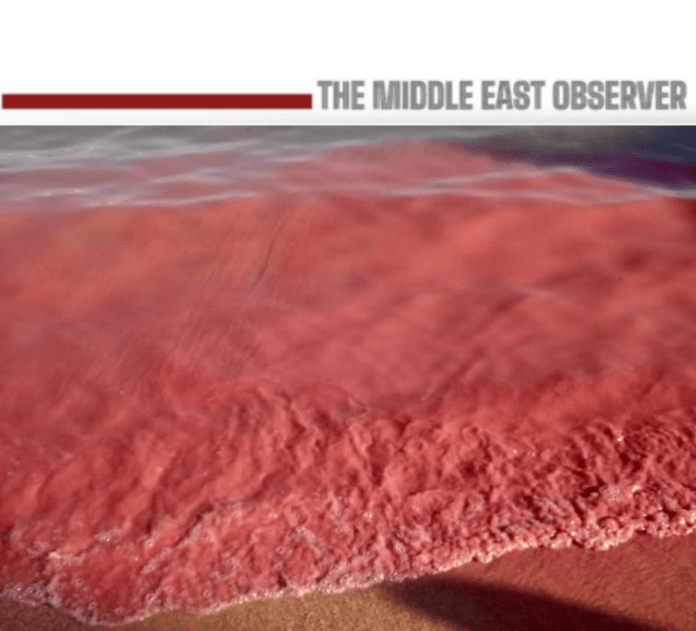
The rollout coincides with recent environmental observations underscoring the Red Sea’s ecological resilience. Local authorities confirmed that the appearance of red-tinted coastal waters is a natural seasonal phenomenon linked to coral spawning, during which coral colonies release millions of fertilized eggs that rise to the surface, temporarily altering water color.
According to the Red Sea Protectorates Administration, this process represents a critical reproductive phase that supports the regeneration of marine biodiversity. Marine specialists indicate that such occurrences are typically associated with stable environmental conditions, including high water clarity and balanced ecosystem dynamics. The phenomenon, closely monitored by environmental experts, is widely regarded as a positive indicator of reef health rather than a cause for concern.
The Middle East Observer notes that the alignment of technology-driven governance with ecological sustainability reflects a deeper policy shift, where environmental management is increasingly treated as a strategic economic asset. The Middle East Observer further observes that integrating citizen-led monitoring with ecosystem preservation enhances Egypt’s ability to maintain service quality, safeguard natural capital, and sustain tourism revenues amid evolving global environmental standards.
Authorities have called on residents and visitors to actively engage with the reporting system while respecting natural marine processes, emphasizing that environmental protection remains a shared responsibility essential to preserving the Red Sea’s long-term value.
In this context, Hurghada’s evolving model—combining real-time civic oversight, environmental resilience, and tourism-driven economics—signals a broader transition toward data-enabled, sustainability-led destination management, increasingly critical to maintaining competitiveness across global tourism markets.