
Concentrix plans to create 11,000 new jobs in Egypt and expand its workforce to 35,000 employees by 2028, as the Ministry of Communications and Information Technology (MCIT) accelerates efforts to position the country among the world’s leading destinations for outsourcing, digital services and technology-enabled business operations.
The expansion represents one of the largest recent employment commitments in Egypt’s business services sector and offers fresh evidence of the government’s strategy to transform digital exports into a key driver of economic growth, foreign currency earnings and private-sector job creation.
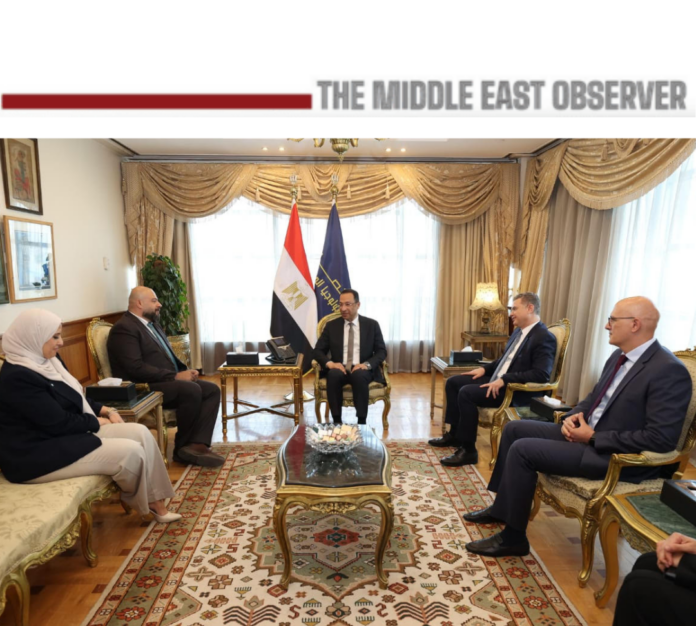
The plans were reviewed during a meeting between Eng. Raafat Hindi, Deputy Minister of Communications and Information Technology for Infrastructure and Digital Transformation, and Concentrix Egypt Managing Director Amr Sobhy. Discussions focused on the company’s expansion roadmap, workforce development initiatives and cooperation in digital skills training to support future growth.
The move builds on a memorandum of understanding signed in January 2025 between Concentrix and the Information Technology Industry Development Agency (ITIDA), under which the company committed to investments of approximately $1 billion and the creation of 16,000 jobs by the end of 2028.
The announcement comes amid intensifying competition among outsourcing destinations across Asia, Eastern Europe and the Middle East to attract multilingual business-services operations serving global markets. Egypt has emerged as one of the fastest-growing locations in the sector, with digital offshoring exports doubling from $2.4 billion in 2022 to nearly $5 billion in 2025, while the number of multinational outsourcing companies operating in the country increased from around 90 to more than 240 over the same period.
Concentrix currently employs approximately 24,000 people in Egypt and plans to increase headcount to 28,000 by the end of 2026, 31,000 in 2027 and 35,000 by 2028. The company also intends to expand its operational footprint from 13 centres to 18 centres within two years through investments in governorates across the Nile Delta and Upper Egypt, extending the benefits of the outsourcing boom beyond Cairo and Alexandria.
MCIT has increasingly placed outsourcing, business services and digital exports at the centre of its economic development agenda, viewing the sector as a major source of export revenues, investment inflows and skilled employment. Egypt now hosts more than 270 global service delivery centres serving clients across Europe, North America, the Gulf region, Africa and Asia, reinforcing its growing role in global business-services supply chains.
Speaking during the meeting, Raafat Hindi said the continued expansion of multinational companies reflects growing confidence in Egypt’s digital infrastructure, investment climate and talent base, adding that the ministry remains focused on expanding specialised training programmes and aligning workforce development with international market requirements.
To sustain momentum, MCIT has significantly scaled up programmes aimed at preparing young professionals for careers in technology services, customer experience management, software development and multilingual business support. These initiatives have become a cornerstone of the government’s strategy to increase digital exports while ensuring international investors have access to a steady pipeline of qualified talent.
Egypt’s attractiveness to international operators has been reinforced by a combination of competitive operating costs, a large pool of multilingual graduates, improving digital infrastructure and geographic proximity to European markets. These advantages enable companies to serve customers across Europe, North America, the Middle East and Africa from a single delivery location, strengthening the country’s position against established outsourcing hubs such as India and the Philippines.
Concentrix’s own trajectory mirrors this broader transformation. Since launching operations in Egypt in 2009 with approximately 150 employees, the company has expanded to around 24,000 staff, making Egypt its third-largest operating hub globally after India and the Philippines among the 72 countries in which it operates, and its largest centre across the Middle East and Africa.
The meeting also reviewed the company’s growing use of artificial intelligence technologies in customer operations, service management and business-process optimisation. As outsourcing providers worldwide integrate AI into service delivery models, the industry is increasingly shifting towards higher-value activities requiring human judgement, multilingual communication skills and specialised expertise.
Industry executives argue that AI is reshaping rather than replacing employment models. While automation is expected to absorb routine and repetitive processes, demand continues to rise for professionals capable of managing complex customer interactions, AI-assisted workflows and specialised support services.
Concentrix Egypt currently delivers services in 12 languages, including English, French, German, Italian and Spanish, supporting clients across sectors such as e-commerce, telecommunications, banking, financial technology, healthcare, media, tourism and transportation.
The latest expansion underscores Egypt’s ambition to position itself alongside leading global outsourcing centres as multinational companies increasingly seek cost-efficient, multilingual and AI-enabled delivery platforms capable of serving multiple markets from a single location. As global firms rethink service-delivery networks in an AI-driven economy, Egyptian policymakers are betting that multilingual talent, digital exports and technology-enabled services can become one of the country’s most durable competitive advantages.