
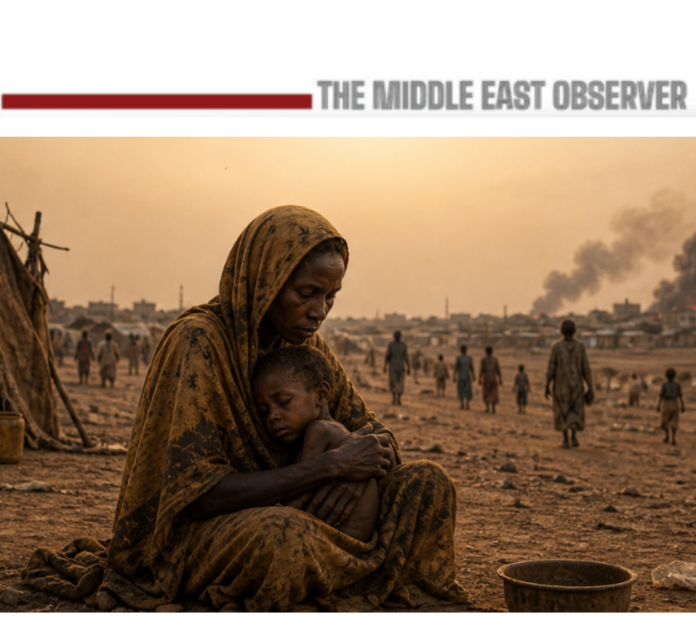
There is a persistent illusion in geopolitics: that wars remain contained within their borders, their consequences confined to those who initiate them. Reality is less accommodating. The disruption of shipping routes triggered by tensions in the Persian Gulf is not merely a regional inconvenience or a spike in insurance premiums—it is a matter of life and death for millions far beyond the battlefield, nowhere more acutely than in Sudan.
What appears, at first glance, to be a logistical complication—rerouted vessels, congested ports, rising fuel costs—quickly reveals itself as something far more consequential. Aid that once moved efficiently from Dubai through the Strait of Hormuz is now forced onto longer, more complex routes. Supplies are diverted through alternative corridors such as Aqaba or Oman, or delayed at overstretched ports. Each detour adds not only distance, but time—time that malnourished children, displaced families, and overwhelmed clinics simply do not have.
The figures are stark. The cost of transporting just over 2,000 metric tons of humanitarian aid has more than doubled, rising from under $1 million to nearly $1.9 million. Delivery timelines risk extending by up to 25 days if vessels are forced to reroute around Africa. In humanitarian operations, such delays are not inefficiencies—they translate directly into human cost.
Yet this crisis is not solely about rising costs or logistical strain. It reflects a system already under extreme pressure being pushed closer to systemic failure. Sudan’s humanitarian emergency—described by the United Nations as the largest displacement crisis globally—was never resilient. It is now being further destabilised by forces entirely beyond its control.
The mechanics of disruption are revealing. War-risk insurance premiums for Gulf shipping have surged, embedding additional costs into every shipment. Fuel prices have climbed across key logistics hubs such as Nairobi, constraining trucking capacity and slowing regional distribution. Port congestion—from Jeddah to Mersin—compounds delays. Each link in the supply chain weakens the overall system.
Overlaying this is a quieter but equally critical constraint: funding. The UN refugee agency’s appeal—$8.5 billion to support 135 million people—remains significantly underfunded. This shortfall coincides with rising operational costs and extended delivery timelines, placing humanitarian agencies under unprecedented strain. They are being asked to deliver more, with fewer resources, under increasingly complex conditions.
The consequences are both predictable and severe. Aid arrives late. Supplies are rationed. Clinics are forced to turn patients away. Rising fuel and fertiliser costs push food prices higher, exacerbating hunger in regions already at the brink of famine. The system does not collapse abruptly; it deteriorates progressively, often out of sight but with mounting human impact.
There is a broader lesson—one that policymakers frequently underestimate. Globalisation does not only integrate markets; it transmits disruption. A shock in a strategic maritime choke point reverberates through supply chains and ultimately manifests in diminished access to food and care for the most vulnerable.
This is not an argument against geopolitical strategy or national interest. It is, however, a reminder that the costs of such strategies are rarely borne by those who design them. They are externalised—onto the poor, the displaced, and the unseen.
Wars, in other words, do not remain contained. They travel—and in doing so, they carry consequences that no border or shipping lane can fully absorb.