
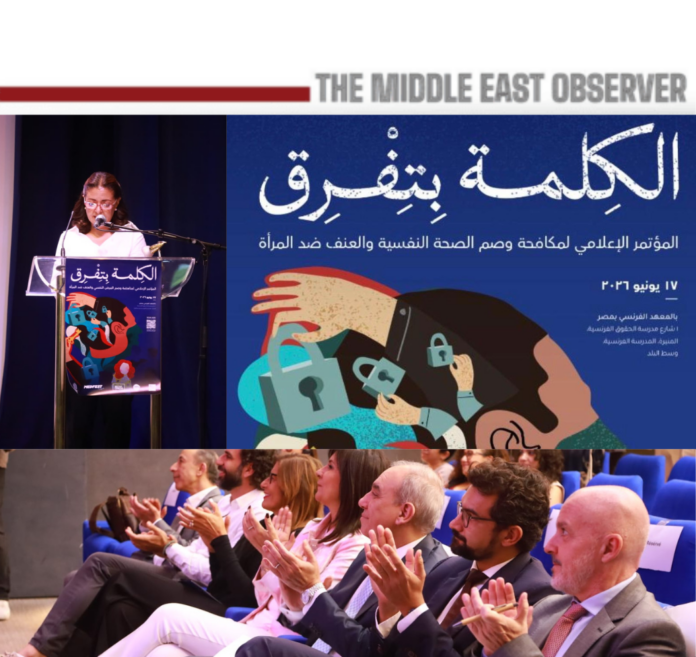
The “Words Matter” conference, a media-focused gathering dedicated to examining how language shapes public perceptions and social attitudes, convened in Cairo this week at the French Institute. The latest edition brought together journalists, researchers, policymakers, mental health advocates and content creators to explore the role of media narratives in challenging stigma surrounding mental health and gender-based violence, while promoting more responsible and inclusive public discourse.
Participants argued that language has become a critical battleground in efforts to combat discrimination, strengthen social inclusion and build public trust. The conference examined how words, images, headlines and digital content influence public understanding of vulnerable groups and affect both policy discussions and help-seeking behaviour.
The discussions come amid growing international concern over the role of media and digital platforms in shaping public perceptions of mental health and violence. Governments, regulators and civil society organizations worldwide are increasingly focusing on the impact of online discourse, misinformation and harmful stereotypes, particularly as social media becomes a primary source of information for younger generations. Participants noted that the challenge extends far beyond Egypt, reflecting a broader global debate over the responsibilities of journalists, content creators and technology platforms in fostering healthier and more inclusive public conversations.
Throughout the conference, speakers stressed a central message: media organizations do not merely reflect social realities but actively influence them. The language used in news reports, television programmes, films and digital content can either reinforce harmful stereotypes or encourage understanding, empathy and social inclusion.
Media’s Role Beyond Reporting
Opening the conference, Alaa Youssef said the event’s title reflected a fundamental reality: words are not simply tools of communication but powerful instruments that shape public awareness, influence behaviour and help define the future. He argued that the media’s responsibility extends beyond reporting events to actively contributing to more informed and humane public discourse.
Youssef highlighted Egypt’s efforts under President Abdel Fattah El-Sisi to address violence against women through legislative reforms, policy development, support mechanisms and awareness campaigns. He pointed to the launch of the National Strategy to Combat Violence Against Women in 2015 and the National Strategy to Eliminate Female Genital Mutilation in 2016 as examples of a broader state-led approach rooted in development and human rights principles.
According to Youssef, confronting mental health stigma and gender-based violence requires more than legislation and public policy. Success depends on effective partnerships among government institutions, civil society organizations, academic and research centres, healthcare professionals, cultural leaders and responsible media organizations capable of shaping public attitudes.
“The stories we tell, the headlines we choose, and the images we publish all contribute to shaping society’s understanding of these issues,” Youssef said, calling for more sensitive, ethical and professional media narratives capable of promoting trust, hope and awareness.
Fighting Stigma in the Digital Age
A recurring theme throughout the discussions was the persistent stigma surrounding mental health disorders. Participants warned that sensationalist reporting, inaccurate terminology and stereotypical portrayals continue to discourage many individuals from seeking treatment and support. Speakers argued that evidence-based, human-centred reporting can play a crucial role in normalizing discussions around mental health and encouraging help-seeking behaviour.
The issue carries significant social and economic implications. According to the World Health Organization, roughly one in eight people worldwide lives with a mental health condition, while depression and anxiety disorders remain among the leading causes of disability globally. Participants noted that gender-based violence likewise affects millions of women worldwide, reinforcing the importance of accurate reporting and informed public discourse in addressing both challenges.
Nabila Makram focused on the human impact of language, arguing that every individual faces unseen struggles and that words can have lasting consequences. She warned that “linguistic cruelty” has become increasingly common in the digital age, particularly across social media platforms where harsh and often dehumanizing discourse spreads rapidly.
Makram explained that the Fahim Foundation for Psychological Support is built around the principles of “Listen, Understand, Speak,” emphasizing the need to promote a more compassionate digital culture. Her remarks reinforced another key finding of the conference: digital platforms have expanded opportunities for awareness and engagement, but have also accelerated the spread of misinformation, social stigma and harmful narratives, making media literacy and responsible communication more important than ever.
Storytelling as a Tool for Social Change
The role of storytelling as a catalyst for social change was highlighted by Mina El-Naggar, who described cinema as a powerful medium for addressing mental health, violence and social stigma. Since its establishment in 2017, MedFest Egypt has expanded to 12 governorates and engaged more than 35,000 participants through screenings and discussions involving filmmakers, physicians and mental health professionals.
“Words have the power to build or destroy, to heal or to wound,” El-Naggar said. His remarks reflected a broader consensus that storytelling, film and cultural initiatives can challenge stereotypes, humanize complex social issues and create space for constructive public dialogue.
The conference also explored the relationship between research, public policy and media coverage. Frédéric Lagrange noted that the Centre for Economic, Legal and Social Studies and Documentation has spent decades researching health, gender and social issues. He argued that mental health and gender-based violence are deeply interconnected and must be understood within broader social and cultural contexts rather than treated as isolated challenges.
Lagrange described mental health as a social, cultural and political issue affecting families, communities and societies as much as individuals. He warned that stigma, misunderstanding and misinformation continue to prevent many people from seeking support, while emphasizing that media organizations play a decisive role in either reinforcing harmful stereotypes or promoting empathy, awareness and help-seeking behaviour.
Building Partnerships for Better Awareness
For her part, Yasmine Shafie said the conference was founded on the belief that journalists, filmmakers and digital content creators are active participants in shaping social realities. She noted that discussions focused on how mental health and gender-based violence are portrayed across traditional and digital media, the influence of language on public attitudes, and the growing impact of online platforms on public opinion.
Shafie emphasized that media organizations should play a more proactive role in directing individuals towards available support services and reliable information. The conference brought together experts in psychiatry, psychology, public health, policymaking and media to explore how communication can become part of the solution rather than part of the problem.
She concluded by observing that perceptions of mental illness have evolved throughout history, including in Egypt, where psychological suffering was often viewed as part of the human condition rather than a source of shame. Her remarks echoed one of the conference’s overarching messages: societal attitudes are not fixed and can evolve through informed dialogue, responsible reporting and sustained public engagement.
The conference concluded with a call for stronger cooperation between media organizations, researchers, healthcare professionals, educational institutions and civil society groups. Participants advocated specialized training programmes for journalists, the development of professional reporting guidelines and greater reliance on expert voices when covering sensitive social issues.
Beyond specific recommendations, the forum highlighted a broader challenge facing modern societies: how to ensure increasingly influential media ecosystems contribute to understanding rather than division. Participants argued that journalists, filmmakers and digital content creators play a vital role not only in informing audiences but also in shaping social norms, influencing public behaviour and building trust between institutions and citizens.
The overarching message was clear: words matter. In an age where information travels instantly across traditional and digital platforms, responsible reporting is no longer simply a professional obligation—it is a cornerstone of social cohesion. The way societies discuss mental health, violence and vulnerability can determine whether individuals feel isolated or supported, stigmatized or understood. As public trust becomes an increasingly valuable and fragile asset, ethical journalism, accurate representation and responsible storytelling will remain essential tools for building more resilient, inclusive and informed communities.
Related news:
A Comprehensive Guide to Healthy Lifestyle
Intensive Efforts Are Making Significant Strides in Addressing the Challenges of Aging
Read also:
Running Through Alexandria: Macron’s Morning Jog Carries a Broader Message About Egypt
Egypt Genome Project Uncovers Millions of New Genetic Variants