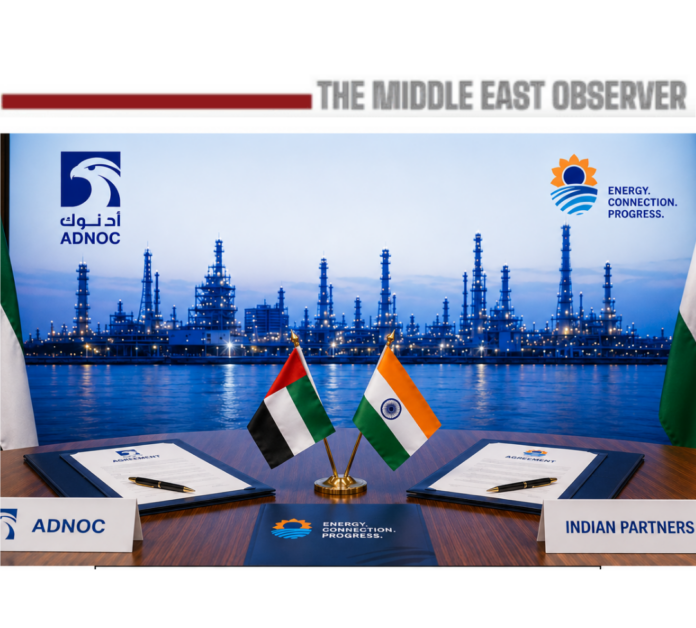
In the presence of UAE President Mohamed bin Zayed Al Nahyan and Indian Prime Minister Narendra Modi, ADNOC signed two strategic energy collaboration agreements with Indian partners aimed at expanding crude oil, LNG, and LPG cooperation while strengthening long-term UAE-India energy security ties.
The agreements include a strategic collaboration with Indian Strategic Petroleum Reserves Limited to explore opportunities in crude oil, LNG, and LPG storage, as well as strategic petroleum reserves. ADNOC said the agreement could increase its crude oil storage capacity in India to as much as 30 million barrels, including existing facilities in Mangalore and potential future projects in Vishakhapatnam and Chandikol.
The agreement also explores crude storage cooperation in Fujairah as part of India’s strategic reserve system, alongside additional LNG and LPG storage opportunities aimed at strengthening supply-chain resilience amid challenging global shipping conditions.
ADNOC also signed a separate strategic collaboration agreement with Indian Oil Corporation to expand LPG supply and trading cooperation, including through ADNOC Global Trading. The deal builds on an existing LPG term contract between both companies in place since 2023 and could support the development of a long-term LPG sale and purchase agreement.
Dr. Sultan Ahmed Al Jaber said India’s rapid economic and population growth continue to position it among the world’s most important energy markets. India remains one of the fastest-growing major economies globally and a key driver of future energy demand growth.
The agreements come as UAE-India economic relations continue to deepen under the Comprehensive Strategic Partnership and the Comprehensive Economic Partnership Agreement (CEPA), which entered into force in 2022. Both countries are targeting bilateral trade worth US$200 billion by 2032 as cooperation expands across energy, trade, and infrastructure sectors.
The agreements further reinforce the UAE’s growing role as one of India’s key long-term energy and strategic economic partners amid shifting global supply-chain, energy-security, and geopolitical dynamics.