
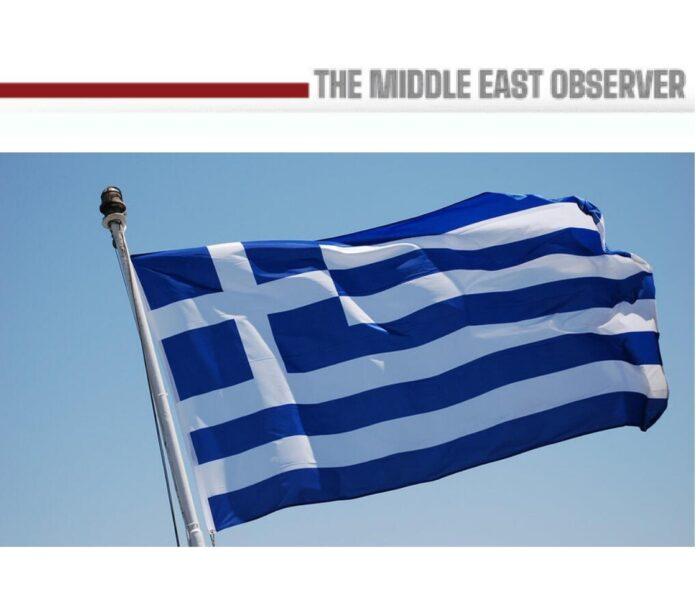
As Greece marks the 205th anniversary of its Independence Day on March 25, The Middle East Observer extends its congratulations to a nation whose historic struggle for freedom continues to resonate far beyond its borders. The commemoration of the 1821–1830 War of Independence is not only a tribute to Greece’s liberation, but also a celebration of enduring democratic ideals, national resilience, and cultural identity that have shaped modern Europe.
Today, Greece stands as a dynamic economy within the European Union, with growth projected at over 2% in the coming years, supported by a diversified structure led by services, alongside industry and agriculture. Tourism remains a cornerstone, contributing close to one-fifth of GDP, driven by the country’s unique geography of more than 2,000 islands, its rich heritage, and its global cultural appeal. From Athens to its island networks, Greece continues to position itself as both a cultural beacon and an economic gateway in Southeast Europe.
Beyond its national achievements, Greece’s relationship with Egypt represents one of the most stable and strategically significant partnerships in the Eastern Mediterranean. Rooted in deep historical and cultural ties, the relationship has evolved into a comprehensive alliance spanning energy, trade, maritime cooperation, and diplomacy. High-level engagement between Abdel Fattah El-Sisi and Kyriakos Mitsotakis has consistently reaffirmed a shared vision for regional stability and economic integration.
Economically, bilateral relations continue to demonstrate steady expansion. Egyptian exports to Greece reached approximately $1.88 billion in 2024, led by energy products, fertilizers, and agricultural goods, while Greek exports to Egypt totaled over $560 million, spanning fuels, cotton, pharmaceuticals, and industrial inputs. Greek investments in Egypt—across more than 100 projects—are concentrated in key sectors including manufacturing, construction materials, food industries, and business services, while Egyptian investments in Greece are notably present in telecommunications.
The strategic dimension of this partnership is increasingly defined by energy cooperation in the Eastern Mediterranean, where both countries are advancing coordinated efforts in natural gas development, infrastructure connectivity, and regional energy security. Institutional frameworks such as the High-Level Cooperation Council further reinforce collaboration across tourism, technology, and cultural exchange, positioning both nations as aligned stakeholders in a rapidly evolving regional landscape.
As Greece celebrates its independence, the occasion serves not only as a national milestone but as a reminder of the enduring value of sovereignty, cooperation, and shared progress. For Egypt and Greece, the relationship continues to evolve from historical affinity into a forward-looking strategic partnership—one that reflects both nations’ commitment to stability, development, and mutual prosperity in the Mediterranean and beyond
