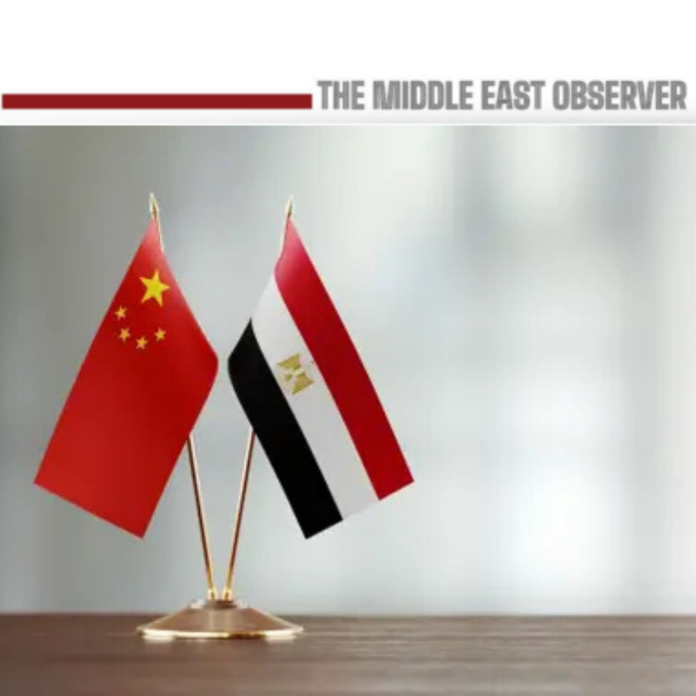
Cairo — Egypt is advancing plans for a $2 billion logistics and commercial city within the Suez Canal Economic Zone, in partnership with China, signaling a structural shift in Cairo’s economic strategy toward becoming a regional trade and redistribution hub rather than a traditional manufacturing or transit economy.
The proposed development, inspired by China’s Yiwu International Trade City model, is designed to function as an integrated commercial ecosystem where goods are displayed, traded, stored, and redistributed across multiple markets. Unlike conventional industrial investments, the project is centered on supply chain management and trade facilitation, reflecting a broader global shift toward logistics-driven economic competitiveness.
Spanning approximately three million square meters, the project is expected to operate as a self-contained economic district incorporating showrooms, warehousing facilities, logistics centers, and supporting infrastructure, including hospitality and service components. Such scale positions it among the largest trade-oriented developments in Egypt and underscores ambitions to create network effects capable of attracting regional and international businesses into a single integrated platform.
At the core of the project’s strategic logic lies Egypt’s geographic advantage. Located along the Suez Canal—one of the world’s busiest maritime corridors—the country provides direct access to European, African, and Gulf markets. According to UNCTAD, maritime transport accounts for nearly 80% of global merchandise trade, reinforcing the value of logistics hubs positioned along critical shipping routes. Within this framework, the proposed trade city would serve as a distribution gateway, enabling Chinese and international exporters to streamline supply chains and reduce reliance on fragmented shipping networks.
The development is further supported by plans to construct a $400 million container terminal at Ain Sokhna Port, strengthening the integration between maritime transport and inland logistics infrastructure. This linkage is essential for reducing supply chain friction, enhancing cargo handling capacity, and improving turnaround times—factors that are increasingly decisive in global trade competitiveness.
Beyond infrastructure, the project reflects the deepening economic relationship between Egypt and China. Chinese investments in Egypt have already exceeded $8 billion, spanning sectors such as manufacturing, textiles, energy, and infrastructure. This existing industrial footprint provides a critical foundation for the success of large-scale logistics developments, as established production networks generate the trade flows necessary to sustain such ecosystems.
From a policy perspective, the trade city aligns with Egypt’s broader ambition to transition from a transit-based economy to a logistics coordinator capable of managing regional supply chains. The project is expected to generate significant employment, with early estimates suggesting up to 150,000 jobs across logistics, services, and supporting industries, while also creating indirect economic activity through supplier networks and distribution channels.
Geopolitically, the initiative reflects a wider trend of supply chain regionalization, as companies seek to mitigate risks associated with global disruptions and overconcentration in specific markets. For China, establishing a logistics hub in Egypt provides a strategic foothold near key trade routes and emerging markets. For Egypt, it enhances economic diversification and strengthens its position within global trade networks, while maintaining a balance of partnerships across major economic blocs.
The Middle East Observer notes that the proposed trade city represents more than a large-scale infrastructure investment—it signals a structural evolution in how Egypt competes within the global economy. As supply chains become increasingly complex and regionally distributed, countries that can integrate logistics, trade, and industrial ecosystems into cohesive platforms are likely to capture disproportionate value. In this context, Egypt’s ability to convert its geographic advantage into an operational logistics system will determine whether it can emerge as a central marketplace linking Asia, Africa, Europe, and the Gulf in the years ahead.