
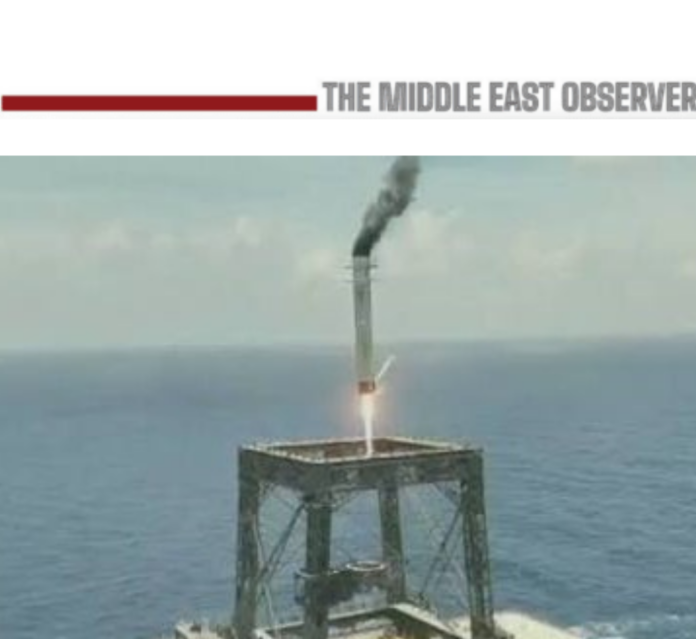
China has moved a significant step closer to challenging US leadership in reusable launch technology after successfully recovering an orbital rocket booster for the first time, a milestone expected to reduce future launch costs, strengthen Beijing’s commercial space ambitions and intensify global competition in one of the world’s fastest-growing high-technology industries.
The achievement came during the launch of the Long March-10B from the Hainan Commercial Space Launch Site on 10 July. Following stage separation, the rocket’s first stage executed a controlled powered descent before being successfully captured by a specially designed suspended net mounted on an offshore recovery platform, marking China’s first successful recovery of an orbital-class launch vehicle. The mission also placed its payload into the planned orbit. Official Chinese media described the operation as a historic breakthrough in reusable launch technology.
The success makes China only the second country after the United States to recover an orbital rocket booster, placing Beijing among a small group of space powers capable of developing reusable launch systems. The technology is widely regarded as one of the most significant advances in modern spaceflight, transforming launch economics by allowing expensive rocket hardware to be reused instead of discarded after a single mission.
Unlike the recovery systems developed by American launch providers, China’s approach relies on a suspended net positioned above an offshore platform rather than deployable landing legs. The method enables the booster to be captured immediately after a precision-powered descent, potentially reducing structural weight and increasing payload capacity by eliminating landing hardware. While engineers believe the concept could offer operational advantages, it will require repeated successful recoveries and refurbishment cycles before its commercial competitiveness can be fully assessed.
Rocket first stages typically account for the largest share of a launch vehicle’s manufacturing cost. Traditionally, these boosters have been discarded after every mission, making space launches expensive and limiting flight frequency. Recovering and reusing first stages allows operators to distribute manufacturing costs across multiple launches, significantly lowering the cost of delivering satellites into orbit while improving launch cadence and operational efficiency.
The breakthrough comes as the global space economy enters a period of rapid expansion. Industry forecasts estimate that worldwide space-related activities—including satellite communications, Earth observation, navigation, launch services and downstream applications—could exceed US$1 trillion during the 2030s. Reusable launch systems are expected to underpin much of that growth by making access to space more affordable for governments, commercial operators and scientific missions alike.
For China, the achievement represents far more than an engineering success. Beijing has made space technology a strategic pillar of national industrial policy, investing heavily in launch infrastructure, satellite manufacturing, lunar exploration, crewed spaceflight and deep-space research. Reusable launch capability is expected to strengthen China’s commercial launch sector while supporting growing domestic demand for communications, navigation, remote sensing and national security satellites.
The mission also underscores the increasingly strategic technological competition between China and the United States. Alongside artificial intelligence, advanced semiconductors, quantum computing and next-generation telecommunications, reusable space transportation has emerged as one of the industries viewed by both governments as essential to future economic competitiveness and technological leadership. Success in reusable launch technology not only reduces the cost of accessing orbit but also strengthens national capabilities in scientific research, defence, satellite deployment and future lunar and interplanetary missions.
The United States remains the global leader in reusable orbital launch systems. SpaceX has demonstrated hundreds of successful booster recoveries through its Falcon 9 programme, fundamentally reshaping the commercial launch industry, while Blue Origin has advanced reusable rocket technologies through its own launch programmes. China’s successful recovery narrows the technological gap and demonstrates that reusable orbital launch capability is becoming increasingly diversified beyond a single national ecosystem.
Industry observers caution that a single successful recovery represents an important engineering milestone rather than proof of operational maturity. To compete with established reusable launch providers, China must demonstrate consistent recovery performance, rapid inspection and refurbishment procedures, and the ability to repeatedly fly recovered boosters while maintaining reliability and commercial viability.
Chinese engineers have indicated that additional test missions are planned during the remainder of 2026, with the objective of achieving routine reuse of the Long March-10B first stage before year-end. If successful, the programme would mark another significant advance in China’s long-term strategy to build a fully reusable launch capability supporting both national priorities and an expanding commercial space industry.
Whether China’s net-based recovery approach ultimately proves more efficient than conventional powered landings remains to be demonstrated. Nevertheless, the successful Long March-10B mission confirms that reusable launch technology has become one of the principal battlegrounds of the global space industry, with Beijing positioning itself as a credible challenger in the next generation of orbital transportation and the rapidly expanding global space economy.
Related news:
Saudi Arabia Leads GCC into Next Phase of Workforce Nationalisation
SpaceX Launches Classified NRO Mission as Washington Accelerates Orbital Intelligence Expansion
Read also:
Egypt Launches ClimCam Space Camera to ISS in Boost to Climate Monitoring Efforts
SpaceX, OpenAI and the Birth of the AI Capital Market
