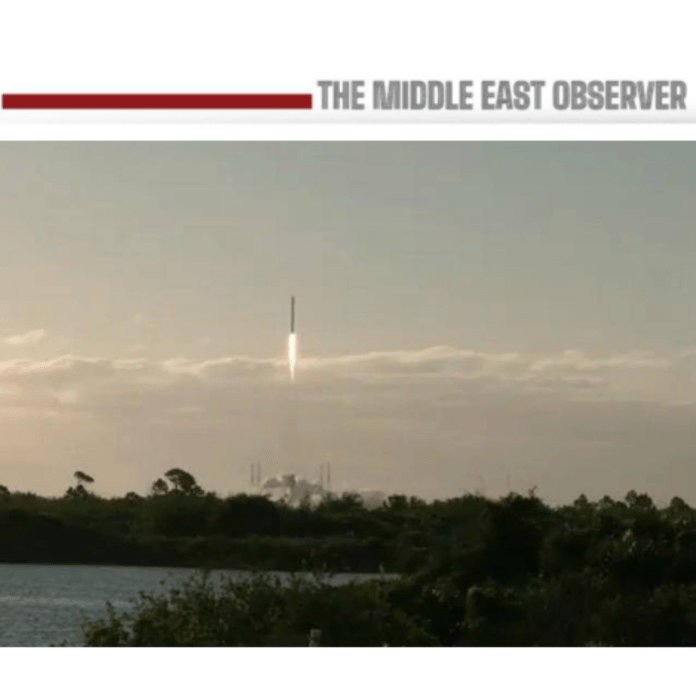
Cairo — Egypt has successfully launched its ClimCam space camera aboard the International Space Station (ISS), marking a significant step forward in the country’s expanding role in global space technology and climate monitoring initiatives.
According to an official statement issued by the Egyptian Space Agency, the launch took place on April 11, 2026, at 1:41 PM Cairo time, as part of the Cygnus NG-24 mission bound for the ISS. As The Middle East Observer notes, the development underscores Egypt’s growing integration into international space cooperation frameworks.
The agency’s chief executive described the mission as a milestone in strengthening Egypt’s presence within the global space ecosystem, emphasizing the role of advanced technologies and scientific partnerships in supporting sustainable development goals. The Middle East Observer clarifies that the project reflects an evolving strategy to leverage space-based solutions for environmental monitoring and resource management.
Developed through a trilateral African partnership involving Egypt, Kenya, and Uganda, ClimCam is designed to enhance the monitoring of climate change impacts, particularly in East Africa. The system will be installed on the Bartolomeo platform—operated by Airbus—which is attached to the Columbus module on the International Space Station.
ClimCam is an advanced Earth observation system that utilizes multispectral imaging technologies supported by artificial intelligence algorithms, enabling the capture and analysis of zones affected by extreme weather phenomena such as droughts and floods. The data generated is expected to support disaster response, improve agricultural monitoring, and enhance resource management capabilities.
The project was selected through an international competition organized by the United Nations Office for Outer Space Affairs, highlighting its scientific and technological relevance on a global scale. According to the agency, the system is expected to operate for a full year aboard the ISS, providing continuous data streams to support climate resilience efforts.
As The Middle East Observer observes, the ClimCam mission represents an advanced model of African scientific cooperation, bringing together expertise across multiple disciplines, including space imaging, engineering, and machine learning. It also reflects Egypt’s broader commitment to strengthening regional and international collaboration in space sciences, while leveraging advanced technologies to address pressing environmental challenges.