
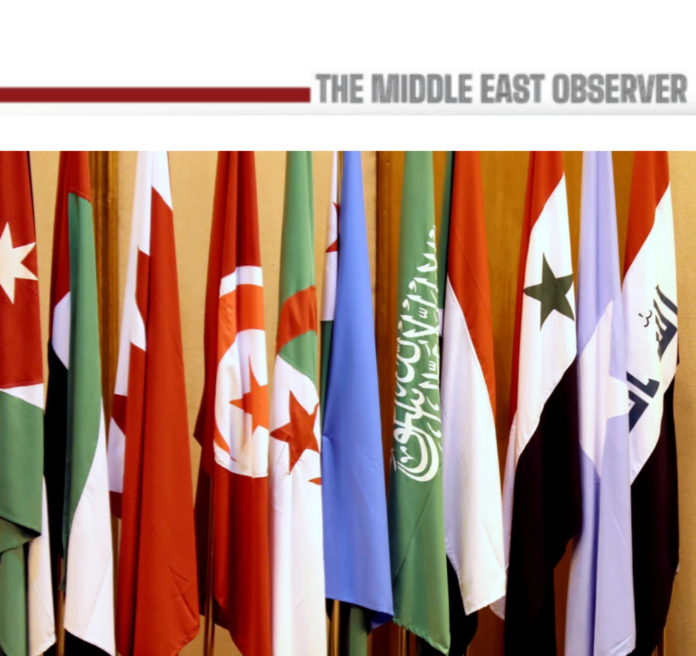
For decades, discussions surrounding Arab unity have oscillated between aspiration and scepticism. Critics point to divergent political systems, uneven levels of economic development, competing national interests, regional rivalries and differing foreign-policy priorities as evidence that deeper integration remains elusive.
Yet history offers a broader perspective. For centuries, the Arab world was linked by powerful bonds of language, culture, religion, commerce and shared civilisational values. Ideas, people, trade and knowledge moved across the region with a degree of connectivity that fostered a common cultural and economic space extending from the Atlantic to the Gulf. Arabs experienced periods of prosperity and adversity together, developing a collective heritage that continues to shape the region’s identity today.
The modern political map of the Arab world, characterised by sovereign states and internationally recognised borders, is a relatively recent phenomenon in historical terms, largely emerging over the past century. While these states have since developed distinct national identities, institutions and interests, the deeper foundations of shared history, language, culture and strategic geography remain intact.
The question, therefore, is not whether Arab countries are identical, nor whether they should surrender their sovereignty. Rather, it is whether these enduring common foundations can serve as the basis for a more coordinated vision capable of advancing collective prosperity, security and influence in an increasingly competitive global landscape.
The world’s most successful regional blocs were not built because their members were identical. They were built because their members recognised that cooperation could transform diversity into strength and create opportunities that no single nation could achieve alone.
This principle is deeply rooted not only in modern statecraft but also in the Arab and Islamic civilisational tradition. The Prophet Muhammad (peace and blessings be upon him) likened believers to the bricks of a building, each strengthening and supporting the other, illustrating the enduring idea that collective strength is greater than the sum of individual parts. Throughout history, societies that succeeded in building lasting influence were those that understood the value of solidarity, coordination and shared purpose.
The Arab world today stands at a similar crossroads.
With a population exceeding 450 million people, a strategic geography connecting Asia, Africa and Europe, some of the world’s largest energy reserves, rapidly growing sovereign wealth, expanding industrial capabilities and an increasingly dynamic digital economy, Arab countries collectively possess many of the ingredients required to emerge as one of the most influential regional groupings of the twenty-first century.
The challenge is not a lack of resources, talent or potential. Rather, it is the absence of a common strategic framework capable of transforming individual strengths into collective power, national successes into regional prosperity and shared aspirations into a coherent vision for the future.
From Shared Identity to Shared Principles
The first step towards meaningful Arab integration is neither political unification nor the creation of a supranational authority. Such outcomes, if they are ever to emerge, must be the product of a gradual and organic process rather than its starting point.
The real foundation lies in establishing a common vision supported by a clear set of principles, standards and long-term objectives capable of defining a shared future.
These principles should be anchored in sovereignty, economic prosperity, collective security, technological advancement, sustainable development and mutual respect for national differences. More importantly, they must be translated into practical frameworks that guide policy, investment and cooperation across generations.
History shows that successful regional blocs did not begin with a common currency, a military alliance or open borders. They began by identifying shared interests and creating institutions capable of managing differences while advancing common goals. Integration succeeded because it was driven by a clear strategic vision and supported by mechanisms that transformed ambition into implementation.
The Arab world has not lacked initiatives, agreements or institutions. Over the decades, numerous frameworks have sought to promote cooperation in trade, defence, investment and political coordination. Yet many have gradually lost momentum, become obsolete or fallen short of their potential—not because the vision itself was flawed, but because implementation was often inconsistent, institutional follow-through was limited and the collective political will required to sustain long-term progress weakened over time.
This experience offers an important lesson. The challenge facing the Arab world today is not the creation of another organisation or declaration. It is the establishment of a shared strategic vision that endures beyond political cycles and provides a practical roadmap for incremental but measurable progress.
A common vision creates something more powerful than agreements alone: it creates common standards. Once standards are established, cooperation becomes easier, institutions become more effective and progress becomes measurable. Economic policies can become more aligned, infrastructure more interconnected, technology standards more compatible, investment flows more efficient and security coordination more effective.
The objective, therefore, is not uniformity. Arab countries will continue to differ in their political systems, economic structures, strategic priorities and development models. The real question is not how they can become identical, but how they can remain diverse while moving in the same strategic direction.
The most successful regional blocs in modern history did not eliminate differences; they organised them around a common purpose. The Arab world has the opportunity to do the same by transforming its shared heritage, interests and aspirations into a practical framework of cooperation that gradually evolves from coordination into integration, and from integration into lasting regional influence.
The Foundations Already Exist
The case for deeper Arab integration does not begin from a blank slate. Over recent decades, the region has already demonstrated that meaningful cooperation is both possible and beneficial when supported by political commitment and practical implementation.
The Gulf Cooperation Council has established one of the developing world’s most successful customs and economic coordination frameworks, while the GCC Interconnection Authority has created a cross-border electricity network that enhances regional energy security. Arab financial institutions have played a significant role in financing infrastructure and development projects across the region, and growing investments in logistics corridors, ports, transport networks and energy interconnections increasingly demonstrate the benefits of coordinated planning.
These achievements may not yet constitute a fully integrated regional framework, but they provide evidence that cooperation can deliver tangible results. The challenge facing the Arab world is therefore not whether integration is possible, but how existing successes can be expanded, connected and transformed into a broader long-term strategy.
Economic Integration: The Foundation of Regional Power
History consistently demonstrates that economic integration is the foundation upon which enduring political influence, strategic autonomy and long-term prosperity are built.
The world’s most successful regional blocs did not begin as political unions; they began as economic projects. The European Union emerged from cooperation in coal and steel before evolving into the world’s largest single market and one of its most influential geopolitical actors. ASEAN transformed a region once characterised by conflict and fragmentation into one of the fastest-growing economic zones globally. The Gulf Cooperation Council, despite its differing political systems and economic structures, has demonstrated how coordinated policies can enhance regional competitiveness, attract investment and strengthen collective economic resilience.
The Arab world possesses the ingredients necessary to achieve a similar transformation.
The scale of the opportunity is considerable. Collectively, Arab economies generate approximately $3.5 trillion in annual GDP, manage sovereign wealth assets measured in the trillions of dollars, control a substantial share of global oil and natural gas reserves and occupy some of the world’s most strategically important maritime corridors, including the Suez Canal, Bab El-Mandeb and the Strait of Hormuz. Few regions combine such economic, financial, energy and geographic advantages within a single civilisational space.
Deeper economic integration could unlock one of the largest and most strategically positioned markets in the world. By connecting North Africa, the Levant and the Gulf through integrated supply chains, harmonised regulations, enhanced labour mobility and more efficient capital flows, Arab countries could create an economic ecosystem capable of competing on a global scale.
A common economic framework would strengthen intra-Arab trade, attract greater foreign direct investment, reduce excessive dependence on external markets and accelerate industrial development. More importantly, it would provide the financial and institutional foundation required to support broader cooperation in security, technology, infrastructure and sustainable development.
Ultimately, economic integration should not be viewed as an end in itself, but as the engine that powers a more influential, resilient and strategically autonomous Arab future.
Building Industrial and Technological Sovereignty
In the twenty-first century, power will increasingly be measured not only by natural resources or military capabilities, but by technological leadership and industrial capacity.
Artificial intelligence, advanced manufacturing, semiconductor technologies, cybersecurity, biotechnology, robotics and digital infrastructure are rapidly becoming the defining pillars of national competitiveness and economic influence. Nations that lead in these sectors will shape the rules, standards and innovations that define the global economy for decades to come.
No individual Arab country currently possesses the scale necessary to compete independently with the world’s largest technological powers. Collectively, however, Arab states possess a rare combination of capital, energy resources, strategic geography, youthful populations, expanding markets and growing innovation ecosystems.
A coordinated regional framework for technology and innovation could establish common standards for digital governance, cybersecurity, data protection and AI ethics, while supporting joint research initiatives, regional centres of excellence, venture capital networks and coordinated investments in strategic industries.
Such an approach would not merely strengthen technological capabilities; it would enhance technological sovereignty, reduce dependence on external providers and position the Arab world as an active contributor to the technologies shaping the future rather than merely a consumer of them.
The emergence of artificial intelligence introduces an additional strategic imperative. The countries that control data, computing infrastructure, advanced algorithms and digital standards will increasingly shape the global economic order. Without greater coordination, Arab countries risk becoming fragmented markets that import foreign technologies while exporting valuable data and capital. With coordination, however, the region has the potential to build shared AI infrastructure, regional cloud ecosystems, Arabic-language large language models, advanced research centres and common digital standards capable of supporting both economic competitiveness and digital sovereignty.
The choice facing the region is therefore increasingly clear: participate in the next industrial revolution as a collection of disconnected markets, or help shape it as an integrated technological ecosystem with the scale necessary to compete globally.
Securing Food, Water and Energy for Future Generations
Food, water and energy security can no longer be viewed as separate policy challenges. Together, they form the foundation of national resilience, economic stability and long-term sustainable development.
The Arab world contains some of the world’s largest food-importing nations, some of its most water-stressed regions and some of its most significant energy-producing economies. Addressed individually, these challenges can strain national resources. Addressed collectively, they can become opportunities for strategic cooperation and shared resilience.
A coordinated regional approach could leverage the comparative advantages of different countries to create a more secure and sustainable system. Agricultural producers could strengthen regional food supply chains. Energy-exporting nations could support industrial development and energy transitions across the region. Joint investments in desalination, renewable energy, water management technologies, climate adaptation and strategic reserves could significantly reduce long-term vulnerabilities.
The objective should be clear: transforming individual dependencies into collective resilience and ensuring that future generations inherit a region better equipped to withstand economic, environmental and geopolitical shocks.
Common Infrastructure for a Connected Region
Economic integration cannot succeed without physical and digital connectivity.
Throughout history, infrastructure has served as the backbone of regional development, linking markets, facilitating trade and accelerating economic growth. The Arab world therefore requires a long-term vision for integrated infrastructure that extends beyond national borders.
Such a vision should encompass transportation corridors, ports, rail networks, logistics hubs, electricity grids, energy interconnections, digital infrastructure, industrial zones and emerging smart-city ecosystems. Together, these assets would form the foundation of a more connected and competitive regional economy.
A seamlessly connected Arab infrastructure network would lower transportation costs, increase trade efficiency, strengthen energy security and create new opportunities for industrialisation, investment and job creation.
Just as infrastructure connectivity played a central role in the emergence of a unified European economic space, it could become one of the most transformative drivers of Arab economic integration and regional competitiveness in the decades ahead.
Trade and Investment Flows: Unlocking Regional Capital
The Arab world is home to some of the largest sovereign wealth funds and investment institutions in the global economy, collectively managing trillions of dollars in assets.
Yet despite this immense financial strength, a substantial share of regional capital continues to be deployed outside the Arab world, while significant investment opportunities within the region remain underdeveloped.
A coordinated investment framework could help redirect a greater share of this capital towards strategic regional priorities, including infrastructure, advanced manufacturing, technology, energy-transition projects and high-value industrial sectors.
The objective is not economic protectionism, but the creation of stronger regional value chains capable of competing internationally while generating greater economic value within the region itself.
By expanding intra-Arab trade and investment flows, Arab economies could become more diversified, resilient and less vulnerable to external shocks. More importantly, regional capital could become a catalyst for regional transformation, financing the infrastructure, industries and technologies that underpin long-term prosperity and strategic independence.
In a world increasingly shaped by economic blocs and competitive industrial strategies, capital is not merely a financial resource—it is a strategic instrument. The ability to mobilise Arab capital for Arab development may ultimately become one of the most important determinants of the region’s future influence and prosperity.
Collective Security Through Coordination
No regional project can succeed without security. Recent geopolitical developments have highlighted a profound shift in the international landscape, where strategic interests increasingly shape decisions and outcomes. In such an environment, regional resilience and collective preparedness become essential pillars of long-term stability and prosperity.
The objective need not be the immediate creation of a military alliance designed for confrontation. Rather, it should be the gradual development of a coordinated regional security architecture capable of addressing common threats, protecting shared interests and strengthening strategic autonomy.
Valuable lessons can be drawn from NATO’s emphasis on interoperability, joint planning, collective preparedness and burden-sharing, while adapting these principles to the political realities and strategic requirements of the Arab world.
Security cooperation should extend beyond traditional defence considerations to include maritime security, cybersecurity, intelligence sharing, disaster response, energy security and the protection of critical infrastructure, trade routes and digital networks.
A stronger regional security architecture would not replace existing international partnerships. Rather, it would complement them by enhancing regional capabilities, reducing strategic vulnerabilities and ensuring that the security of the Arab world is increasingly shaped by its own collective vision and interests.
Turning Differences into Strategic Advantages
The diversity often cited as an obstacle to deeper Arab integration may, in reality, represent one of the region’s greatest untapped strategic assets.
Differences in political systems offer a wealth of governance experiences and institutional approaches. Varied economic structures create opportunities for complementary growth and integrated value chains. Diverse diplomatic relationships expand the region’s collective reach across multiple centres of global influence. Even differing national priorities can become sources of strength when aligned around shared long-term objectives.
History demonstrates that successful regional cooperation is rarely built upon uniformity. Their success did not stem from eliminating differences, but from creating institutions capable of managing them while advancing common goals.
The Arab world’s diversity should therefore not be viewed as a barrier to cooperation, but as a source of resilience, adaptability and strategic depth. The challenge is not to erase differences, but to organise them within a framework of shared principles, common standards and collective ambitions.
A Practical Roadmap Forward
A realistic path towards deeper Arab integration must be gradual, pragmatic and institution-driven rather than ideological.
The first phase should focus on establishing a shared strategic vision supported by common principles, regulatory standards and long-term priorities.
The second phase should strengthen economic integration through trade facilitation, infrastructure connectivity, industrial partnerships, investment coordination and the gradual harmonisation of regulations and standards.
The third phase should expand cooperation in strategic sectors, including technology, artificial intelligence, food security, water security, energy security, education, research and critical infrastructure.
As trust, interdependence and institutional capacity deepen, more advanced forms of collective security coordination and regional governance mechanisms can gradually emerge, reflecting the evolving needs and ambitions of the region.
The objective is not the creation of a union overnight. It is the gradual construction of a framework capable of transforming shared aspirations into practical achievements and coordinated action.
The Choice Facing the Arab World
The fundamental question is no longer whether Arab countries are capable of deeper cooperation. The more important question is whether the Arab world can recognise the profound transformation taking place in the international system.
Increasingly, global influence is being shaped by large economic blocs, integrated markets, technological ecosystems and coordinated strategic frameworks. Scale, connectivity and collective capability are becoming decisive sources of power. In such an environment, fragmentation carries growing costs, while cooperation creates expanding opportunities.
History rarely waits for those who hesitate. The twenty-first century is increasingly being shaped by continental-scale economies, technological alliances, integrated supply chains and coordinated strategic frameworks. The United States, China, the European Union, India and emerging regional blocs are all positioning themselves around scale, resilience and collective capability.
For the Arab world, the question is no longer whether integration is desirable; it is whether fragmentation remains sustainable in an era defined by competition between increasingly interconnected centres of power. The region possesses the resources, geography, capital and human potential to become one of the defining economic and strategic forces of the century. Whether that potential is realised will depend on the willingness of Arab nations to move beyond episodic cooperation towards a shared vision supported by common standards, practical institutions and long-term commitment.
The choice is not between unity and diversity. The choice is between remaining a collection of individual strengths or transforming those strengths into a collective force capable of shaping a shared, secure and more prosperous future.
History repeatedly demonstrates that nations and regions achieve their greatest influence not when they act alone, but when they align their capabilities around a common purpose. Individual strengths may command respect, but collective strength shapes outcomes.
Like a single stick separated from the bundle, even the strongest can become vulnerable in isolation. Bound together by a shared vision, common standards and coordinated action, however, those same individual strengths can form a resilient foundation capable of withstanding challenges, seizing opportunities and securing a more influential future for generations to come.
Related news:
Egypt, Saudi Arabia, Turkey & Pakistan Signal Push for New Regional Security Framework
El-Sisi Joins Arab and Regional Leaders in Push for Iran Settlement
Read also:
Engineering Export Excellence Awards Highlight Egypt’s Shift Towards Smarter Manufacturing
Egypt’s World Cup Awakening: Why One Victory Means Far More Than Three Points