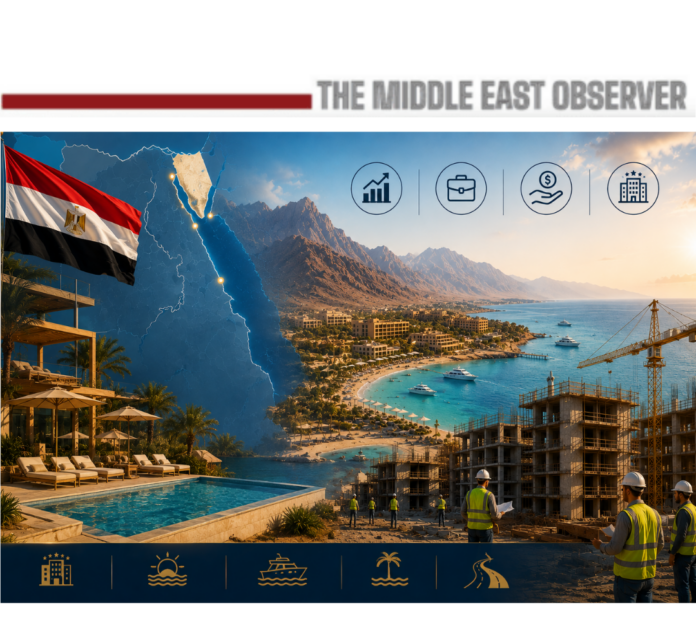
CAIRO — Egypt has granted preliminary approvals for 63 tourism investment projects across the Red Sea and South Sinai governorates with an estimated combined investment value of around EGP 16 billion, as the government moves to accelerate integrated coastal tourism development and expand hospitality infrastructure, according to official statements from the Tourism Development Authority.
The projects cover land allocations estimated at between 2 million and 2.5 million square metres and are concentrated in strategic tourism zones along the Red Sea coastline and South Sinai, regions considered central to Egypt’s long-term tourism expansion plans due to their proximity to European and Gulf travel markets and their established marine tourism appeal.
According to Mostafa Mounir, the approved developments include a diversified mix of hotels, integrated resorts, entertainment venues, restaurants, tourism bazaars, water parks, and supporting service facilities designed to strengthen destination capacity rather than support speculative land activity.
Officials indicated that the projects aim to create more comprehensive tourism ecosystems capable of increasing average visitor stays, enhancing spending levels, and broadening Egypt’s tourism offerings beyond traditional resort accommodation.
The investment approvals come as Egypt continues implementing wider infrastructure upgrades across Red Sea and Sinai tourism corridors, including expansions in roads, airports, utilities, and logistics services intended to support rising visitor volumes and private-sector tourism investment.
Industry data shows that the Red Sea region remains one of Egypt’s strongest-performing tourism destinations, particularly for European charter tourism, diving tourism, and winter travel demand. South Sinai also continues to hold strategic importance due to destinations such as Sharm El-Sheikh and Dahab, which remain key contributors to Egypt’s tourism revenues.
The latest approvals are expected to support additional hotel room capacity and generate new opportunities for hospitality operators, leisure developers, retail activity, and tourism-related employment across both governorates.
Tourism and investment analysts note that Egypt is increasingly shifting toward destination-based development models in which hospitality projects are integrated with entertainment, retail, and lifestyle infrastructure to improve competitiveness against emerging regional tourism markets in the Gulf and Eastern Mediterranean.
The projects also align with broader national economic priorities aimed at increasing foreign currency inflows, stimulating private investment, and strengthening sectors capable of generating long-term employment and exportable services revenues.
Egypt has continued positioning tourism as one of the country’s primary hard-currency generating sectors, particularly as authorities seek to expand annual visitor numbers and diversify tourism products across leisure, entertainment, eco-tourism, and coastal destination segments.
As The Middle East Observer notes, the latest Red Sea and South Sinai approvals reflect more than a wave of new resort projects. They signal a broader strategic transition toward integrated tourism infrastructure planning, where entertainment, hospitality, services, and urban connectivity are increasingly developed as part of unified economic and destination ecosystems designed to enhance Egypt’s long-term regional tourism competitiveness.