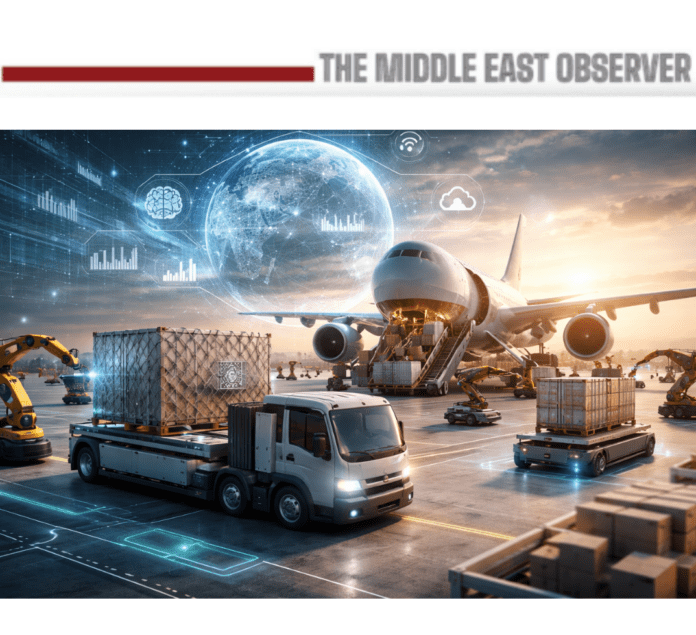
Geneva — The global air cargo industry is undergoing a structural shift toward automation and data-driven operations, driven by rapid adoption of artificial intelligence and robotics, according to the latest Technology Trend Radar issued by the International Air Transport Association (IATA).
The 2026 report identifies AI, robotics, and advanced data integration as central to reshaping cargo operations, with the sector increasingly moving toward digitized, transparent, and interconnected supply chains. IATA noted that many of the priority technologies identified in 2025 remain in focus, but have since advanced into more practical and scalable deployment stages.
The radar evaluates 24 emerging technologies across six domains, including intelligent analytics, robotics, wearables, sustainability, visibility and transparency, and digital process automation. The findings are based on input from more than 120 industry stakeholders, including airlines, freight forwarders, ground handlers, and technology providers, offering a comprehensive view of adoption trends and expected timelines.
According to the report, technologies such as artificial intelligence, computer vision, autonomous guided vehicles, and robotics are transitioning from experimental phases into active operational use, enabling faster decision-making, improved cargo handling efficiency, and enhanced tracking capabilities across logistics chains.
However, IATA highlighted several structural challenges accompanying this transition. Chief among them is a growing gap between technological investment and workforce readiness, as companies struggle to adapt skills and training frameworks to increasingly automated environments. The report also flagged rising cybersecurity risks, driven by greater system interconnectivity, alongside differing industry views on which technologies will deliver the most immediate impact.
IATA emphasized that future progress will depend on balancing technology deployment with human capital development, while strengthening collaboration across the logistics ecosystem. The organization added that these transformations are expected to improve operational efficiency, enhance resilience against disruptions, and support sustainability objectives across the global air cargo sector.