
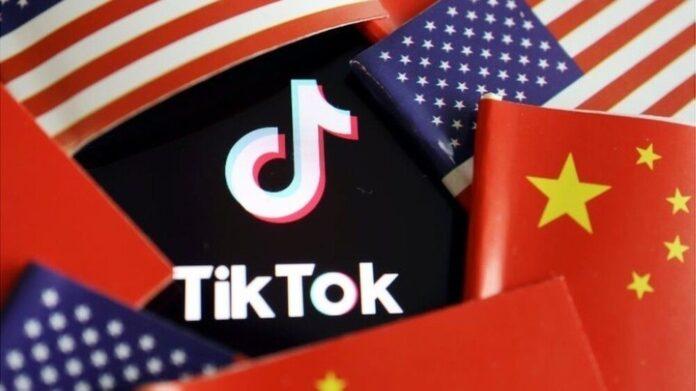
The United States and China have reached a framework agreement to secure TikTok’s continued operation in the U.S., according to statements by Treasury Secretary Scott Bessent and President Donald Trump during U.S.–China trade talks in Madrid. While the deal averts, for now, the app’s court-upheld shutdown deadline of September 17, 2025, the most sensitive issue—control of the recommendation algorithm—remains unsettled. Trump indicated he will speak directly with President Xi Jinping this week to finalise the terms.
The framework must comply with a 2024 law signed by then-President Joe Biden, which mandated that TikTok’s Beijing-based owner ByteDance divest its U.S. operations or face a nationwide ban. The Supreme Court upheld that requirement in January 2025, leaving divestment as the only lawful outcome. Any sale will be complicated by China’s 2020 export-control rules covering core algorithms, giving Beijing a veto over any technology transfer. U.S. officials are weighing structures ranging from a U.S.-only codebase to licensed access, but ByteDance’s residual role is still unclear.
The list of potential buyers is diverse. Microsoft and Amazon are reported to have submitted bids this year; Oracle is again involved in a consortium alongside major venture investors; Frank McCourt’s “People’s Bid” has drawn attention; while Elon Musk has explicitly ruled himself out. Blackstone withdrew earlier in July. Several options would keep Oracle as the cloud provider regardless of ownership. These dynamics highlight both the scale of TikTok’s U.S. revenue—estimated at $23bn in 2024, rising to over $32bn in 2025—and the strategic value of controlling a platform that now represents more than 11% of global social-media advertising spend.
For ByteDance, the divestment comes at a time when its valuation, implied by recent buybacks, exceeds $330bn, underscoring how pivotal the U.S. market remains to its global standing. Yet a forced sale without the algorithm could sharply discount the U.S. asset and disrupt creators’ content discovery, potentially pushing parts of the “TikTok economy” toward YouTube, Meta’s Reels or Snap. Analysts warn that ad pricing could be volatile in the short term if campaigns are reshuffled.
In Europe, regulatory pressure is also shifting. The EU’s General Court annulled the Commission’s 2023 supervisory fees on very-large platforms, including TikTok and Meta, ordering Brussels to redraft its methodology. While the ruling did not refund past payments, it offers temporary relief from compliance costs as the divestment battle plays out in the U.S.
The Middle East is watching closely. TikTok counts more than 230m users across MEA, with Saudi Arabia and the UAE among the world’s most penetrated markets. Governments in the region are tightening online-content and data-protection rules, and TikTok has ramped up moderation in Egypt, Iraq, Morocco and the Gulf. Regional sovereign wealth funds, particularly in Saudi Arabia, have shown interest in backing any U.S. restructuring—underlining how geopolitics, regulation and investment capital now converge in the fate of a single platform.
The immediate path forward will depend on three factors: whether ByteDance retains any non-controlling stake in a U.S. entity; whether Beijing licenses the export of TikTok’s algorithm; and how Washington structures oversight of U.S. data and governance. Without agreement on these elements, the framework could falter. But with both leaders signalling optimism, TikTok’s U.S. future now hangs on the delicate interplay of law, technology and statecraft.
