As Sudan enters a fourth year of war between the military and paramilitary forces, the World Health Organization has warned that the country is facing what it describes as the world’s largest humanitarian and health crisis.
Three years of conflict have devastated Sudan’s healthcare system and sharply worsened living conditions across the country. With Sudan’s population estimated at roughly 48 to 50 million, nearly 34 million people now require humanitarian assistance (Over two-thirds of the population). Of that total, 21 million people are in urgent need of health services, while more than 4 million are suffering acute malnutrition.
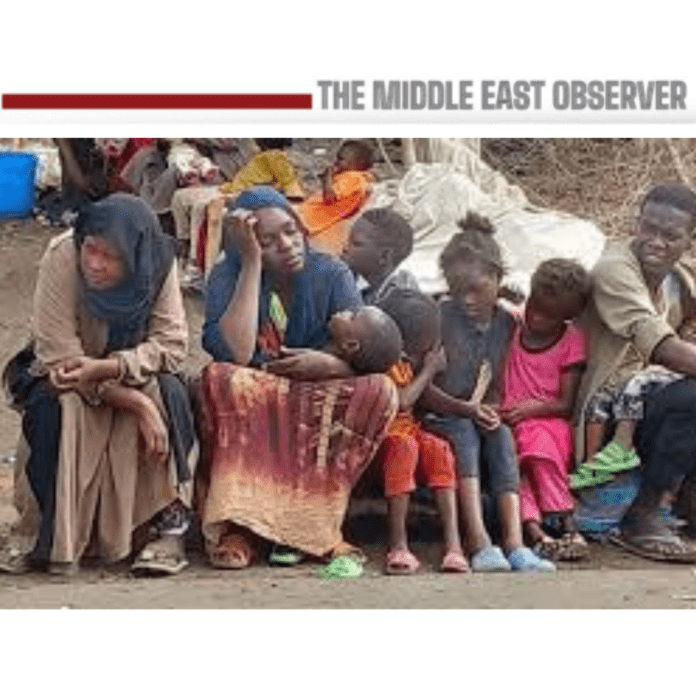
The war has also triggered a wider humanitarian collapse. Recent figures cited by international agencies indicate that at least 59,000 people have been killed, although the actual toll is believed to be higher. Around 9 million people are displaced inside Sudan, while another 4.5 million have fled to neighboring countries including Egypt, Chad, Libya, South Sudan, and others. Hunger has also deepened, with more than 19 million people facing acute food insecurity.
The health emergency has intensified as conflict continues to damage already fragile infrastructure. The WHO says only 63% of Sudan’s health facilities are fully or partially functioning, leaving 37% non-operational. At the same time, the organization has verified 217 attacks on health facilities since the conflict began, further restricting access to treatment and exposing patients and medical staff to grave danger. In heavily affected regions such as Darfur and Kordofan, displacement, insecurity, and damaged roads have forced many civilians to undertake long and dangerous journeys to reach the nearest functioning hospital or clinic.
Disease outbreaks are spreading in parallel with the collapse in services. The WHO report points to rising cases of malaria, dengue, measles, polio, and cholera, all of which are being fueled by poor sanitation, malnutrition, population displacement, and shrinking access to care. Children have borne a particularly heavy burden. UNICEF figures indicate that more than 4,300 children have been killed or maimed, while at least 8 million children remain out of school. Some 11% of schools are reportedly being used by armed actors or as shelters for displaced civilians.
The economic strain has compounded the emergency. Fuel prices in Sudan have risen sharply, adding to the cost of transport, aid delivery, and daily survival for millions already struggling under wartime conditions. Meanwhile, international observers and aid agencies have continued to accuse both sides in the conflict of grave abuses against civilians, including ethnic violence, extrajudicial killings, and sexual violence.
Against this backdrop, diplomatic pressure is mounting for a political breakthrough. International agencies and global leaders are increasingly stressing that humanitarian aid alone cannot resolve Sudan’s crisis without a ceasefire and a credible political settlement. Current proposals focus on an immediate halt to hostilities, renewed negotiations under regional and UN mediation, safe humanitarian corridors across conflict zones, stronger pressure on external backers of the warring parties, and increased international funding to stabilize health and relief operations while preparing for long-term recovery.
The World Health Organization warns that the overall trajectory remains deeply alarming. Without a sustainable peace agreement, Sudan risks a prolonged collapse of its health system and a further entrenchment of one of the gravest humanitarian crises in the world today. A viable path forward hinges on an immediate and inclusive ceasefire, followed by a comprehensive political settlement that preserves Sudan’s territorial integrity and national unity, restores state institutions, and guarantees safe, unimpeded humanitarian access across all regions. Only through a coordinated international effort—aligned with Sudanese-led reconciliation and reconstruction—can the country begin to stabilize its health system, rebuild essential services, and set the foundation for durable peace and recovery.