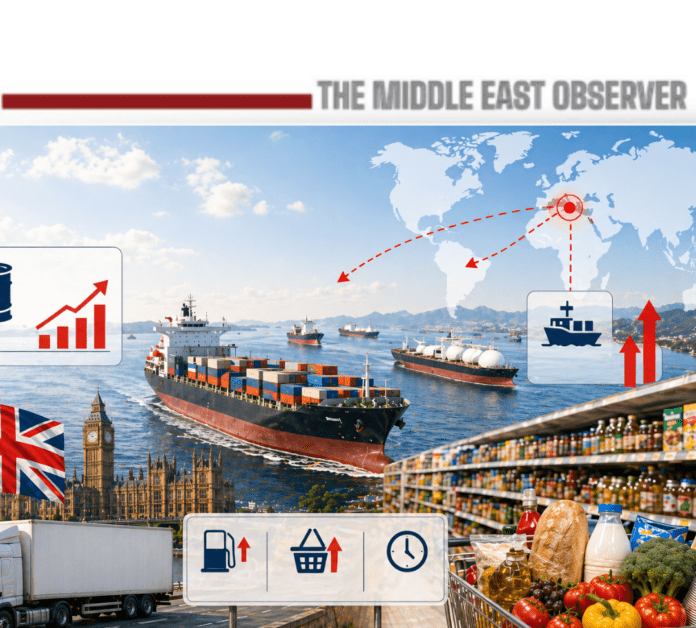
The United Kingdom is facing rising risks of food shortages and price increases as disruptions linked to tensions around the Strait of Hormuz impact global energy and supply chains, according to industry experts and officials cited in international reporting .
Constraints on shipping through this critical corridor—through which a significant share of global oil and gas flows—have driven up fuel and fertiliser costs, placing mounting pressure on agricultural production and food distribution systems. UK officials indicate that these effects could extend beyond the immediate crisis, with cost pressures likely to persist for months after any stabilisation .
Statements attributed to UK government officials, including Prime Minister Keir Starmer, suggest households may need to adjust consumption patterns as inflationary pressures build. Treasury assessments cited in reports point to supply chain disruptions continuing to affect prices for up to eight months after the end of hostilities .
Fresh produce is expected to be among the most exposed categories, particularly greenhouse-grown fruits and vegetables that depend heavily on energy inputs. Higher fertiliser costs and reduced yields are likely to constrain supply, while logistics disruptions further tighten availability .
Pressure is also intensifying across meat and dairy sectors, where rising refrigeration, feed, and transport costs are increasing production expenses. Industry concerns over potential carbon dioxide shortages—essential for food processing and preservation—could further strain supply chains, with milk prices projected to rise within three to six months .
The broader inflationary impact is becoming increasingly visible. Analysts cited in international coverage warn that UK food inflation could approach 10% by year-end, intensifying cost-of-living pressures and potentially prompting shifts in consumer behaviour, including precautionary stockpiling .
Retail sector pressures are also emerging. Major supermarket chains such as Tesco and Sainsbury’s are expected to face rising input costs across key staples including potatoes, milk, and chicken. Analysts suggest retailers may initially absorb part of these increases, but sustained pressure is likely to translate into higher consumer prices and tighter product availability .
The Middle East Observer assesses that the situation underscores the deepening interdependence between energy security and food systems. Disruptions in critical maritime chokepoints such as the Strait of Hormuz are increasingly transmitting inflationary shocks across global supply chains, reinforcing a synchronised cycle of cost pressures affecting both producers and consumers worldwide.